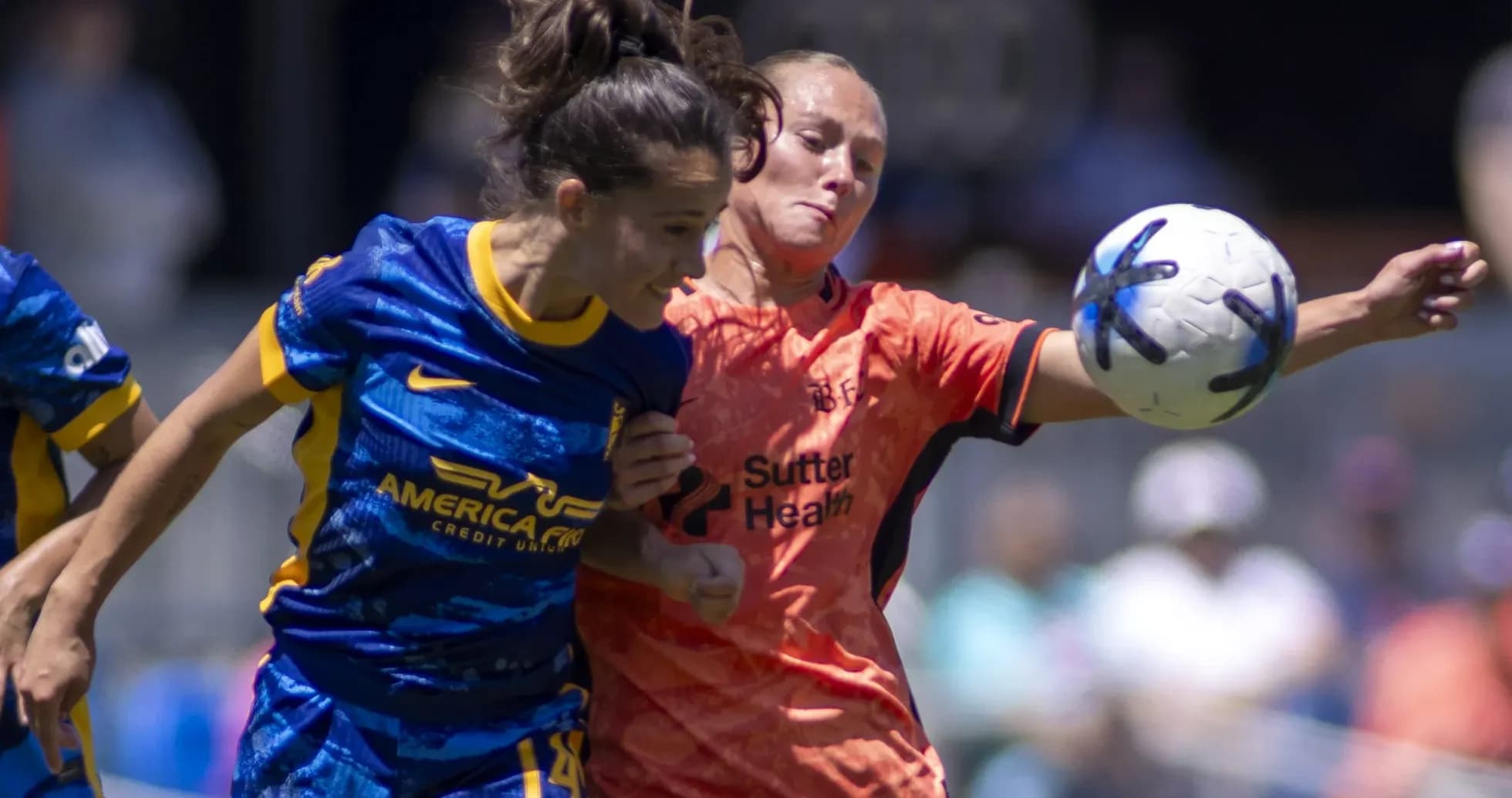
Bay FC vs Utah Royals W: Tactical Stalemate at PayPal Park
Bay FC and Utah Royals W played out a tactical stalemate at PayPal Park, a 0-0 that was more about control and structure than chaos and chances. Both sides finished with eight total shots, mirrored foul counts, and identical corner numbers, underscoring how finely balanced the contest was. Bay FC edged possession 52%–48% and attempted more passes, but Utah carried the greater penalty-box presence with seven shots inside the area to Bay’s two. The game evolved into a territorial and pressing duel, shaped by second-half substitutions and a tight defensive discipline that kept both goalkeepers largely protected.
Executive Summary
Across 90 minutes, Emma Coates’ Bay FC tried to assert themselves through ball circulation and width, while Jimmy Coenraets’ Utah Royals W focused on compactness, vertical runs, and sharper use of the box. The draw reflected a contest where both defensive units read the game well, and where neither attack consistently converted possession or entries into clear chances. With no goals and limited saves required, the match became a test of structure, pressing triggers, and in-game adjustments.
Scoring Sequence & Disciplinary Log
There were no goals in this fixture; the half-time score was 0-0 and it remained Bay FC 0-0 Utah Royals W at full time.
Disciplinary actions followed a clear second-half pattern:
- 55' Claire Hutton (Bay FC) — Foul
- 65' Aldana Cometti (Bay FC) — Foul
- 70' Tatumn Milazzo (Utah Royals W) — Foul
- 81' Joelle Anderson (Bay FC) — Argument
Bay FC finished with three yellow cards, Utah Royals W with one, for a total of four cards. All cautions came as the game’s intensity and duels increased after the interval, with Bay’s bookings split between midfield, central defense, and the back line, while Utah’s single caution came from a defensive action by substitute Tatumn Milazzo.
Tactical Breakdown & Personnel
Bay FC
Without a listed formation, Bay FC’s personnel suggest a back four built around Jordan Silkowitz in goal, with Sydney Collins, Aldana Cometti, Joelle Anderson, and Anouk Denton as the defensive core. The defensive performance was quietly efficient: Utah managed only two shots on goal and eight total attempts, with just one from outside the box. Silkowitz was called into action for two saves, indicating that the back line generally held Utah at arm’s length and limited clean looks.
In midfield, the trio of Hanna Bebar, Claire Hutton, and Taylor Huff, supported by Dorian Bailey and the advanced positioning of Racheal Kundananji, underpinned Bay FC’s 52% possession share. The team completed 248 of 338 passes (73%), reflecting a desire to build rather than bypass the middle third. However, the shot profile reveals the main tactical shortcoming: only two efforts inside the box out of eight total, with six from distance. The structure allowed Bay to control tempo and territory at times, but they struggled to convert that into dangerous central combinations or penalty-area overloads.
The front line, led by Karlie Lema, lacked sustained penetration against Utah’s compact defensive block. Only one shot on goal from Bay suggests that final-third patterns were either too slow or too predictable. Coates’ substitutions were clearly aimed at refreshing attacking dynamics: at 58', Caroline Conti (IN) came on for Taylor Huff (OUT), adding a more direct forward presence. At 73', Onyeka Gamero (IN) came on for Dorian Bailey (OUT), injecting pace and one-v-one potential from wide areas. Finally, at 90', Madeline Moreau (IN) came on for Karlie Lema (OUT), a late attempt to change the reference point up front, though there was little time to reshape the attacking pattern.
Defensively, the yellow cards to Hutton and Cometti for Foul and to Anderson for Argument underline a midfield and back line operating at the edge of physical and emotional intensity as Utah tried to transition quickly. Still, Bay conceded only four corners and three offsides, suggesting a relatively controlled defensive line and well-managed depth.
Utah Royals W
Utah Royals W leaned into a more vertical, box-focused approach. Despite having the same number of total shots (8) as Bay, they produced seven inside the box, indicating more effective occupation of central attacking zones. With two shots on goal and only one from range, Utah’s chance creation was structurally superior, even if it did not translate into a breakthrough.
At the back, Mandy McGlynn faced just one shot on target and made one save, supported by a back line of Janni Thomsen, Kate Del Fava, Kaleigh Riehl, and Nuria Rábano. The defensive unit allowed Bay to circulate the ball (302 passes attempted by Utah versus 338 by Bay) but protected the area in front of McGlynn well, forcing Bay into lower-quality, long-range efforts. Utah’s passing (302 passes, 208 accurate, 69%) was slightly less precise, reflecting a more direct or risk-accepting approach in progression.
The midfield combination of Ana Tejada, Narumi Miura, Cecelia Kizer, Mina Tanaka, and Cloé Lacasse, with Kiana Palacios leading the line, provided a platform for late-arriving runs and box entries. Utah matched Bay in fouls (11) and corners (4), but their spatial occupation in the final third was more incisive.
Coenraets’ substitutions were decisive in maintaining intensity and refreshing the press. At 46', Tatumn Milazzo (IN) came on for Janni Thomsen (OUT), adjusting the right side of the defense and later picking up a yellow card for Foul at 70', a sign of aggressive engagement in duels. At 61', Paige Monaghan (IN) came on for Kiana Palacios (OUT), offering fresh movement up front. The 75' double change — Alexa Spaanstra (IN) for Cloé Lacasse (OUT) and Aria Nagai (IN) for Narumi Miura (OUT) — re-energized the wide and central channels, keeping Utah’s attacking structure dynamic. Finally, at 88', Brecken Mozingo (IN) came on for Cecelia Kizer (OUT), adding late creativity and shooting threat.
Utah’s single yellow card total, compared to Bay’s three, suggests they managed their aggression more cleanly despite playing a transition-oriented game. Their ability to reach the box more consistently, while keeping defensive exposure low, points to a well-balanced game model.
The Statistical Verdict
The numbers frame this as a draw with distinct tactical identities. Bay FC’s 52% possession and higher passing volume (338 passes, 248 accurate, 73%) reflect a team prioritizing control and structured buildup, but their attacking return — one shot on goal, two inside the box — reveals a lack of penetration and final-third precision. Utah Royals W, with 48% possession and 302 passes (208 accurate, 69%), accepted less control in exchange for more direct threat, evidenced by seven shots inside the area and two on target.
Defensively, both sides were solid. Bay’s back line and Silkowitz limited Utah to two efforts on target, while McGlynn and the Utah defense faced just one shot on goal. The equal foul count (11–11) and identical corners (4–4) underscore how evenly matched the game was in terms of territorial and physical contest. Card distribution — Bay FC 3, Utah Royals W 1, Total 4 — highlights Bay’s slightly higher defensive strain, particularly as Utah’s fresh attackers arrived in the second half.
With no xG data provided, the shot locations and volumes suggest Utah likely edged chance quality, while Bay edged control. The 0-0 outcome at PayPal Park ultimately reflects two well-organized teams whose structures largely cancelled each other out, with Utah’s superior box occupation offset by Bay’s ball control and disciplined last-line defending.