Barcelona's Summer Rebuild: The Search for a Number Nine
Barcelona’s summer rebuild has been bold, expensive and, in one crucial area, incomplete.
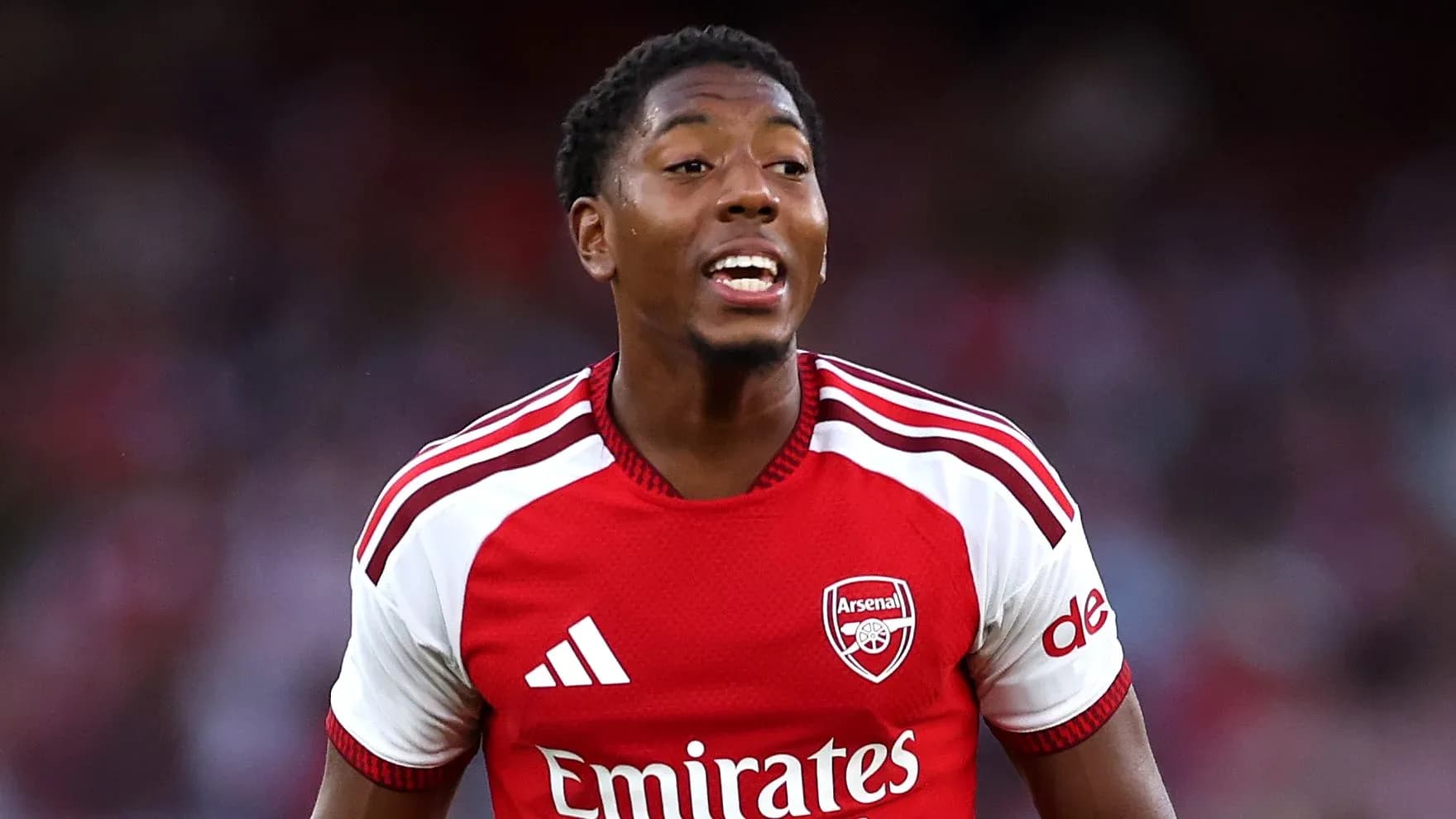
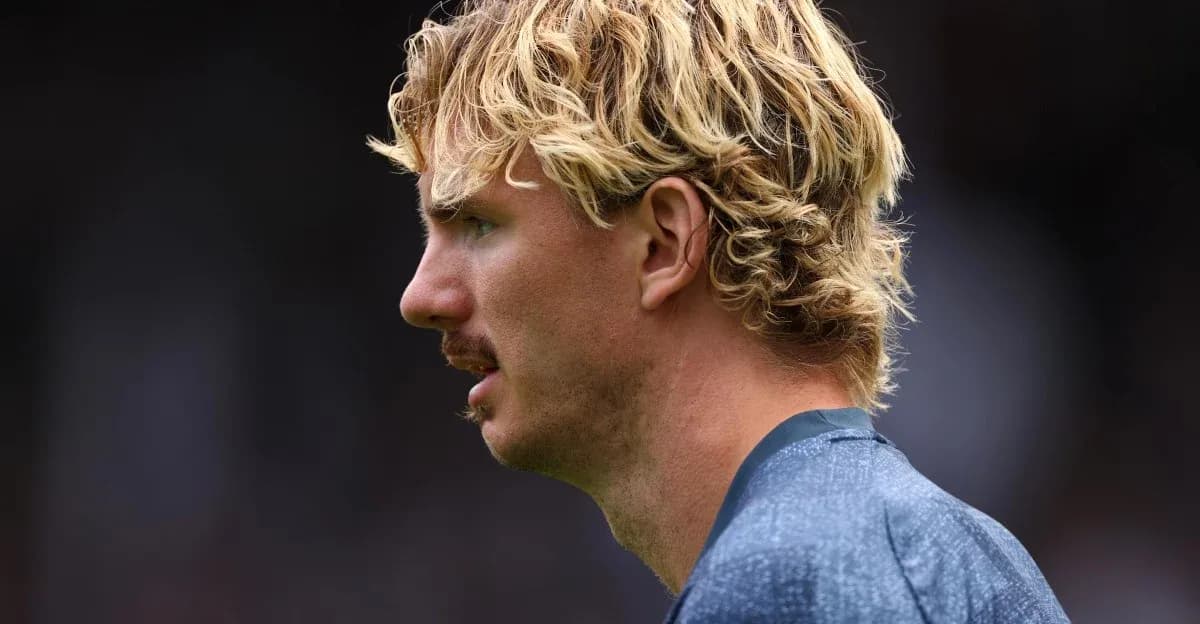
They have reinforced almost every line of the pitch. The champions went into the market and pulled out a Ballon d'Or winner and World Cup‑winning captain in Rodri, prising him from Manchester City to anchor a midfield already overflowing with technicians. They have injected raw pace and width with Anthony Gordon and Karim Adeyemi. They have even placed a bet on the future with 18-year-old Belgian winger Jesse Bisiwu.
Yet as La Liga looms, one glaring hole remains.
A supercharged squad, a missing number nine
Barcelona travel to Elche on Sunday, 23 August, to open their title defence. As it stands, Hansi Flick could take his team into the new season without a recognised centre-forward.
Robert Lewandowski is gone. The 37-year-old, who carried the number nine role with typical relentlessness, left for Chicago Fire in Major League Soccer when his contract expired at the end of last season. Ferran Torres, the man who so often stepped in through the middle, has also departed, joining Paris St-Germain for about 50m euros (£42.7m).
Torres’ numbers underline the loss: 21 goals in 49 appearances last season, frequently as the alternative to Lewandowski in the central role. With both of them out of the door, Barcelona’s first-team squad no longer contains an established senior striker.
For a club built on attacking glamour, that is not a small detail. It is a structural question.
The Alvarez obsession
Inside the club, there is no secret about the preferred solution. Barcelona want Julian Alvarez.
The Argentina international, 26, made clear during the World Cup that he would be open to a move. His work rate, penalty-box movement and ability to link play tick almost every box for Flick’s system. He is the profile they crave: a specialist nine in his prime, comfortable at the highest level.
There is a problem. Atletico Madrid have drawn a thick line through his name.
Interest from Real Madrid only hardened Atletico’s stance. Chief executive Miguel Angel Gil Marin spelled it out: the club would not sell Alvarez, not even for 200m euros (£170.8m). For now, that shuts the door. Barcelona can want him as much as they like; Atletico are not playing.
With the transfer window closing on 1 September, time is already starting to squeeze. Flick knows it.
“We know we have to do something,” he said this month. The message was blunt. The solutions, for now, must come from within.
Flick’s internal puzzle
If Barcelona cannot buy a number nine, they may have to invent one.
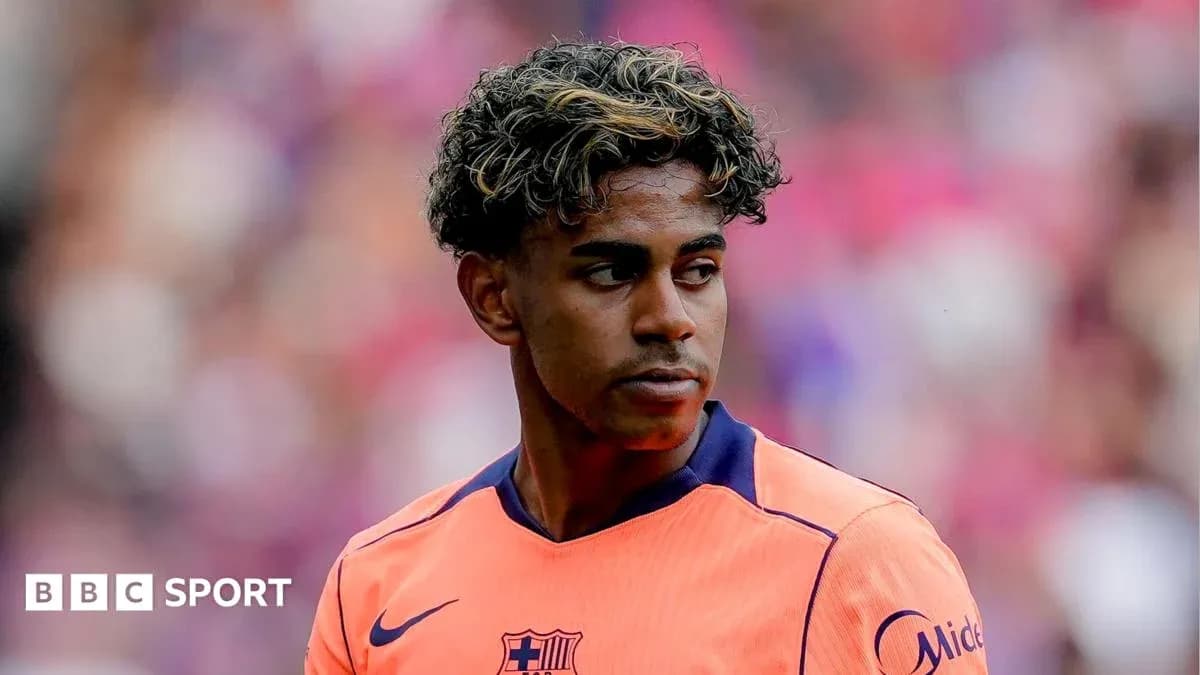
The most obvious candidate is already the face of their attack: Lamine Yamal. Still a teenager, already a world champion with Spain, he is coming off a season in which he scored 24 goals and shouldered responsibility beyond his years.
He can play as a false nine. He has the touch, the awareness between the lines, the composure in tight spaces. Flick has acknowledged that option. Yet it is not where he wants to see his brightest star.
Lamine Yamal’s greatest threat comes from the right flank, where he can square up a full-back, shift the ball inside and bend a game to his will from seemingly impossible positions. Flick’s preference is clear: keep him wide, keep him facing defenders, keep him unpredictable.
So the coach looks elsewhere.
Dani Olmo can operate as a false nine, dropping off the centre-backs, dragging them into awkward areas and creating space for runners. Raphinha has also been used centrally under Flick, a more direct, aggressive presence who can press from the front. Fermin Lopez offers another option in advanced zones and has said he feels comfortable playing as a false nine if required.
Then there are the new signings. Gordon and Adeyemi bring speed, direct running and the ability to attack space behind a high line. Neither, though, is a conventional penalty-box striker. They want grass in front of them, not bodies around them.
A fluid front line – solution or gamble?
One path is obvious: abandon the idea of a fixed number nine altogether.
Flick could lean into a fluid front three, with constant rotation, interchanging positions and no single player camped between opposition centre-backs. Lamine Yamal drifting inside, Gordon attacking the left channel, Adeyemi bursting through the middle, Raphinha ghosting into central spaces – the picture keeps changing, the reference points for defenders keep disappearing.
On paper, that version of Barcelona would be a nightmare to mark. No clear target, no predictable runs, only waves of movement and technical quality from all angles.
It is also a risk.
A team chasing domestic and European titles often needs a specialist, someone who lives in the box, who turns half-chances into goals, who offers a simple out-ball when the patterns break down. Barcelona know this. Their recent history, from Luis Suarez to Lewandowski, is built on it.
That is why, even as Flick experiments with false nines and rotating front lines, the club’s preferred option has not changed. They still want a striker who fits the profile, a true number nine to complete a summer of big moves.
The question is whether they can find him before the window shuts – or whether this season’s story will be written around the one piece they never managed to replace.