Barcelona's Influence in the World Cup: 16 Players and More
This World Cup is breaking records before a ball is even kicked. The biggest tournament in history, spread across the United States, Mexico and Canada, will also feel uncannily like a travelling tribute to FC Barcelona. Wherever you look, there is a trace of blaugrana: on the pitch, on the touchline, and deep in the academy roots of the players on show.
For culers, this is not just a month of following one flag. It is a month of following an entire footballing idea.
Sixteen current Barça players on the global stage
The most direct link is also the most striking. Sixteen members of the current Barça squad have made it to this World Cup, spread across eight different national teams. It is a remarkable footprint for a club that has grown used to seeing its dressing room empty out every four years.
Their stories will intersect and clash across the continent, but the common thread is clear: wherever the cameras turn, there is a Barcelona shirt waiting back at the training ground.
And that is only half the picture.
Messi, Neymar and the ghosts of Camp Nou
The tournament is crowded with familiar faces who once wore the Barça colours and now carry their nations’ hopes.
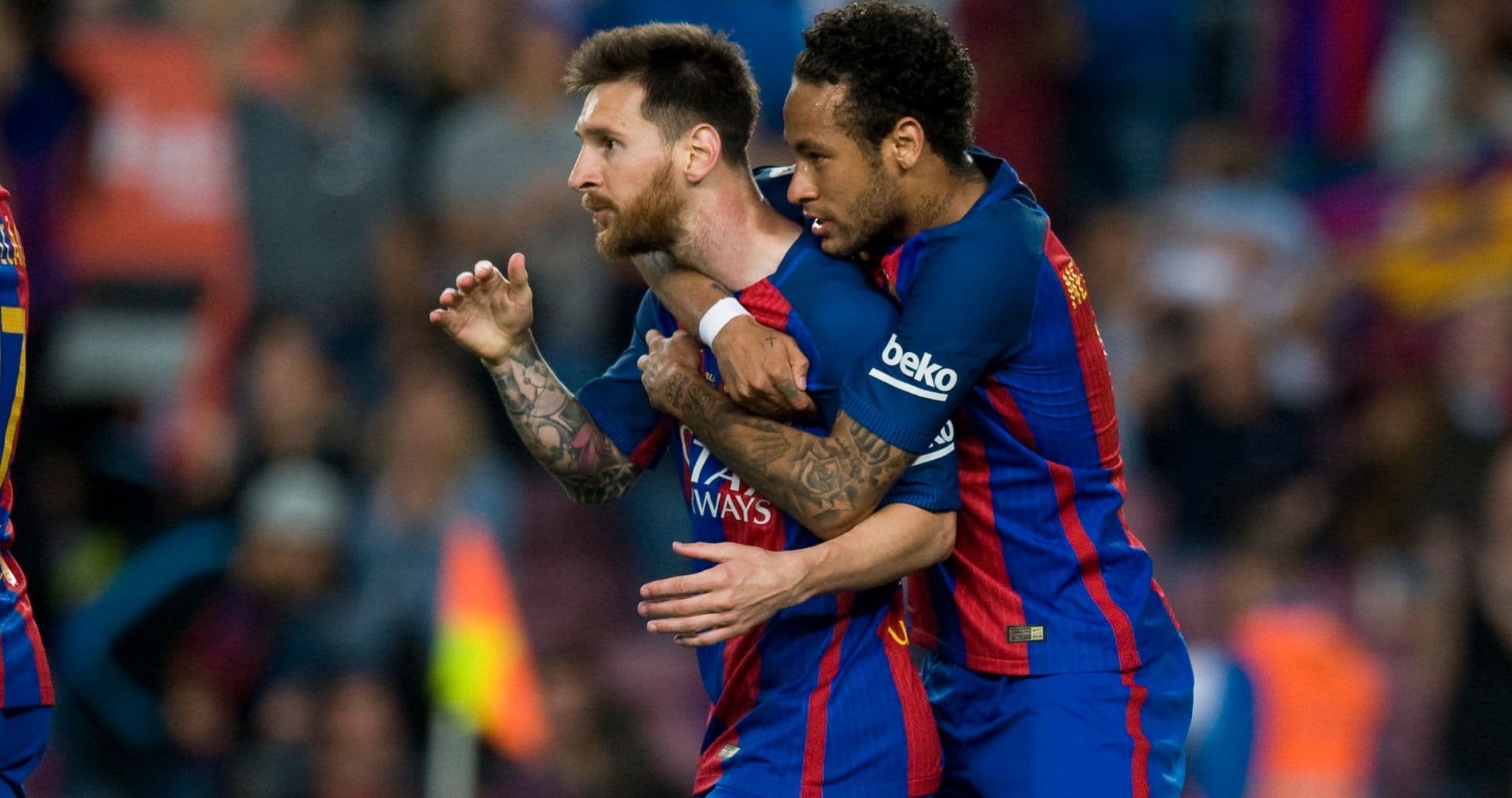
At the centre of it all stands Leo Messi. The man who lifted the trophy in 2022 now returns as defending champion with Argentina, still the defining figure of his generation, still the reference point for any World Cup conversation.
France, runners-up last time, arrive with another former Barça talent in their ranks: Ballon d’Or holder Ousmane Dembélé. The winger, whose explosive dribbling once lit up Camp Nou, is part of a squad that also includes Lucas Digne, another ex-Blaugrana, and Marcus Thuram. Thuram’s surname carries its own Barcelona echo: he is the son of Lilian Thuram, who once patrolled the Camp Nou back line, and Marcus himself passed through the FCB Escola during his father’s spell at the club.
Portugal bring their own cluster of Barça connections. João Félix, Francisco Trincão and Nélson Semedo all feature in a squad with clear Catalan fingerprints. Waiting for them in Group K is Colombia, where former Barça centre-back Yerry Mina anchors the defence.
Across the draw, Franck Kessié stands out as a key figure for Côte d’Ivoire, while Sergiño Dest is expected to lock down the right flank for one of the host nations, the United States.
Then comes one of the great storylines of the tournament: Neymar’s return to the Brazil squad. Two and a half years have passed since his last call-up, yet his shadow still looms large over the seleção. Injury will keep the Santos forward out of the opening game, but his presence alone reshapes the narrative around Brazil. He remains one of the defining icons of this World Cup.
On another touchline, Ronald Koeman’s Netherlands will lean on Memphis Depay, now also playing his club football in Brazil. Depay’s creativity and goal threat make him one of Koeman’s primary attacking weapons as the Dutch chase another deep run.
Blaugrana on the bench
Barcelona’s imprint is not limited to those in boots.
Ronald Koeman, the hero of Wembley ’92 and a symbol of Barça’s modern history, arrives as national team coach of the Netherlands, one of three head coaches at this World Cup with strong Camp Nou ties.
The other two are working far from football’s traditional power centres. Julen Lopetegui leads Qatar, while Thomas Christiansen takes charge of Panama, carrying the Barça influence into dressing rooms that grew up watching, rather than sharing, the club’s golden era.
Morocco’s Barça-tinted edge
Morocco’s squad also carries a Barcelona flavour. Ez Abde, one of the North Africans’ most in-form attacking options, will miss the opening match through injury, a blow for a side that relies on his direct running and flair.
Behind him, centre-back Chadi Riad is expected to play a prominent role. Another product of Barça’s youth system, he embodies the path from La Masia to the world stage that has become almost routine for the club’s best prospects.
La Masia’s fingerprints all over the World Cup
Riad is far from alone. This World Cup is littered with players shaped in the corridors and training pitches of La Masia.
Spain’s two left-backs, Marc Cucurella and Alejandro Grimaldo, both came through the Barça academy, bringing a familiar mix of technique and aggression to Luis de la Fuente’s flanks. Young winger Víctor Muñoz, also a La Masia graduate and currently recovering from injury, is another reminder of how deep that production line runs.
Elsewhere, Uruguay defender Santi Bueno and Japan winger Take Kubo carry the same badge in their footballing past. Their styles, honed in Barcelona’s youth ranks, now serve very different national identities.
The list stretches on. Paraguay’s leading striker Antonio Sanabria once wore the Barça crest as a rising talent. South Korea midfielder Seung-Ho Paik was long considered one of the brightest prospects in the club’s academy.
These are not coincidences. They are the residue of decades of work in a school that has quietly shaped the modern game.
In a World Cup that spans a continent and smashes old limits, one thing feels familiar: wherever you turn, from title contenders to ambitious outsiders, from star forwards to understudy full-backs, Barcelona’s influence refuses to step out of the spotlight.