Barcelona Dominates Real Madrid in 2-0 La Liga Victory
Barcelona’s 2-0 home win over Real Madrid at Camp Nou in La Liga’s Regular Season - 35 was a controlled, front‑loaded performance built on early attacking precision and then defensive game management. Hansi Flick’s side struck twice inside 18 minutes through Marcus Rashford and Ferran Torres, then used their 57% possession and compact 4-2-3-1 structure to deny Alvaro Arbeloa’s Real Madrid the central spaces they needed. With the halftime score already 2-0, Barcelona spent the second half managing rhythm and territory rather than chasing more goals, while Real Madrid’s late pressure lacked the clarity to convert their eight total shots into a genuine comeback threat.
I. Scoring Sequence & Disciplinary Log
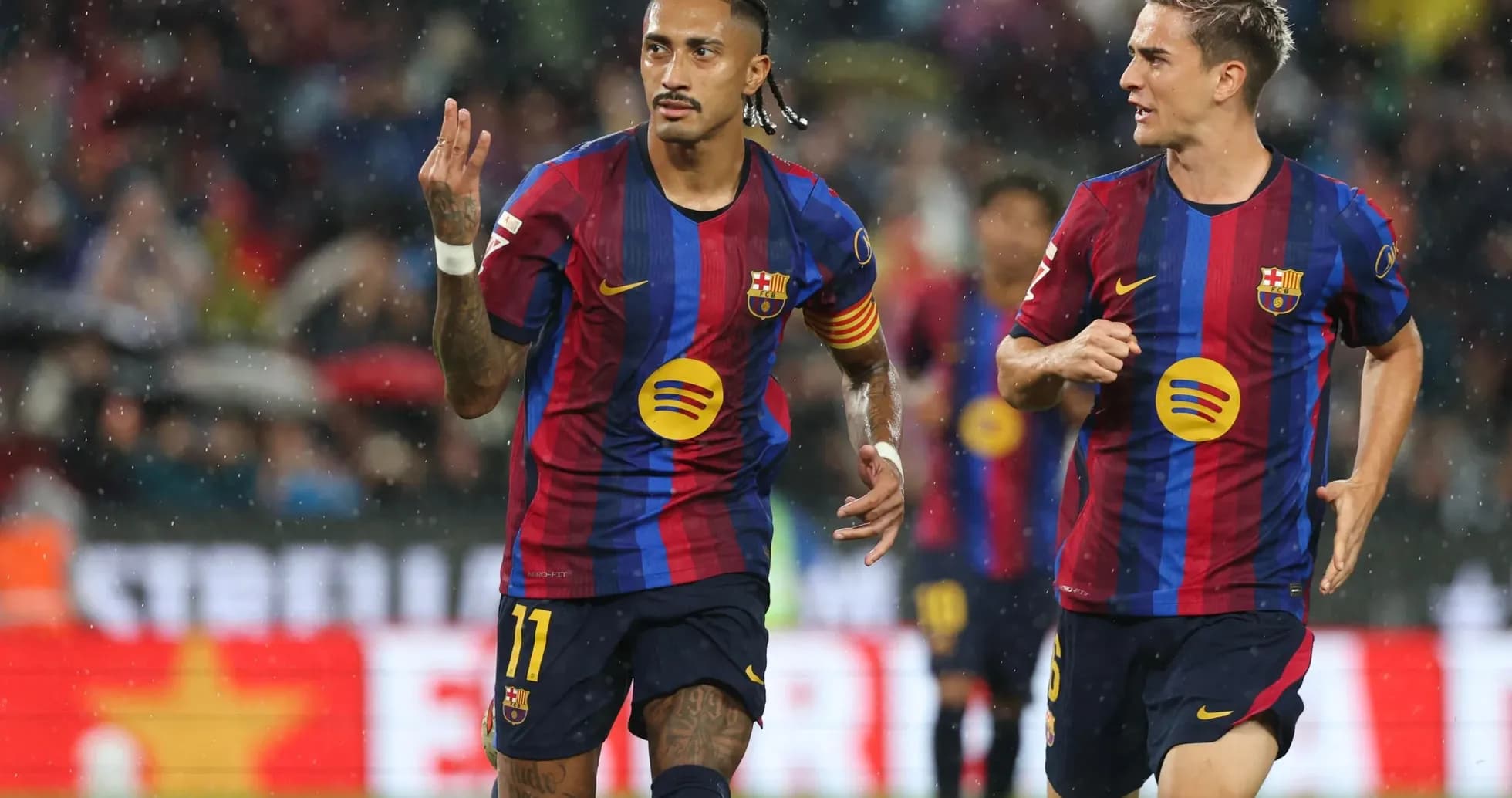
Barcelona imposed their attacking plan immediately. On 9', Marcus Rashford (Barcelona) converted a Normal Goal to give the hosts a 1-0 lead, exploiting the space Real Madrid left while still settling into their shape. The advantage doubled on 18' when Ferran Torres finished another Normal Goal, this time assisted by Dani Olmo, for 2-0. That scoreline held to halftime, reflecting Barcelona’s superior shot quality rather than sheer volume: 10 total shots to Real Madrid’s 8, but 7-1 in shots on goal.
Discipline unfolded in clear phases. The full card log, in chronological order:
- 40' Eduardo Camavinga (Real Madrid) — Foul
- 52' Dani Olmo (Barcelona) — Argument
- 52' Raúl Asencio (Real Madrid) — Foul
- 55' Jude Bellingham (Real Madrid) — Unallowed field entering
- 81' Raphinha (Barcelona) — Argument
- 81' Trent Alexander-Arnold (Real Madrid) — Argument
That yields exact totals of: Barcelona: 2, Real Madrid: 4, Total: 6.
Substitutions then shaped the game’s final third. On 64', Frenkie de Jong (IN) came on for Dani Olmo (OUT), and Raphinha (IN) came on for Marcus Rashford (OUT), adding fresh control and vertical threat for Barcelona. Real Madrid responded on 70' with Thiago Pitarch (IN) for Eduardo Camavinga (OUT), seeking more progressive passing. On 77', Robert Lewandowski (IN) replaced Ferran Torres (OUT), and Marc Bernal (IN) came on for Gavi (OUT), giving Barcelona a more conservative double pivot and a penalty-box reference. Real Madrid’s last push came on 79', when Franco Mastantuono (IN) replaced Brahim Díaz (OUT) and César Palacios (IN) replaced Gonzalo García (OUT). Finally, at 88', Alejandro Balde (IN) came on for Fermín López (OUT) to lock down the left side.
II. Tactical Breakdown & Personnel
Both teams lined up in a 4-2-3-1, but the interpretation of the shape diverged sharply. Barcelona’s double pivot of Pablo Gavi and Pedri provided constant short options to circulate under pressure, enabling a high-possession approach: 527 total passes, 484 accurate (92%). This passing security allowed the attacking line of Rashford, Dani Olmo, Fermín López and Ferran Torres to occupy aggressive positions between and behind Real Madrid’s midfield line.
Early on, Barcelona targeted the half-spaces around Aurélien Tchouaméni and Eduardo Camavinga. Rashford’s opener at 9' came from precisely this dynamic: wide starting positions with diagonal runs into the channel between full-back and centre-back, stretching Antonio Rüdiger and Raúl Asencio. For the second goal on 18', Dani Olmo’s assist to Ferran Torres highlighted Barcelona’s vertical combinations: Olmo drifting inside from the No. 10 zone, Torres pinning the back line and timing his movement across the face of the defence.
Out of possession, Barcelona’s 4-2-3-1 flattened into a 4-4-1-1, with Rashford and Torres working to screen passes into Jude Bellingham. The emphasis was on protecting the central lane: Real Madrid were forced wide, reflected in their 8 total shots but only 1 on goal. Joan García’s workload was light—just 1 goalkeeper save—underlining how well Pau Cubarsí, Eric García, Gerard Martín and João Cancelo managed depth and box protection. The negative “goals prevented” figure (-0.53) for Barcelona’s keeper suggests Real Madrid’s single on-target effort was of reasonable quality, but the volume was simply too low.
Real Madrid’s own 4-2-3-1 was more reactive than usual. With 394 total passes and 342 accurate (87%), they circulated the ball competently but lacked vertical incision. Bellingham, nominally the central attacking midfielder, was often crowded by Gavi and Pedri, while Vinicius Júnior faced frequent 2v1 situations against Cancelo and a shifting midfielder. Trent Alexander-Arnold’s advanced positioning did create crossing opportunities, reflected in Madrid’s 8 corner kicks to Barcelona’s 4, but the penalty-area occupation was insufficient to turn these into high-quality chances (xG only 0.79).
Arbeloa’s changes on 70' and 79' were designed to inject creativity and energy—Thiago Pitarch and Franco Mastantuono both offering more direct, risk-taking profiles—but by then Barcelona had adjusted. Frenkie de Jong’s introduction gave Barcelona calmer progression under pressure and improved rest-defence, while Lewandowski provided an outlet for long clearances, allowing the team to climb the pitch and reset their block.
III. The Statistical Verdict
The statistical profile reinforces the tactical story of controlled superiority rather than overwhelming dominance. Barcelona generated 0.99 xG from 10 shots (7 on target), efficiently converting two early chances to kill the contest’s volatility. Real Madrid’s 0.79 xG from 8 shots (1 on target) indicates they reached some promising positions but failed to test Joan García frequently enough.
Possession (57% to 43%) and passing accuracy (92% vs 87%) underline Barcelona’s superior Overall Form on the night: they imposed their tempo and dictated where the game was played. Defensively, Barcelona’s “Defensive Index” is reflected in limiting Real Madrid to a single shot on target and just 1 save required from their goalkeeper, despite conceding 8 corners and 7 shots inside the box; their box defending and last-line interventions were decisive.
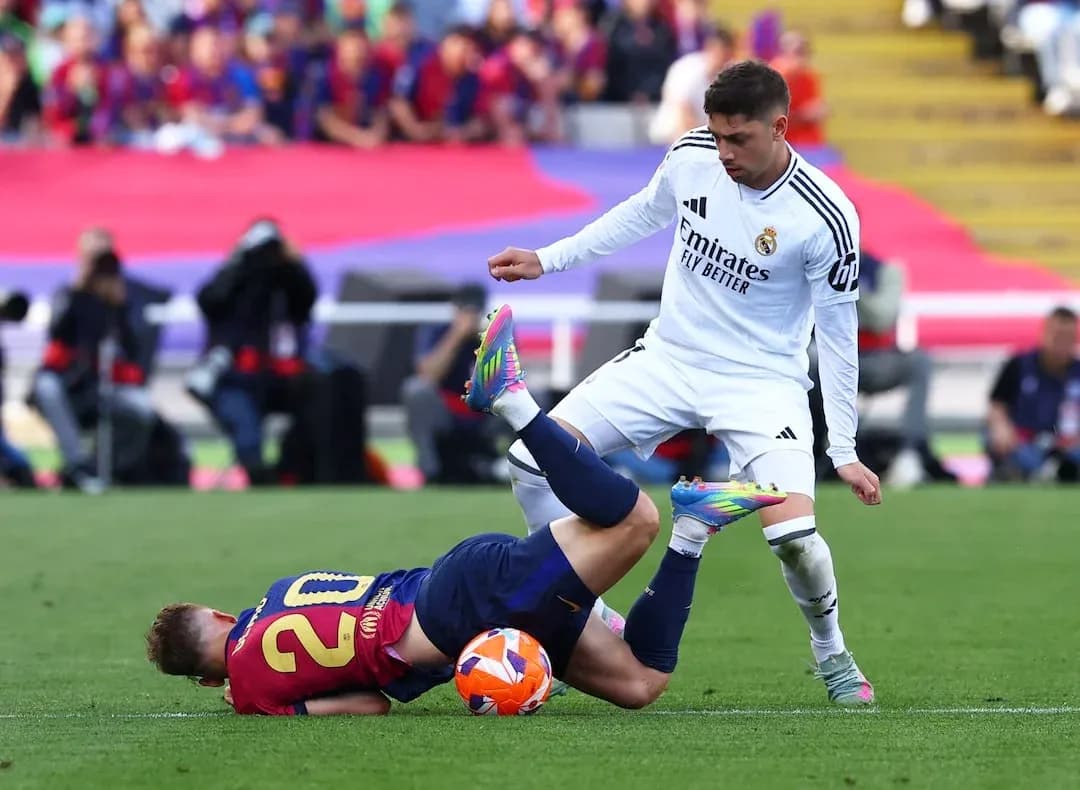
Discipline tilted against Real Madrid—4 yellow cards to Barcelona’s 2—with reasons ranging from “Foul” to “Unallowed field entering” and multiple “Argument” incidents, suggesting growing frustration as the match slipped away. In contrast, Barcelona’s fouls (18 to Madrid’s 9) were part of a deliberate tactical strategy to disrupt transitions, yet they managed to keep their card count relatively low.
Overall, Barcelona’s 2-0 win was the product of early attacking clarity, superior possession structure, and disciplined defensive control, while Real Madrid’s late adjustments never fully overcame the structural issues that defined the opening 20 minutes.