Barcelona vs Levante: A Clash of Footballing Worlds
The late summer heat over the Estadio Ciudad de Valencia framed a contest that felt like a clash of footballing worlds. On one side, Levante, 13th in La Liga with 5 points from 5 matches, still sketching out their identity in the top flight. On the other, Barcelona, already perched atop the table with a perfect 15 from 15 and a fearsome goal difference of +17, arriving as if on rails: five wins from five, 21 goals scored and only 4 conceded overall.
The 4-4-2 chosen by Luis Castro was a statement of intent: Levante would not simply bunker. M. Ryan anchored the side in goal behind a back four of J. Toljan, Dela, A. Mandi and M. Sanchez. Ahead of them, a flat but flexible midfield line of V. Garcia, H. Sotelo, J. A. Olasagasti and R. Brugue was tasked with both compressing space and springing forward. Up front, D. Requena and P. Ratkov formed a classic strike partnership, the former to roam and combine, the latter to occupy centre-backs and attack crosses.
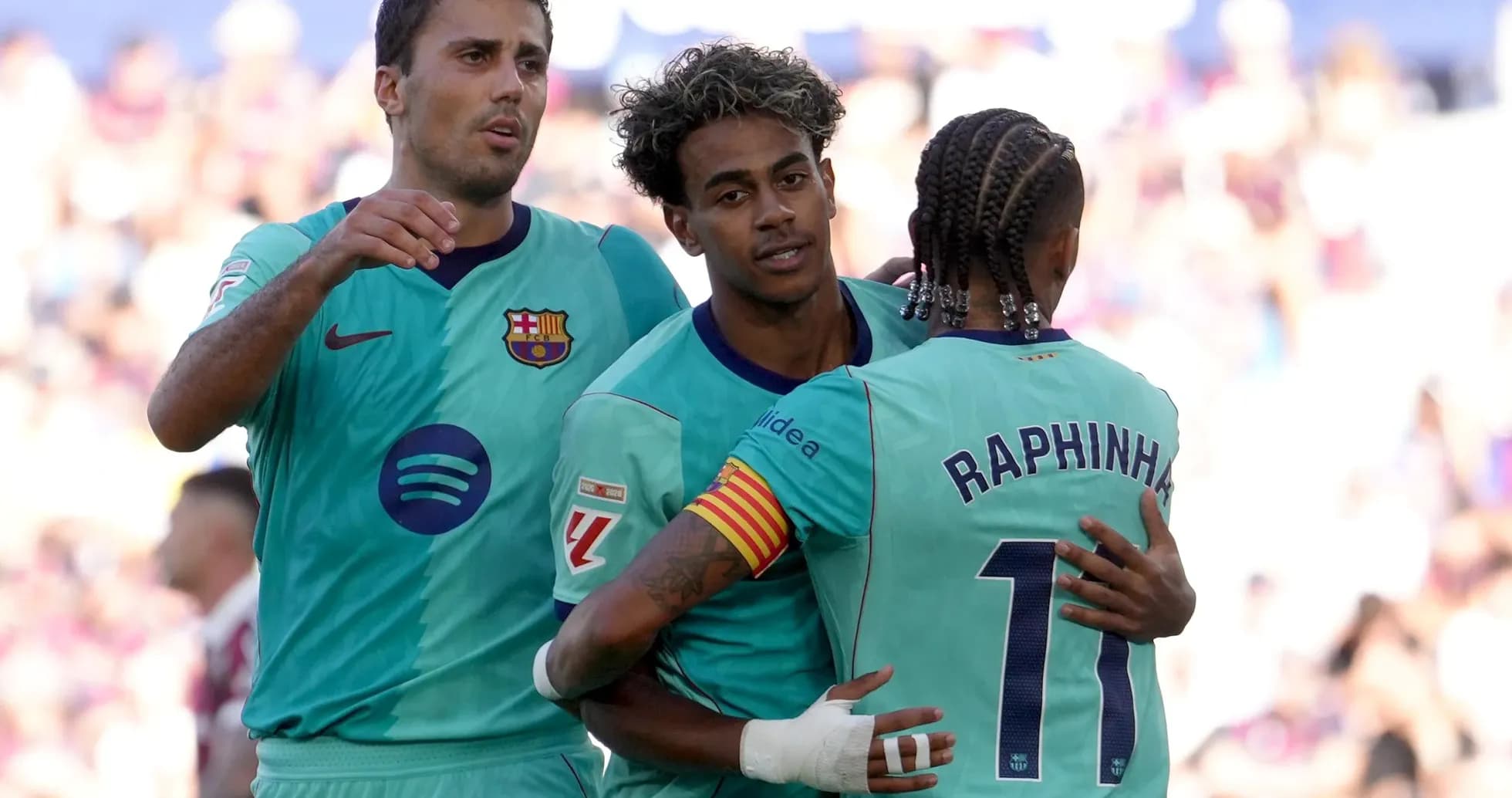
Hansi Flick’s Barcelona arrived in their now-familiar 4-3-3, but with a distinctly modern twist. J. Garcia started in goal, shielded by a back line of E. Garcia, P. Cubarsi, G. Martin and X. Espart. In midfield, Fermín, Rodri and Pedri offered a three-pronged engine: energy, balance and control. The front three – Lamine Yamal, Raphinha and A. Gordon – were less a line than a constantly morphing triangle, interchanging positions and reference points.
Heading into this game, the statistical backdrop made the task facing Levante brutally clear. Overall, Levante had scored 7 and conceded 9, a goal difference of -2. At home, however, they were wild and volatile: 7 goals scored and 6 conceded in just 2 matches, an average of 3.5 goals for and 3.0 against at the Estadio Ciudad de Valencia. This is not a side that plays in half-measures in front of their own fans. Yet that chaos met a Barcelona team that had turned efficiency into an art form: overall averages of 4.2 goals scored and 0.8 conceded per match, including 4.7 scored and just 0.7 conceded on their travels.
Injury absences shaped the tactical voids on both sides. Levante were without K. Etta Eyong and A. Primo, both ruled out, thinning Castro’s options for rotation and late-game energy, especially in wide and advanced areas. Barcelona, for their part, travelled without R. Bardghji and the influential F. de Jong, the latter’s knee injury removing one of Flick’s most reliable tempo-setters and press resistors. It placed even greater responsibility on Pedri and Rodri to knit Barcelona’s phases together.
Defensively, Levante’s profile hinted at the knife-edge they walk. Overall, they had yet to keep a clean sheet at home, conceding 6 in 2 matches there, and 9 overall in 5 games, an average of 1.8 goals conceded per match. Their yellow card distribution suggested a team that often finds itself firefighting late: 20.00% of their cautions coming in each of the 31–45, 46–60, 61–75 and 76–90 minute windows, plus another 20.00% in added time up to 105 minutes. This is a side that grows stretched as matches wear on, and that tendency would be ruthlessly tested by a Barcelona team whose physical and technical levels rarely dip.
Barcelona’s discipline profile told a different story. Their yellow cards clustered in the middle of matches: 20.00% between 16–30 minutes and a heavy 60.00% between 46–60. Flick’s team tend to tighten the screw after half-time, pressing high and aggressively, and they accept the bookings that come with that intensity. Crucially, they had yet to see a red card in the league.
The “Hunter vs Shield” duel in this fixture was almost unfair on paper. Levante’s most dangerous attacking reference, R. Brugue, came into the round with 3 league goals from midfield, 11 shots (5 on target) and a 7.07 average rating. His energy and timing from the left side of Levante’s four made him their primary threat between the lines. But he was up against a defensive unit that had conceded only 4 goals overall, with X. Espart in particularly impressive form: 20 tackles and 7 interceptions in 5 appearances, plus 2 assists from full-back. Espart’s duel with Brugue promised to define Levante’s ability to transition from deep defending into meaningful attacks.
At the other end, Barcelona’s hunters were almost overqualified. Raphinha, with 6 goals and 3 assists already, and Lamine Yamal, also on 6 goals, formed a double spear. Raphinha’s 11 shots with 9 on target, and Lamine’s 20 shots with 11 on target, underlined how relentlessly they test goalkeepers. A. Gordon, leading La Liga in assists with 4, added the subtlety: 7 key passes and 13 successful dribbles made him the connector, drifting inside from the left to overload central zones.
In the engine room, Fermín’s emergence gave Barcelona a different flavour. With 4 goals, 2 assists, and 1 blocked shot to his name, he blends late box arrivals with real defensive output. His battle with H. Sotelo and J. A. Olasagasti was the game’s hidden hinge: if Fermín could ghost beyond Levante’s midfield line, the back four would be exposed repeatedly to three-versus-four or worse against Barcelona’s forwards.
Levante’s season-long tactical story is one of structural searching. They had already used three different formations – 4-1-4-1, 4-2-3-1 and now 4-4-2 – in their first five matches. The shift to a two-striker system here was a gamble to pin Barcelona’s centre-backs and prevent them from stepping into midfield. But it also risked leaving Sotelo and Olasagasti outnumbered three-against-two against Fermín, Rodri and Pedri, particularly in Barcelona’s favoured post-interval surge when their yellow card profile shows how aggressively they attack games between 46–60 minutes.
From a statistical prognosis standpoint, the trends pointed overwhelmingly towards a high-event contest tilted Barcelona’s way. Levante’s home matches averaged 6.5 total goals (3.5 for, 3.0 against), while Barcelona’s away fixtures produced 16 goals in 3 games, with 14 for and just 2 against. Barcelona had converted both of their penalties this season with 100.00% efficiency, underlining their ruthlessness in big moments, while Levante had yet to win or take a spot-kick.
Yet within that apparent inevitability lay the emotional core of Levante’s approach. This is a team that, despite their defensive frailty, refuses to abandon ambition at home. With P. Ratkov and D. Requena stretching the pitch, Brugue attacking the half-spaces and V. Garcia pushing on from the right, Levante sought to turn the game into the kind of open, chaotic contest where their volatility could unsettle even the league leaders.
Barcelona, by contrast, arrived as a machine in motion: perfect record, multi-layered attacking threats, and a defensive structure that had already delivered 3 clean sheets overall. The tactical preview wrote itself: if Levante could survive Barcelona’s mid-game storm and keep the scoreline within reach, their wild home scoring record gave them a puncher’s chance. But every metric, every pattern of form, and every individual matchup suggested that the league leaders would impose their rhythm, turn the chaos into choreography, and leave Valencia still flawless at the summit.