Atletico Madrid's Victory Over Real Madrid: A Statement of Identity
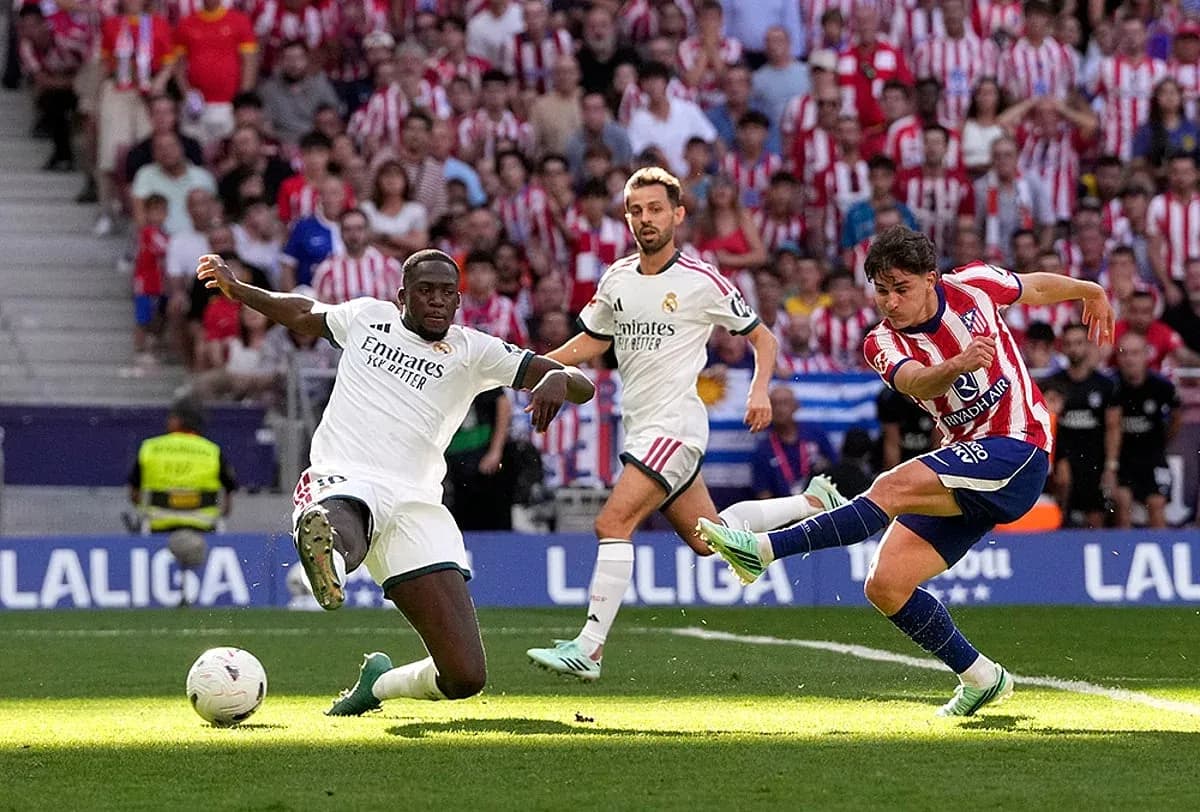
Under the late‑afternoon glare at the Riyadh Air Metropolitano, Atletico Madrid’s 2–1 victory over Real Madrid felt less like an upset and more like a statement of identity. In a La Liga season where both clubs arrived as free‑scoring contenders, this derby became a referendum on structure versus chaos, on rehearsed mechanisms versus individual brilliance. Over 90 minutes, Diego Simeone’s 4‑4‑2 out‑thought José Mourinho’s 4‑2‑3‑1, and the league table now reflects it: Atletico sit 2nd with 16 points and a goal difference of 9, while Real Madrid drop to 4th on 15 points and a goal difference of 10.
The season’s DNA for both sides was clear heading into this game. Atletico, with 16 goals for and 7 against overall, have married a ruthless cutting edge with a disciplined back line. At home they have been particularly unforgiving: 10 goals scored and only 3 conceded across 4 league matches, an average of 2.5 goals for and 0.8 against. Real Madrid arrived as the division’s most explosive attack, 18 goals in total from 7 matches, averaging 4.0 goals at home but a more modest 1.5 on their travels. Away from the Bernabéu, they had already conceded 6, a vulnerability that Atletico’s front line were primed to exploit.
Simeone’s lineup told its own story. Jan Oblak anchored a back four of Marc Pubill, C. Romero, Dávid Hancko and Álex Grimaldo, a unit built for both aerial duels and aggressive stepping into midfield. In front, a flexible band of four – G. Simeone, Marcos Llorente, J. Cardoso and Álex Baena – was less a flat line than a shifting net, compressing space around Real’s creators. Up front, Lee Kang‑In and Jonathan David formed an atypical strike pair: one a roaming technician between the lines, the other a penalty‑box predator whose 3 league goals from only 160 minutes hinted at ruthless efficiency.
Across the divide, Mourinho’s Real Madrid stuck to their season‑long template: Thibaut Courtois behind a back four of Denzel Dumfries, Ibrahima Konaté, D. Huijsen and Marc Cucurella; a double pivot of Fede Valverde and Aurélien Tchouaméni; and a glittering line of three – Arda Güler, Jude Bellingham, Vinícius Júnior – supporting Kylian Mbappé. On paper, it is a structure designed to pin opponents deep and overwhelm them with rotations and one‑v‑one quality. But away from home, where Real had already lost twice and conceded 1.5 goals per match, the balance between adventure and control has been fragile.
Injuries and absences quietly reshaped both squads’ tactical options. Atletico were without P. Barrios and A. Sorloth, both missing with muscle injuries. Barrios’ absence reduced Simeone’s options for a third central midfielder to lock down the middle if the game turned chaotic. Sorloth’s physical presence would have offered a more direct out‑ball against Real’s high line; in his absence, the onus fell on David’s movement and Lee’s ability to receive under pressure.
Real Madrid’s missing trio was even more consequential. Eder Militao’s hamstring injury removed their most dominant box defender, forcing Mourinho to persist with the Konaté–Huijsen axis. Ferland Mendy’s hip problem meant Cucurella started at left‑back, a technically secure but less defensively imposing option against Atletico’s wide runners. Rodrygo’s knee injury deprived Real of a vertical threat off the bench, narrowing Mourinho’s attacking variations once the starting structure began to fray.
The disciplinary backdrop added another layer of tension. Atletico’s season card profile shows yellow cards spread across the match, but with a notable 30.77% spike between 31–45 minutes and a late‑game red‑card flashpoint between 76–90 minutes. Real Madrid, by contrast, cluster 25.00% of their yellows in both the 46–60 and 61–75 minute windows, and have already seen a red in the 46–60 period. D. Huijsen’s league‑leading red card and Konaté’s 3 yellows underline a back line that defends on the edge. In a derby where Atletico habitually raise the intensity after the break, those numbers foreshadowed exactly the kind of storm Real’s centre‑backs would have to survive – and ultimately did not.
Hunter vs Shield
Within that storm, the “Hunter vs Shield” duels defined the narrative. Mbappé entered as La Liga’s most devastating finisher, with 7 goals and 2 assists, 32 shots (22 on target), and a penalty record of 1 scored, 1 missed. His battle was twofold: against Atletico’s collective defensive record – only 7 conceded overall, 3 at home – and against the individual nous of Romero and Hancko. Simeone’s plan was clear: compress the central lane with Cardoso and Llorente, force Mbappé to receive with his back to goal, and trust Romero’s aggression to deny him the turn. Oblak’s presence behind a line that already averages only 1.0 goal conceded overall further tilted the odds.
On the other side, Atletico’s own “Hunter” was Álex Baena, whose 4 goals and 1 assist from midfield, coupled with 14 key passes, have made him the creative heartbeat. His duel was with Tchouaméni and Valverde, Real’s “Shield”. Yet Real’s away defensive numbers – 6 goals conceded, an average of 1.5 per match – suggested that Baena’s late arrivals and half‑space drifting could find seams, especially with G. Simeone’s relentless off‑ball work (15 tackles, 6 interceptions, 2 assists) dragging markers into uncomfortable zones.
Engine Room
The “Engine Room” confrontation between Bellingham and Atletico’s central trio was just as decisive. Bellingham’s 3 goals, 2 assists, 17 key passes and 83 duels contested speak to a midfielder who drives Real’s entire attacking rhythm. Simeone’s response was to build a triangle of Cardoso’s positional discipline, Llorente’s running power and Baena’s pressing intelligence around him. Deny Bellingham’s turn, and Real’s front line is starved; allow him to face forward, and Mbappé and Vinícius become unmanageable.
Statistically, the pre‑match balance tilted subtly towards Atletico once context is applied. Overall, Real Madrid had scored more (18 vs Atletico’s 16), but Atletico’s home attacking average of 2.5 goals, married to only 0.8 conceded, contrasted sharply with Real’s away profile of 1.5 scored and 1.5 conceded. Atletico’s 3 clean sheets overall against Real’s single shut‑out, plus the visitors’ 50.00% penalty conversion with one miss already on the ledger, hinted at a side more likely to blink under pressure.
The 2–1 scoreline, then, felt like the logical end point of those intersecting trends. Atletico’s structure, their home ferocity, and their capacity to suffocate elite individuals overcame Real Madrid’s star power and away‑day volatility. Following this result, Simeone’s side look every inch a sustainable title contender; Mourinho’s Madrid remain a terrifying attacking machine, but one whose defensive seams – especially on their travels – will continue to invite precisely the kind of calculated ambush they suffered in this derby.