Barcelona's Five Captains for 2026-27 Season: A Shift in Leadership
Barcelona have confirmed their five captains for the 2026-27 season – and the list says as much about the club’s identity as it does about its hierarchy.
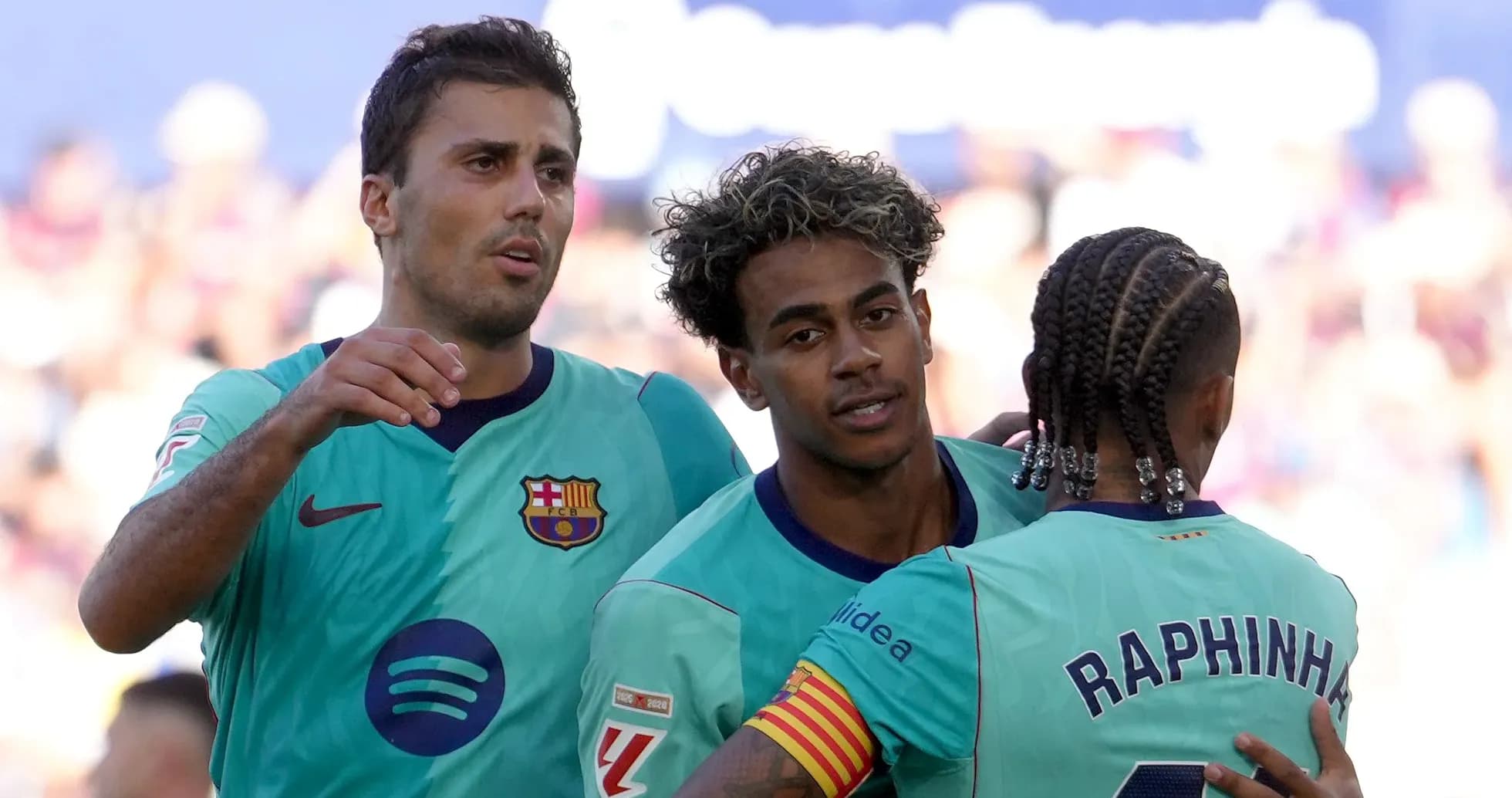
Hansi Flick has already shown he is not afraid to tweak tradition. The German coach personally installed Raphinha and Pedri as his two primary leaders, a clear statement that the dressing room will revolve around their energy and influence. The remaining three armband roles went to a squad vote, with Eric Garcia, Frenkie de Jong and Lamine Yamal emerging from the ballot.
Yamal’s inclusion jolted plenty of observers. Nineteen years old. Still at the start of his story. Yet now officially one of the faces of the Barcelona dressing room. The shock grew louder when set against the name missing from the list: Rodri.
Barcelona paid €76.5m (£65.3m) to prise him from Manchester City in the summer. He arrived as Spain’s World Cup-winning captain, a midfielder who has spent years dictating games at the highest level and marshalling some of the sport’s biggest egos. On paper, he looks like a captain in waiting. In most squads, he would already be wearing the armband.
But this is Barcelona, and the rules inside that room are different.
According to The Athletic, the players’ vote leans heavily on club seniority rather than total career mileage. Time at Camp Nou counts. Yamal, for all his youth, has been part of the first-team setup for three seasons. Rodri only walked through the door in mid-August. The message from the group is clear: the armband belongs first to those who have grown up in the building.
That has not stopped Rodri from taking control in other ways.
His first start under Flick, against Valencia, underlined why Barcelona moved so aggressively to sign him. Flick did not hide his satisfaction. “We’re pleased to have Rodri in our team,” he told reporters. “You can also see everything he does with the ball, everything he does on the pitch. It makes sense. He gives the team structure in attack with the ball, but also without it.”
The structure was obvious. Rodri anchored attacks, closed spaces, and stitched together moves with the calm of a player who has been here a decade, not a month.
His voice has carried even when he has not been on the pitch. During Barcelona’s 5-0 demolition of Valencia, television cameras picked up a blunt assessment from the bench as he spoke to Pau Cubarsi: “They’re really weak, they haven’t got past the halfway line.” It was the kind of unfiltered, competitive edge that rarely stays private in the modern game.
Once he realised those words had gone public, his response showed the other side of his leadership. Rodri picked up the phone and personally called Valencia captain Jose Gaya to apologise. He then issued a public statement after Barcelona’s Champions League win over Feyenoord, fronting up and closing the issue before it could fester.
No armband. Plenty of authority.
Inside the club, staff already see him as a reference point for the next generation. Nineteen-year-old defensive midfielder Marc Bernal has gravitated towards him, and not by accident. The pair have started to share minutes, Bernal stepping on alongside the former City lynchpin in recent wins over Feyenoord and Levante. For a teenager learning one of the game’s most demanding roles, there are few better guides than the man who just lifted the World Cup as Spain’s captain.
The reality is that the Barcelona captaincy has always been about more than medals. It is about years in the shirt, scars from defeats, memories from La Masia, and the slow accumulation of trust in that room. On that front, Rodri is still at the beginning. The relationships, the institutional weight, the sense of “belonging” that underpins the armband – those things cannot be bought in a single transfer window.
What he does bring, instantly, is gravitas. A voice that carries. A standard that others must meet.
That presence will be tested brutally in the coming weeks. Barcelona are staring at a 12-day gauntlet that could shape their season and define Flick’s early months in charge. Galatasaray away, with all the noise and hostility that trip guarantees. Real Betis on the road, never a gentle assignment. Then Paris Saint-Germain, with their own ambitions and their own superstars.
And then, the storm at the end of the run: El Clasico.
Real Madrid come to Camp Nou on October 25, a date already circled in red. The fixture always crackles, but for Rodri it carries an extra charge. Madrid, under Jose Mourinho, once pushed hard to bring him to the Bernabeu. He turned them down and chose Barcelona instead.
He will not wear the armband when the teams walk out that night.
He may not need it to look – and sound – like Barcelona’s leader.