Australia 2-0 Türkiye: Match Report and Tactical Analysis
Australia 2-0 Türkiye at BC Place in Vancouver, a result that puts Australia on 6 points with a perfect record and a +4 goal difference at the top end of Group D contention, while Türkiye remain on 0 points with a -4 goal difference and serious work to do to stay alive in the World Cup group stage.
Match Report
On 27', Australia struck first. Australia goal — Nestory Irankunda (assisted by Paul Okon-Engstler) finished a rare early break to make it 1-0, punishing Türkiye’s high defensive line.
At half-time, Türkiye looked for more incision in the final third. On 46', Kenan Yıldız replaced Barış Alper Yılmaz (Türkiye), adding an extra creative threat between the lines.
Australia responded with fresh legs on the flank. On 61', Nishan Velupillay replaced Nestory Irankunda (Australia), maintaining the outlet on the right while preserving Irankunda after his high-intensity first hour.
Türkiye continued to chase control in midfield. On 62', Yunus Akgün replaced Orkun Kökçü (Türkiye), a like-for-like attacking midfield change aimed at increasing penetration against Australia’s low block.
Australia then rotated their central striker. On 74', Tete Yengi replaced Mohamed Touré (Australia), providing a more physical focal point to hold up clearances under heavy pressure. In the same minute, Jason Geria replaced Jacob Italiano (Australia), a defensive full-back swap to shore up the right side against Türkiye’s growing volume of attacks.
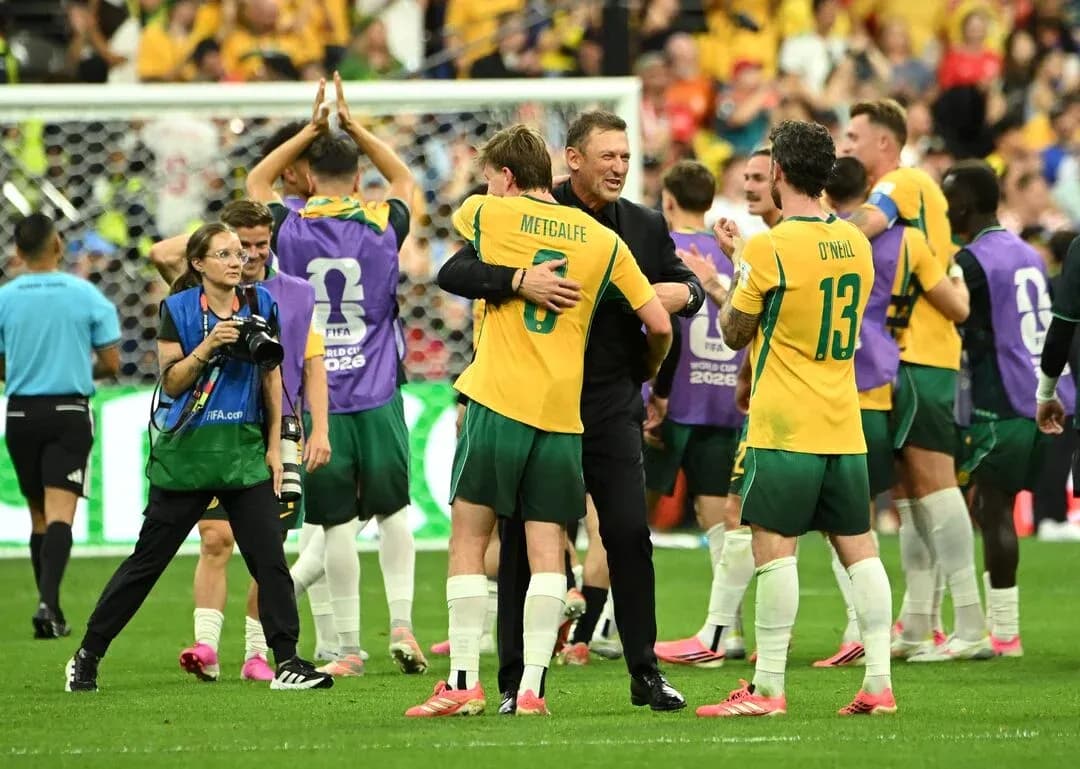
Australia doubled their lead moments later. On 75', Australia goal — Connor Metcalfe (unassisted) drove forward and finished a second-phase situation from outside the box, a solo effort that pushed the scoreline to 2-0 and gave Australia critical breathing room.
Türkiye turned again to their bench on 81', seeking fresh energy in midfield and at right-back. Salih Özcan replaced İsmail Yüksek (Türkiye), adding passing range from deep, while Mert Müldür replaced Zeki Çelik (Türkiye) to offer more attacking thrust down the flank.
Australia continued to lock down the result on 84'. Aziz Behich replaced Jordan Bos (Australia), reinforcing the left side with experience, and Jackson Irvine replaced Paul Okon-Engstler (Australia), adding height and defensive work-rate in central midfield for the closing stages.
On 85', Türkiye made their final attacking roll of the dice as Deniz Gül replaced Kerem Aktürkoğlu (Türkiye), introducing a fresh forward to attack crosses and second balls in the box.
The frustration of Türkiye’s dominance without reward surfaced late. On 86', Yunus Akgün (Türkiye) — yellow card (Roughing) — was booked after a late challenge as Australia continued to disrupt rhythm and run down the clock, and the match closed with Australia preserving their 2-0 advantage.
Fixture Statistics & Tactical Audit
- xG: Australia 0.77 vs 1.33 Türkiye
- Possession: Australia 28% vs 72% Türkiye
- Shots on Target: Australia 4 vs 8 Türkiye
- Goalkeeper Saves: Australia 8 vs Türkiye 2
- Blocked Shots: Australia 1 vs 12 Türkiye
The scoreline flattered Australia relative to the underlying numbers. Türkiye were dominant in territory and circulation (72% possession, 707 passes at 90% accuracy) and generated the higher xG (1.33 vs 0.77) with 30 total shots and 8 on target. Australia’s approach was compact and reactive: a deep 5-4-1 block that conceded volume but protected central spaces, reflected in Türkiye’s high count of blocked shots (12) and many efforts from distance. Australia were clinical in transition (2 goals from 4 shots on target, xG 0.77) and maximised their few attacking moments, while their goalkeeper and last line absorbed sustained pressure (8 saves, 1 blocked shot) to preserve the clean sheet. On balance, a draw would have been more in line with the shot quality profile, but Australia’s execution in both boxes decided the contest.
Standings Update & Seasonal Impact
Australia entered the night on 3 points, 2 goals scored and none conceded. This 2-0 win moves them to 6 points, 4 goals for and 0 against, for a new goal difference of +4. That tally consolidates their position near the top of Group D and puts them firmly on course for the Round of 32, with a strong defensive record giving them margin for error in the final group fixture.
Türkiye started with 0 points, 0 goals scored and 2 conceded. Defeat here keeps them on 0 points, with their goals for still at 0 and goals against rising to 4, leaving a new goal difference of -4. They remain in the lower half of the Group D standings and now face a must-win scenario in their remaining group matches, likely needing both victory and help elsewhere to recover their qualification hopes.
Lineups & Personnel
Australia Starting XI
- GK: Patrick Beach
- DF: Jacob Italiano, Alessandro Circati, Harry Souttar, Cameron Burgess, Jordan Bos
- MF: Connor Metcalfe, Aiden O'Neill, Paul Okon-Engstler, Nestory Irankunda
- FW: Mohamed Touré
Türkiye Starting XI
- GK: Uğurcan Çakır
- DF: Zeki Çelik, Merih Demiral, Abdülkerim Bardakcı, Ferdi Kadıoğlu
- MF: İsmail Yüksek, Hakan Çalhanoğlu, Arda Güler, Orkun Kökçü, Barış Alper Yılmaz
- FW: Kerem Aktürkoğlu
Post-Match Verdict
Australia’s game plan was pragmatic and efficient. In a low-possession, counter-attacking setup (28% possession, 270 passes), they prioritised compactness in a back five, funnelling Türkiye into low-probability shooting zones (30 shots conceded but xG only 1.33, with 12 efforts blocked). Their attacking play was clinical relative to volume (2 goals from 9 total shots and 0.77 xG), with Irankunda’s timing in transition and Metcalfe’s individual strike exemplifying their emphasis on quick, vertical breaks.
Türkiye, by contrast, produced a dominant but ultimately sterile performance in terms of end product. They controlled the ball and territory (72% possession, 707 passes, 90% accuracy) and consistently worked shooting positions (30 shots, 8 on target), yet lacked the incisiveness and variation to break down Australia’s set block. The high number of blocked attempts (12) underlines a predictable shot profile, with too many efforts coming through traffic rather than from clear, disorganising moves. Defensively, they were vulnerable in transition at key moments (2 goals conceded from just 4 shots on target faced), and that imbalance between territorial control and box management turned a statistically strong display into a damaging defeat.