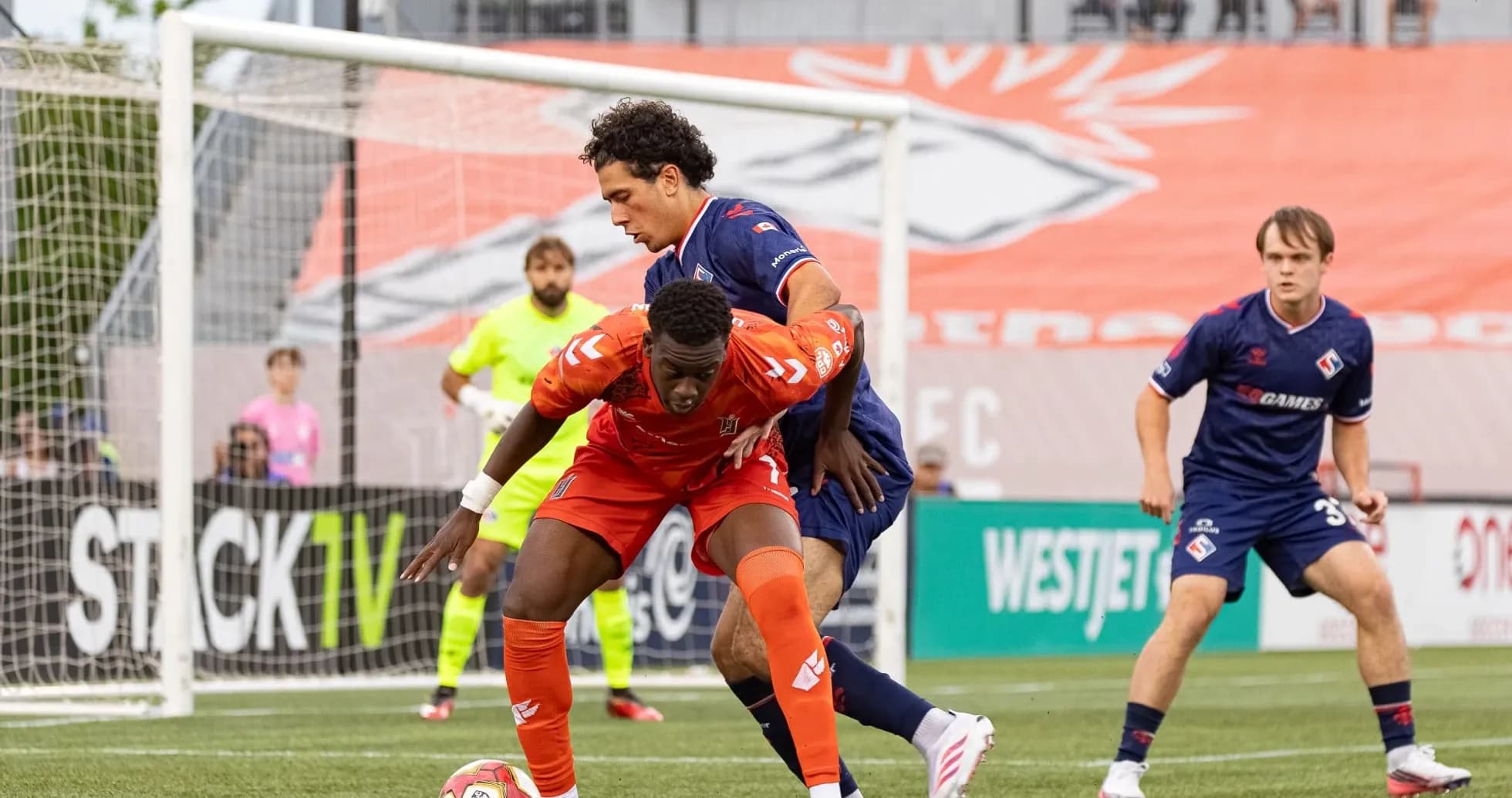
Atlético Ottawa Overcomes York United in Canadian Premier League Clash
Under the Friday night lights at TD Place Stadium, this Group Stage meeting in the Canadian Premier League delivered both a storyline and a statement. Atlético Ottawa, third in the table heading into this game with 33 points and a perfectly balanced overall goal difference of 0 (34 scored, 34 conceded), overturned a half-time deficit to beat York United 2–1, underlining why they remain one of the league’s most imposing home sides. York arrived in seventh with 18 points and a fragile overall goal difference of -15 (22 for, 37 against), and left with their season narrative unchanged: competitive in moments, but repeatedly undone by structural frailty.
I. The Big Picture – contrasting identities
The scoreline mirrors the season-long profiles. At home, Atlético Ottawa are a front-foot, high-yield side: 7 wins from 10, with 21 goals scored and 13 conceded. Their home averages of 2.1 goals for and 1.3 against speak to a team that embraces risk but usually bends the game to its terms. York, by contrast, have been far more cautious and less effective on their travels: just 1 away win in 9, with 7 goals scored and 18 conceded, averaging 0.8 goals for and 2.0 against away from home.
Those macro numbers framed the tactical tone. Mauro Eustaquio’s York were always likely to arrive with a compact, reactive block, leaning on transition and set plays. Drew Beckie’s Ottawa, meanwhile, have used a mix of back-three and back-four systems this season (notably 3-4-3 and 3-4-2-1) to flood advanced zones with technical attackers like B. Tabla, N. Fleuriau Chateau and G. Antinoro. The 0–1 half-time scoreline felt like York’s game, but the 2–1 full-time result felt like Ottawa’s season.
II. Tactical voids and discipline
Neither side’s absentees list is detailed in the data, so the focus shifts to who was present and what that meant structurally. Ottawa’s starting XI, with C. Kalongo in goal and a spine featuring D. Aguilar, M. Aparicio and the young creators around them, was built to dominate territory. The presence of both K. Habibullah and B. Tabla from the start, alongside G. Antinoro and N. Fleuriau Chateau, suggested a clear plan: overload the half-spaces, drag York’s back line into constant lateral decisions, and attack second balls around the box.
Ottawa’s disciplinary profile this season is a double-edged sword. Their yellow cards cluster heavily late: 36.36% of their cautions arrive between 76–90 minutes, with another 20.45% between 91–105. That late-game aggression can tilt tight matches in their favour by sustaining pressure, but it also courts chaos. The fact that G. Antinoro already carries a red card this season underlines the volatility in their press and counter-press. York, for their part, see 26.53% of their yellows between 61–75 minutes and 20.41% between 46–60, often when they are trying to reset games after half-time. It paints a picture of a team that struggles to recalibrate under pressure and resorts to tactical fouling.
III. Key matchups – Hunter vs Shield, Engine Room
The headline duel in attack belonged to B. Tabla against York’s brittle defensive record. Tabla’s league output – 5 goals and 1 assist, 16 shots with 10 on target, and a 7.11 average rating – makes him one of the most efficient forwards in the competition. His dribbling volume (19 attempts, 9 successful) and 18 fouls drawn mark him out as Ottawa’s primary “hunter”: the player who destabilises blocks and wins territory and set pieces.
York’s “shield” has been porous all season. Overall they concede 2.2 goals per match, with 37 allowed in 17 games, and on their travels that figure remains high at 2.0 goals conceded per away match. Against a home side averaging 2.1 goals scored at TD Place, the matchup tilted heavily towards Tabla and his fellow attackers. Even when York’s starting centre-backs like F. Sturing and O. Leon defended the box bravely, the cumulative pressure eventually told.
In the engine room, M. Aparicio and D. Aguilar offered contrasting but complementary roles for Ottawa. Aparicio’s season numbers – 562 passes with 11 key passes, 22 tackles, 4 blocks and 17 interceptions – describe a metronome who also disrupts. His 5 yellow cards show he walks a fine disciplinary line, but his ability to sustain Ottawa’s tempo was vital in turning the game around. Aguilar, with 441 passes at 85% accuracy and 18 tackles, adds vertical progression and bite. Together, they allowed Ottawa to compress the pitch, pinning York’s midfielders like C. Guzman and S. Yeates deep and starving the forwards of clean service.
For York, creativity flowed through B. Badibanga. With 3 assists, 10 key passes and 12 fouls drawn in just 295 minutes, he is their most incisive provider. His duel with Ottawa’s aggressive midfield screen was crucial; when he found pockets between the lines, York looked capable of striking, as they did in the first half. But as the match wore on and Ottawa’s territorial control grew, Badibanga was forced deeper, blunting his influence.
Up front, York’s theoretical spearhead, T. Skublak, did not feature in the starting XI but looms large in any squad analysis. His 4 goals and 1 assist, combined with 66 duels contested and 6 yellow cards, paint him as a combative focal point. Without him on the pitch from the start, York lacked a reliable outlet to relieve pressure and hold the ball high, a key reason why their early lead could not be protected.
IV. Statistical prognosis – why the game broke Ottawa’s way
From a probabilistic standpoint, this fixture always leaned towards an Ottawa win. At home they have 7 victories in 10, with only 1 defeat, and they have failed to score at TD Place just once all season. York, away from home, have only 1 win in 9 and have failed to score twice. Ottawa’s overall averages of 1.7 goals scored and 1.7 conceded per match, combined with York’s 1.3 scored and 2.2 conceded overall, suggest a game with chances at both ends but with the home side more likely to edge the xG battle.
Ottawa’s penalty record adds a note of intrigue. They have won 4 spot-kicks this season, scoring 2 and missing 2 – a 50.00% conversion rate that is far from clinical. Any future meeting between these sides will keep that in mind: Ottawa are adept at forcing fouls in the box, but not automatic from the spot. York, meanwhile, have yet to take a penalty this campaign; their penalty tally is 0, with 0 scored and 0 missed.
Following this result, the deeper story is less about a single comeback and more about entrenched identities. Ottawa, with their layered attacking talent in Tabla, N. Fleuriau Chateau, E. García, J. Assi and the creative depth of K. Habibullah and J. Coulanges from the bench, look built for sustained top-three contention. York, despite bright individual pieces like Badibanga, S. Gonzales and the absent-but-influential Skublak, remain a side whose defensive structure and away form undermine their attacking promise.
On this night at TD Place, the numbers and the narrative aligned: the hunter overwhelmed the shield, and the league’s third-placed side played exactly like it.