Arsenal Faces Manchester City in Community Shield Showdown
Arsenal have spent the summer answering the same question in different forms: after 22 years of waiting, three straight near-misses and finally a 14th league title, what comes next? Not tactically. Emotionally.
They staggered over the line last season, bodies and minds drained. Declan Rice looked spent by the time the World Cup came around. Bukayo Saka flickered rather than burned. William Saliba left that tournament with a back injury and a reminder of the toll taken. The title was a triumph of endurance as much as quality. Now comes the awkward sequel.
The weeks after a World Cup are always strange. Legs are heavy, pre-seasons are staggered, and managers are forced to knit together squads at different stages of readiness. This year feels stranger still. Nine of the 20 Premier League clubs have changed manager. For the first time in four decades, none of the defining figures of the Premier League era – Sir Alex Ferguson, Arsène Wenger, José Mourinho, Jürgen Klopp or Pep Guardiola – will be on the touchline.
The league has lost its old giants. What remains is a landscape full of unknowns. Even at Arsenal.
Mikel Arteta is now the longest-serving manager in the division, which says as much about the rest of the league as it does about him. He has his title, his authority, his project. He also has a squad that has emptied itself to get over the line, and a fanbase that will no longer accept “nearly” as part of the journey. A slow start would surprise nobody. It might still cause a minor panic.
City after Guardiola
On the other side of Sunday’s Community Shield stand Manchester City, who somehow managed to be disappointed by the last two seasons. By their standards, they were. The football dulled, the aura dimmed, the trophies did not arrive in the usual stack. Now Guardiola has gone and the decade-long reference point has vanished.
Into that vacuum steps Enzo Maresca, who looks and coaches like a Guardiola disciple because he is one. The shape, the spacing, the obsession with control – all familiar. Yet the questions around him are real.
He took Leicester up and lifted the Europa Conference League and Club World Cup with Chelsea, but neither fanbase fell in love with the football. Leicester got the job done but grumbled about the style. Chelsea’s squad was wildly unbalanced and undeniably worsened after he left, but it was never obvious he was squeezing everything from what he had.
So City arrive at Wembley with a new man on the touchline and a fanbase trying to work out whether this is evolution, imitation or something less flattering.
What the Community Shield really tells you
The Community Shield will not decide anything. It rarely does. It is a curtain-raiser, a photo opportunity, a chance to see who has remembered their lines and who is still fumbling through rehearsals.
Recent history is clear enough: no winner of the Community Shield has gone on to win the Premier League since 2018. If you want omens, it is more anti-bellwether than launchpad. Its real value tends to be in the flaws it exposes, the hairline cracks that widen months later.
Sometimes its importance is only obvious with hindsight. The 1974 brawl between Kevin Keegan and Billy Bremner told a story that took time to decode – Keegan’s discomfort after Bill Shankly’s retirement, and the deeper rot at Leeds under Brian Clough after Don Revie. The game became a snapshot of two clubs in emotional turmoil.
Or take José Mourinho in 2015. He turned up for the Community Shield unshaven, in tracksuit bottoms and a baggy T-shirt, then suffered his first defeat to Wenger. It looked odd at the time. It became a prelude to the chaos that engulfed Chelsea and ended with his sacking that December.
Last year’s Shield – Crystal Palace beating Liverpool on penalties after a 2-2 draw – carried similar warning signs for Arne Slot’s side. Mohamed Salah looked out of sync with the rest of the front line. The defence creaked. Liverpool twice let leads slip. All of it felt like pre-season rust, the kind you brush off. It turned out to be something deeper.
The problem, as always, lies in the separation: what is just incomplete preparation, and what is a structural flaw that will still be there in October?
Arsenal’s moving parts
There are fewer obvious questions this time, but a handful of intriguing ones. Arsenal’s midfield, for a start.
Bruno Guimarães came off the bench in Wednesday’s friendly against Como and could feature at Wembley, likely alongside Myles Lewis-Skelly. The 19-year-old has been one of the stories of Arsenal’s pre-season, stepping into a midfield temporarily stripped of Rice, Martín Zubimendi and Martin Ødegaard, all of whom were granted extended breaks after the World Cup.
Lewis-Skelly has been bright, bold and busy – and also linked with a move. That is why his celebration against Como felt loaded: a heart sign with his hands, then a tap of the badge. It might have been nothing more than a teenager enjoying his moment. It might have been a small statement.
On the left of Arsenal’s attack, the picture is less romantic and more practical. Leandro Trossard has gone, leaving a gap that needed filling. Morgan Rogers chose Chelsea. Vinícius Júnior stayed at Real Madrid. So Arsenal turned to Christos Tzolis, the 24-year-old Greece international from Club Brugge.
Sunday offers a first real look at how Tzolis fits into Arteta’s structure. Is he a rotation piece, a starter, or a bridge until another signing arrives? The left flank powered so much of Arsenal’s best football last season. If it stalls, the attack changes shape.
City’s midfield rebuild and the Rodri question
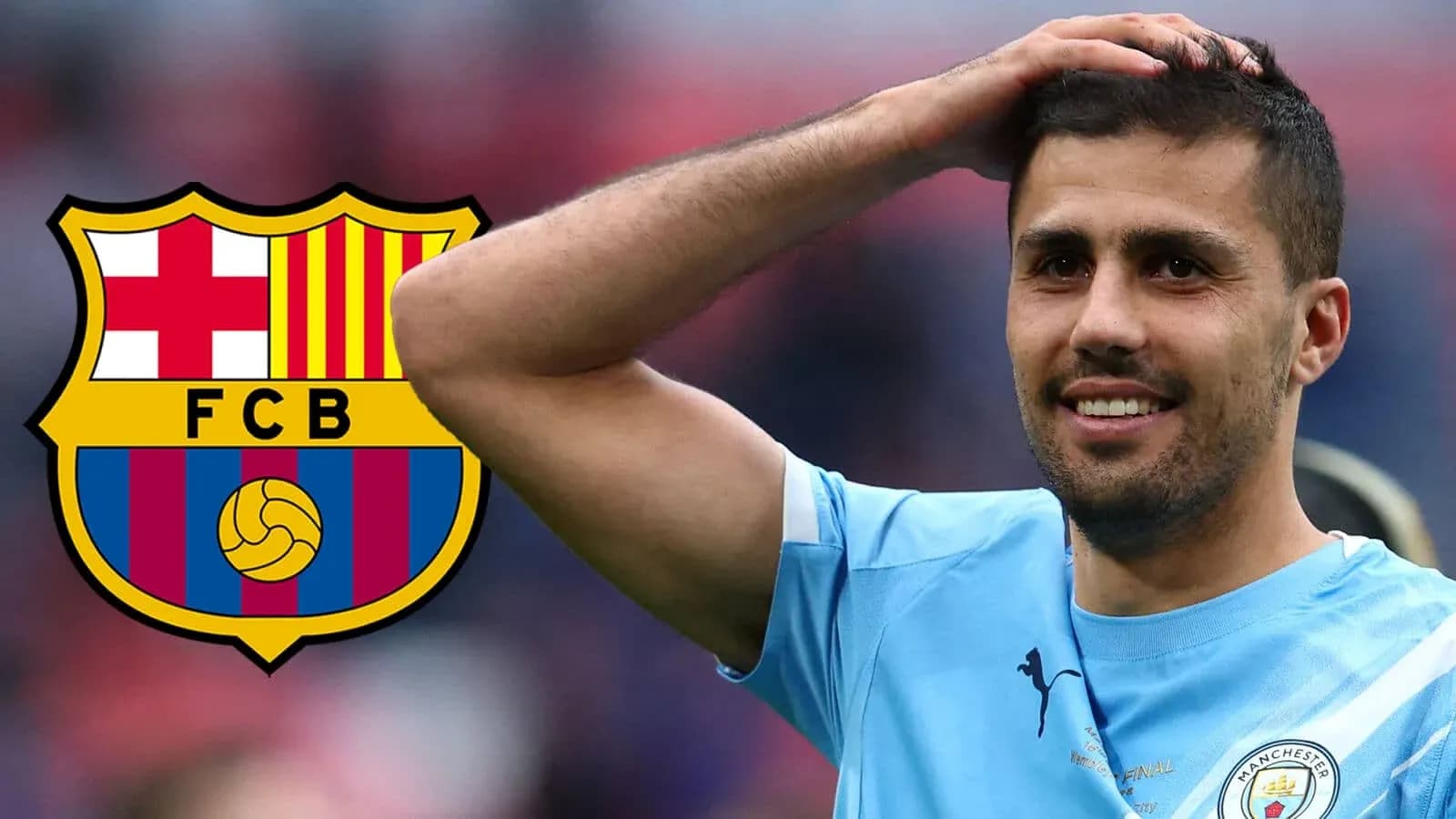
City’s biggest headache sits in the middle of the pitch. Rodri’s proposed move to Barcelona has yet to materialise, but it hangs over everything. If he goes, City lose the anchor around which their entire structure has revolved. If he stays, they still have a midfielder who knows he was ready to leave.
The uncertainty has stalled their own plans. Enzo Fernández is the preferred successor, a passer of rare range and vision. The doubt comes with his frame. Can City accommodate his comparative lack of physicality in the deepest role, even with the arrival of the more robust Elliot Anderson to offer ballast?
Around that pivot, the rest of City’s midfield is being pulled apart and reassembled. Tijjani Reijnders, who started friendlies against Inter and Atlético, is on his way to Al-Qadsiah. Bernardo Silva has joined Real Madrid. Two of Guardiola’s most trusted problem-solvers are gone, and with them a chunk of City’s rhythm and intelligence.
Phil Foden sits at the crossroads of that rebuild. Since being named player of the year in 2024, he has lost his edge, his form dipping just as the team needed a new leader. Maresca started him against Inter and Atlético, a clear hint that he sees Foden as central to what comes next. With others still working back from World Cup exertions, the next few weeks hand him a rare stretch of uncontested runway. It is a chance to reclaim the team, or to drift further from its core.
The quieter loss is John Stones. He started only 11 games across the past two seasons, so his departure will not rip up Maresca’s tactical plans. What it does is strip away a dressing-room voice, a presence who had lived through the full Guardiola cycle. Remove Stones, remove Silva, remove Guardiola himself, and the character of the squad inevitably shifts. The question is whether it hardens or hollows out.
A glimpse, not a verdict
So Sunday at Wembley becomes exactly what this fixture usually is: a glimpse. A look at what a post-title Arsenal feels like when the confetti has been swept away. A first public draft of Maresca’s City, built on Guardiola’s blueprint but forced to find its own personality.
The temptation will be to read too much into it. To turn a sluggish half into a crisis, or a sharp 30 minutes into a title prediction. The smarter play is to watch the details: who looks sharp, who looks unsure, where the ball naturally flows, where it refuses to go.
Because it is only the Community Shield. The real story starts later. But if this is the first page of a new chapter for both clubs, how many of the season’s plot twists are already hiding in plain sight?