Andrew Robertson on Trent Alexander-Arnold's Defensive Criticism
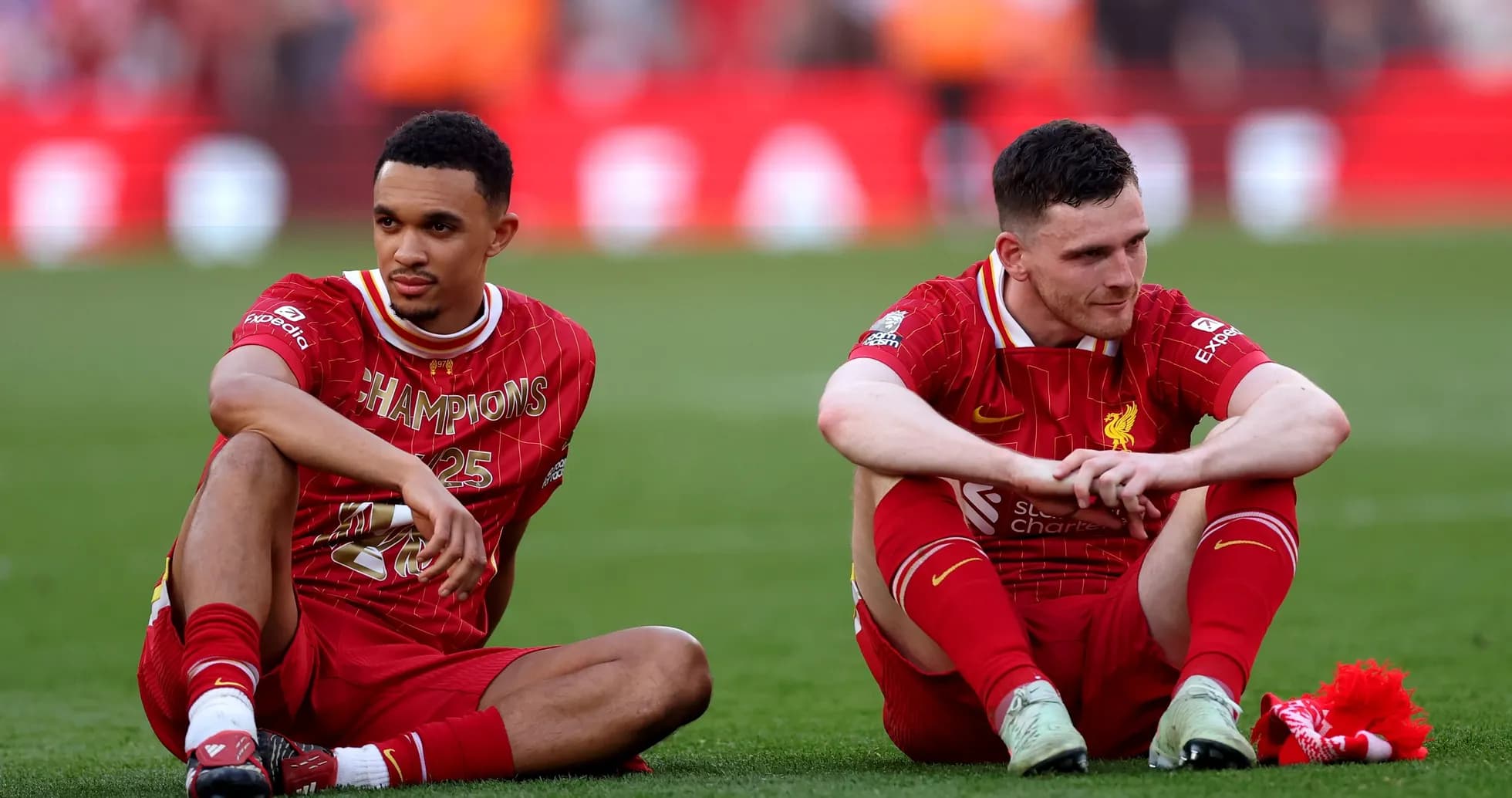
Andrew Robertson has lifted the lid on the reality behind Liverpool’s celebrated full-back axis – and why he believes Trent Alexander-Arnold has been unfairly targeted over his defending for almost his entire career.
Under Jurgen Klopp, the pair helped redefine what it meant to be a modern full-back. They racked up assists, drove Liverpool to a Champions League title in 2019 and a Premier League crown the following year, and turned the flanks at Anfield into a production line for goals.
Yet while both tormented opposition defences, Robertson says the scrutiny at the other end of the pitch fell almost entirely on one side.
‘I started to feel sorry for him’
Speaking on The Overlap, the current Tottenham defender laid out a tactical picture that will sound familiar to anyone who watched Liverpool at full throttle.
On the left, Robertson had Sadio Mane. Relentless, aggressive, always willing to sprint 60 yards back and snap into a tackle if his full-back missed one.
On the right, Alexander-Arnold had Mohamed Salah – one of the world’s deadliest forwards, whose job was to stay high, threaten in behind and be ready to counter. Defensive cover near his own box? That was never the priority.
“The way I defended at Liverpool compared to Trent was very different,” Robertson explained. “I had Sadio helping me out and he was a bit more aggressive so if I missed [a tackle], he'd usually be there.
“With Mo [Salah], we didn't want him coming back towards our box. A lot of times, Trent was waiting on someone like [Jordan Henderson] to come over, so, sometimes, I started to feel sorry for him.”
The structure that made Liverpool so devastating going forward also left their right-back exposed. When attacks broke down, space opened up behind Alexander-Arnold, and the recovery help often had further to travel. The cameras picked up the one-on-ones. The clips spread. The narrative stuck.
English spotlight, different standards
Robertson believes nationality sharpened that focus. As a Scotland international playing alongside an England poster boy, he saw the contrast close up.
“It's very different when you are English, compared to another nationality,” he said. “I always said to Trent, ‘I will never get as much high praise as you, but I'll never get as much criticism as you.’”
Alexander-Arnold, a local lad from Liverpool’s academy, became both a symbol of the club’s resurgence and a lightning rod when things went wrong. Every lapse, every misjudged duel, fed the idea that he “can’t defend”, even as he stacked up trophies and assists.
Robertson insists that label has never matched the reality.
Locking down Europe’s elite
The Scot pointed straight to Liverpool’s run to the 2018 Champions League final as evidence. Alexander-Arnold, still a teenager then, faced some of Europe’s most explosive wide players and produced mature, disciplined performances under intense pressure.
“I've seen him lock out [Kylian] Mbappe at PSG. In the Champions League finals, he was unbelievable,” Robertson said. “Trent is a very, very good defender… [in his] best games, he was an unbelievable one-v-one defender.”
The criticism has not gone away, even as the right-back has grown in stature and experience. Mistakes still happen, Robertson admitted, but he bristles at the idea that they define his former teammate.
“Now, at times, he maybe makes mistakes. But we all do,” he added. “But it's as if [Trent] had this stigma around him, that he can't defend. And he's had that from a very early age. It's as if he can't shift it.”
New England chance, uncertain Madrid future
Alexander-Arnold’s next test comes with England. Thomas Tuchel has named him in his latest squad, handing the 27-year-old another chance to convince an international manager he can be trusted as more than a luxury playmaker from right-back or midfield.
Despite his club success, Alexander-Arnold has never fully nailed down a permanent starting role for the Three Lions. Each camp feels like another audition, another battle against perception as much as opposition wingers.
At club level, the questions are just as sharp. Since his 2025 move to Real Madrid, his La Liga journey has stalled. Form has dipped, rhythm has been hard to find, and his long-term place in the Spanish capital is no longer guaranteed.
For Robertson, the picture is clear: the system, the spotlight and the badge on Alexander-Arnold’s passport have all shaped the story told about him. The next chapter – with England and at Madrid – will decide whether that old stigma finally fades, or continues to chase him through the prime of his career.