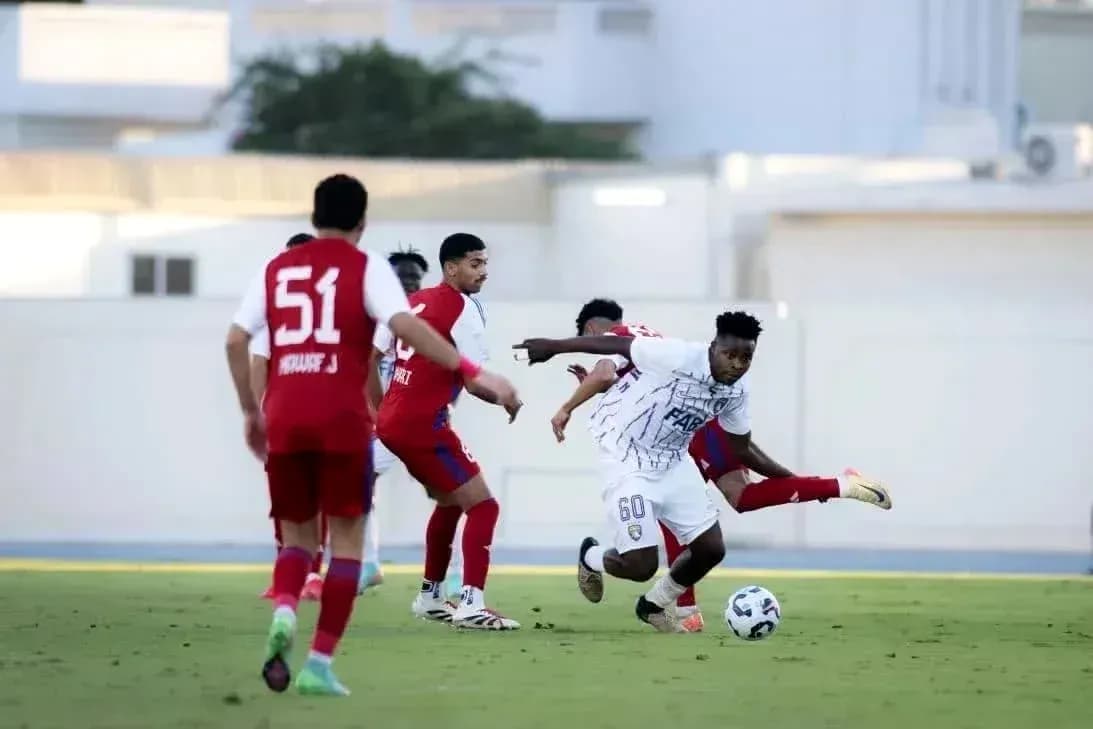
Al Wahda U23 vs Khorfakkan U23: A Crucial Clash in Pro League U23
Al Wahda U23 host Khorfakkan U23 in the Pro League U23 on 12 May 2026, a mid-table versus relegation-battle clash that matters for pride, momentum and final positioning in the 2025 campaign. The venue is not specified in the data, but Al Wahda U23 have home designation and come into this round 25 fixture 10th in the league, while Khorfakkan U23 sit 14th.
With no cup context here, the stakes are league-only: consolidating safety and perhaps climbing a place or two for Al Wahda U23, and damage limitation plus survival hopes for Khorfakkan U23, whose goal difference and away record have been a problem all season.
League context and form
In the league, Al Wahda U23 are 10th with 28 points from 24 matches and a goal difference of -5 (27 scored, 32 conceded). Their recent league form is mixed at best: “DLWDL” across the last five in the standings snapshot, and the broader season form string “WWDLLLLLWLWLLWWDWLDLDWLL” underlines how streaky they have been. They can put wins together in short bursts but also slide into prolonged losing runs (their longest losing streak is five).
Khorfakkan U23 are 14th on 14 points, with a much heavier goal difference of -28 (26 for, 54 against). Their form line “WLDLD” shows a slight uptick recently, but the season-long pattern “LWLLDLWLLLLDLLLLDLLDLDLW” is that of a side often outmatched, rarely able to build on positive results, and frequently beaten in runs of three or four in a row.
Across all phases, both teams have played 24 league matches. Al Wahda U23 have 8 wins, 4 draws and 12 defeats; Khorfakkan U23 have 3 wins, 5 draws and 16 losses. Both average 1.1 goals scored per match, but the defensive numbers separate them: Al Wahda U23 concede 1.3 per game, Khorfakkan U23 a much more concerning 2.3.
Home vs away dynamics
The most striking split is Al Wahda U23’s home weakness against their strong away returns. In the league they have:
- Home: 11 played, 1 win, 4 draws, 6 losses, 7 scored, 15 conceded
- Away: 13 played, 7 wins, 0 draws, 6 losses, 20 scored, 17 conceded
Across all phases, that is backed up by the season stats: 7 goals for at home (0.6 per game) versus 20 away (1.5 per game). They have failed to score in 6 of 11 home matches and kept only 1 home clean sheet. Al Wahda U23 are far more comfortable on the counter and in transition away from home than when they have to force the game in their own stadium.
Khorfakkan U23, meanwhile, are poor both home and away, but particularly fragile on the road:
- Home: 12 played, 2 wins, 3 draws, 7 losses, 16 for, 24 against
- Away: 12 played, 1 win, 2 draws, 9 losses, 10 for, 30 against
Their away average of 0.8 goals scored and 2.5 conceded per match suggests a side that struggles to sustain attacks and is repeatedly exposed defensively. They have failed to score in 7 of 12 away fixtures and kept just 1 clean sheet away.
This sets up an intriguing contrast: Al Wahda U23’s home bluntness versus Khorfakkan U23’s away fragility. The hosts are not prolific in front of their own fans, but the visitors concede heavily almost everywhere they go.
Tactical tendencies and key patterns
Without lineups or player-specific data, the tactical reading must come from team-level trends:
- Al Wahda U23’s structure:
- Low-scoring at home (0.6 for, 1.4 against per home game) suggests a conservative or perhaps cautious approach that struggles to turn possession into chances.
- They have 4 clean sheets overall and have failed to score 10 times, which points to tight, low-margin matches.
- Their biggest home win is 3-1; biggest home defeat 0-3. That range hints at a side that, when it does click, can put a few past visitors, but is rarely blown away.
- Khorfakkan U23’s approach:
- Conceding 54 in 24 matches (2.3 per game) with only 2 clean sheets suggests a defence often exposed, whether by an open attacking style, individual errors, or structural issues.
- Their biggest away win is 1-3, and their heaviest away defeat 5-0. They are capable of scoring in bursts but can collapse badly when under sustained pressure.
- Ten matches without scoring across all phases underlines how often they are kept at arm’s length by opponents.
Both teams have taken zero penalties this season according to the team stats, so there is no significant set-piece-from-the-spot narrative to build on.
Head-to-head record
The recent competitive head-to-head data includes one league meeting in the current season:
- On 29 December 2025 in the Pro League U23 (Regular Season - 10), Khorfakkan U23 hosted Al Wahda U23 and the match finished 0-2. Al Wahda U23 were away and won 0-2.
So, in the last available competitive meeting, Al Wahda U23 took all three points away from home, with a clean sheet. That result reinforces the overall picture: Al Wahda U23 are comfortable travelling, and Khorfakkan U23 have difficulty containing them.
Based strictly on the data provided, the recent head-to-head record stands at:
- Al Wahda U23 wins: 1
- Khorfakkan U23 wins: 0
- Draws: 0
(Friendlies are not listed and therefore not considered.)
Squad availability
There is no injury or suspension data provided for either side, and no list of missing or questionable players. The preview therefore assumes both coaches can draw from their usual squads, but this is an information gap rather than a confirmed clean bill of health.
What it means for the table
In the league context:
- A win for Al Wahda U23 would take them to 31 points from 25 matches, further distancing them from the bottom places and potentially setting up a push toward mid-table security.
- A win for Khorfakkan U23 would lift them to 17 points, still with a negative goal difference but with renewed hope of climbing off the lower rungs and making the run-in more competitive.
Given Khorfakkan U23’s -28 goal difference and 16 defeats already, every remaining fixture is about restoring belief and tightening up defensively.
The verdict
Data points in several directions at once. Al Wahda U23 are poor at home but significantly stronger overall than Khorfakkan U23; they also won the reverse fixture 0-2 away. Khorfakkan U23 are among the league’s leakiest defences, particularly on the road, and have struggled to score consistently.
Tactically, this suggests a match in which Al Wahda U23 will be asked to take more initiative than they prefer, but they face an opponent whose defensive structure and away record offer opportunities. If the hosts can raise their attacking tempo even slightly above their usual home level, Khorfakkan U23’s vulnerabilities suggest chances will come.
Khorfakkan U23’s path to a result likely lies in compactness and counter-attacks, trying to exploit Al Wahda U23’s occasional lapses and the psychological weight of their home form. However, the statistical balance of the season, the league positions and the previous 0-2 result point toward Al Wahda U23 as the likelier winners, probably in a relatively low-scoring contest unless Khorfakkan U23’s defence unravels again.