A Beautiful Obsession: Guardiola's Raw Journey Through Manchester City's Collapse
Pep Guardiola has never looked so raw on screen.
Amazon’s new four-part series, A Beautiful Obsession, lands on Prime on Wednesday and walks straight into the wreckage of Manchester City’s 2024‑25 season. No soft focus. No airbrushing. Just a great manager, his club and his private life all unravelling at once.
This is City’s own production, controlled and filmed in-house, yet it refuses to play as a glossy tribute. The most brutal stretch of Guardiola’s reign – nine defeats and a single win in 13 games, a mid‑winter collapse that shattered the aura of the “machine built for winning”, as chair Khaldoon al‑Mubarak calls it – is laid bare. So is the decision to move on from Kevin De Bruyne, the greatest player of City’s modern era. And when Khaldoon fumes over Guardiola’s baffling choice to change 10 players for a 2-0 Champions League defeat at home to Bayer Leverkusen, that anger is left in.
The camera doesn’t flinch. Nor does Guardiola.
A manager stripped back
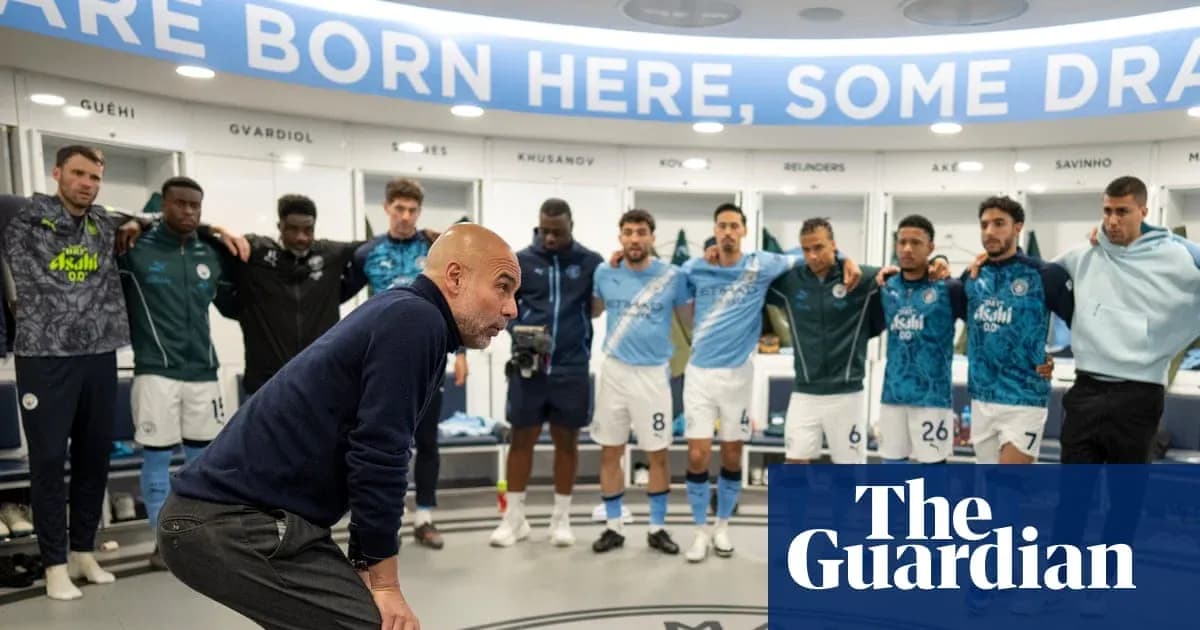
The most startling moments come when Guardiola drags his private life into the dressing room. After a 2-0 defeat by Juventus on 11 December 2024 – City’s seventh loss in 10 games – he tries to jolt his players by detonating a bombshell.
“I’m fucking divorced from the most beautiful woman on your planet,” he tells them. “I love her unbelievably, but we lost the passion. How do you play football, because you are paid? Or because of something inside? Where is the passion?”
It is a staggering line to cross. Guardiola has every right to speak about his marriage, yet the choice feels self‑sabotaging: a manager so drained by conventional methods that he turns to his own heartbreak as a last resort. He knows what a No 1 must be, later defining the role in stark terms: “You have to convince your players [that they would] go to the penthouse, the roof and jump down [for you].”
A year on, after that fateful Leverkusen rotation, he returns to the same theme. “I leave my life, my divorce and my family is away, and everything for all of you. And what do you give back?” he asks the squad.
The series then hands the microphone to Manuel Estiarte, Guardiola’s close confidant and City’s director of first-team operations. In episode two, The Rebuild, Estiarte admits he went to the players himself to explain why their manager was “anxious, sad, different”.
“I said to the team: ‘Please, you have to understand, you’re not playing with a coach who can be a bit impulsive, intense, sometimes a bit up and down. You’re seeing a human being. He’s getting a divorce.’ It was necessary for the team not only to visualise Pep as a manager but for the first time as a human being.”
The confession lands with an awkward echo. Why did Guardiola not say this to the players himself? And once the issue is out in the open, you can almost hear the boardroom questions: how much is this private turmoil affecting his ability to manage?
The edit cuts sharply to a different Guardiola. Smiling, lighter. “In my life I made a lot of changes – I got divorced and I have to settle a bit. But no complaints at all honestly,” he says, before drawing a line between the personal and the professional. “In my job, yeah,” he adds, when asked if he is happy.
That tension – between the human being and the super‑coach – runs through the whole documentary. It becomes the spine of his management style. Episode three is even titled: Love and Hugs.
Captaincy, conflict and a dressing room fracture
Part one, The Desert, lingers on a moment that cuts Guardiola deeply. Kyle Walker, his captain, walks away in January 2025, right when the team is listing badly and needs its leader most.
Guardiola addresses the squad, close to tears. Walker, he says, did not behave like their captain. Then he turns the spotlight back on them. They voted for Walker. Why did they not pin him to the wall and demand more loyalty?
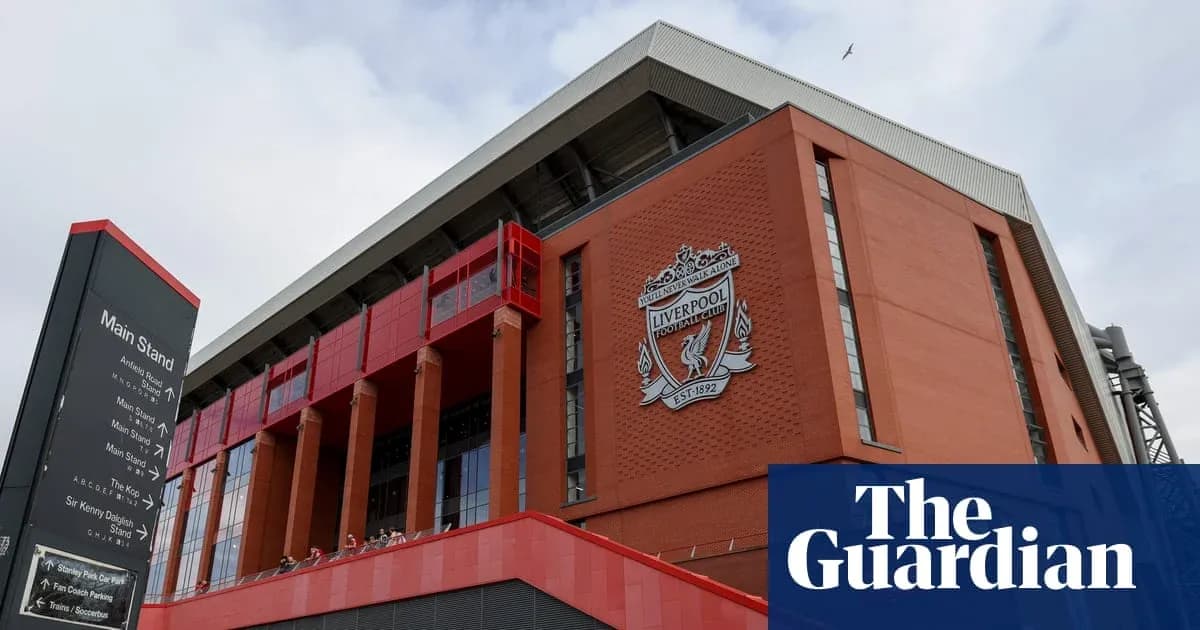
The flashpoint that triggers Walker’s exit is shot with real cinematic craft. In the Anfield dressing room, after Walker’s mistake leads to Luis Díaz winning a penalty that Mohamed Salah converts in a 2-0 Liverpool win, Guardiola calls out the error. Walker snaps. He complains the finger is pointed at him “every meeting”.
The row ends with Guardiola crying, delivering a kind of confession. He had signed a new contract just 11 days earlier, in the middle of that dreadful run, he reminds them, because he wanted to fight. The camera frames him in the foreground, pouring his heart out, while Walker sits behind, silent, forced to confront his part in the rupture.
“If captains first, then the other ones, for example [feel] that there’s a problem, tell me,” Guardiola says. “It’s not going to change the love I have for all of you. I’m sorry.”
The vulnerability is striking. So is the sense of regret.
Saying goodbye to ‘Super Kev’
Episode two opens with another emotional wrench: De Bruyne is not offered a new contract. Ferran Soriano, City’s CEO, tells Khaldoon that “Kevin gets the respect he deserves as the greatest player in the modern history of City”. Yet respect does not translate into a new deal.
Guardiola recalls how “Super Kev” broke down in his office. He also admits there had to be a cold edge to the decision. The club’s machine has to keep moving. The documentary then shows De Bruyne in tears when he is asked what he will miss most. “My kids don’t want to go,” he says.
The series pauses there, letting the weight of that line sink in. It is a reminder that the people who drive elite sport are not just assets on a balance sheet. Their children have schools, friends, routines. The bonds formed inside a dressing room can carry as much pain as joy when they are severed.
A chairman’s fury and a manager’s mistake
The Leverkusen game becomes the lightning rod for internal criticism. Guardiola’s decision to change 10 outfield players for a Champions League tie of that magnitude is dissected on camera.
“Our attitude with Pep Guardiola should not be too negative. But it shouldn’t be too kind or accommodating either. This is his mistake this time,” Soriano says.
Khaldoon goes further. “To pick an entire new [outfield] team in a game this important is probably one of the lowest points we’ve had. I can’t speak to him – I’m so angry.”
Those are extraordinary words to hear in a club‑produced film. They strip away the illusion that Guardiola’s authority is absolute, or that City’s hierarchy views him as untouchable. Even a coach of his stature is dragged back to what he and De Bruyne ultimately are in this story: commodities in a ruthless business that exists to win.
Trophies, closure and life beyond the touchline
The final episode, Nothing Is Eternal, does not pretend the season was a triumph. It doesn’t need to. The context is enough. Out of the wreckage, City still haul in the Carabao Cup and FA Cup, pushing Guardiola’s haul to 20 trophies in a decade, including three Community Shields, and finish second in the league.
The rebuild, at least in structural terms, is complete. Guardiola gets his farewell, framed not as a man broken by the game but as someone finally stepping away from it on his own terms.
“Life should not just be about football. It’s too much to be honest,” he says.
The line lands like a full stop. After a decade of relentless winning, a brutal winter collapse, a public divorce and the painful shedding of legends, A Beautiful Obsession shows Guardiola walking away not as a myth, but as a man who has given everything and decided that, at last, enough is enough.