York United Defeats Pacific FC in Canadian Premier League Clash
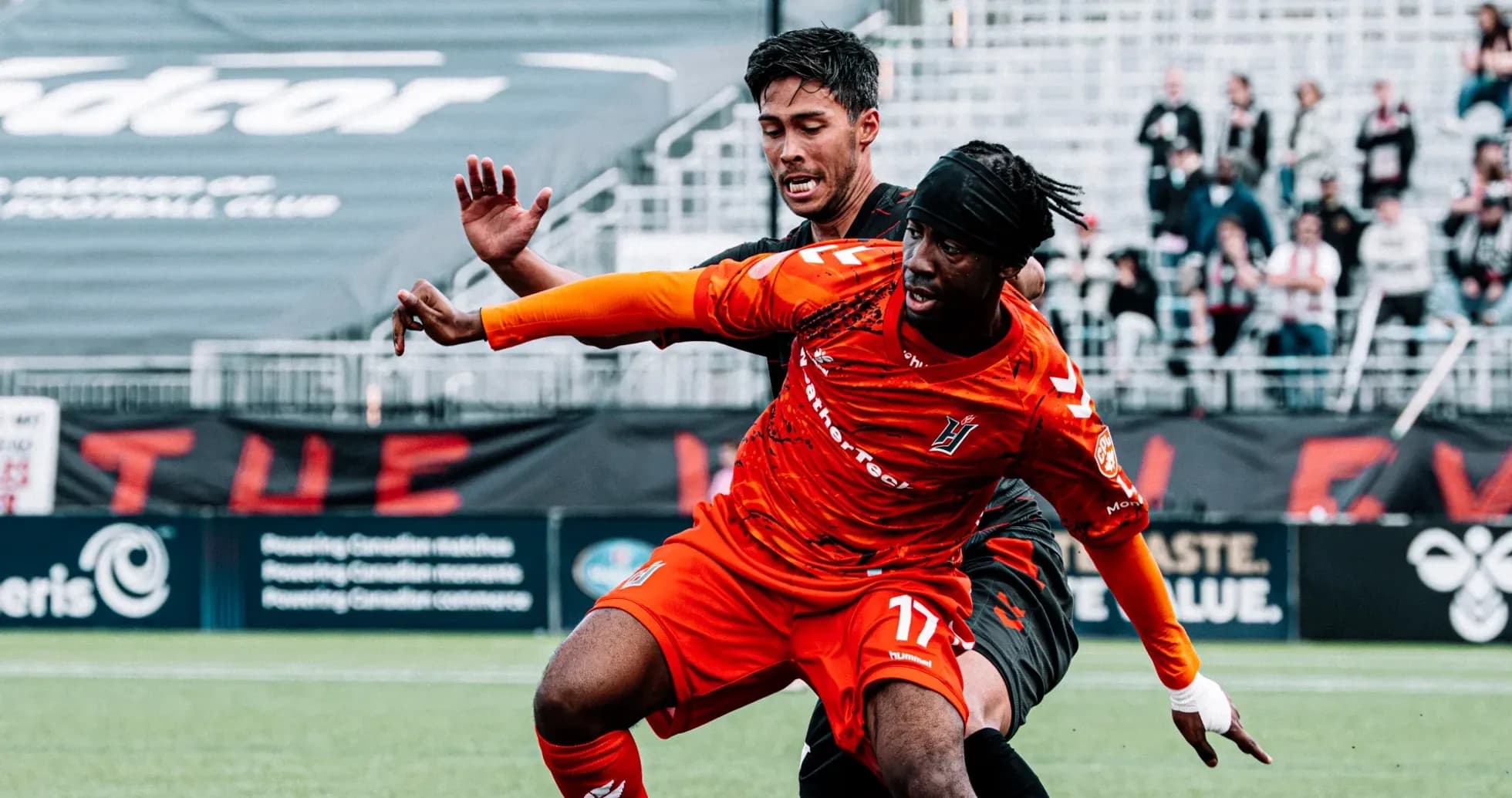
Under the Starlight Stadium floodlights, this Group Stage meeting in the Canadian Premier League finished with a stark, simple verdict: Pacific FC 0–1 York United. Following this result, the table tells a story of divergence. Pacific sit 8th with 1 point and a goal difference of -6, winless after 6 matches. York United, by contrast, occupy 3rd with 11 points and a goal difference of 5, unbeaten through 5 league games.
I. The Big Picture – Two Different Seasons in One Match
Pacific’s season-long DNA is fragile and streaky. Overall they have played 6 league matches, with 0 wins, 1 draw and 5 defeats. At home the picture is even bleaker: 5 played, 0 wins, 0 draws, 5 losses, scoring 4 and conceding 10. Their overall goalsFor average is 1.0 per game, while goalsAgainst sit at 2.0 per game both home and away. They have yet to keep a single clean sheet in total and have already failed to score twice overall.
York arrive as the mirror opposite. Overall they have 3 wins and 2 draws from 5 matches, with 9 goalsFor and 4 goalsAgainst, an overall scoring rate of 1.8 and a defensive average of just 0.8 conceded. At home they average 2.3 goalsFor; on their travels they are more pragmatic, with 1.0 away goalsFor and only 0.5 away goalsAgainst. They have kept 2 clean sheets in total and have not failed to score in any match.
The goal-timing data underlines York’s identity as a side that builds pressure through the middle phases. Overall, 37.50% of their goals arrive between 46-60 minutes, with another 25.00% between 31-45 and 25.00% between 61-75. They are relatively quiet late on, with 0% of their goals coming between 76-90. Pacific, by contrast, have no published minute distribution for their goalsFor, which fits the sense of a team without a clear attacking pattern.
II. Tactical Voids and Discipline – A Nervy Pacific vs a Streetwise York
Absence data is not provided, but the disciplinary record sketches the emotional landscape of both squads.
Pacific’s season has been littered with late-game volatility. Their yellow-card distribution peaks in extra time: 42.86% of their yellows arrive between 91-105 minutes, with another 28.57% between 61-75 and 14.29% in each of the 16-30 and 46-60 windows. Red cards are particularly alarming: 66.67% of their reds come between 76-90 and 33.33% between 91-105. That pattern suggests a team that loses composure as matches stretch, often chasing games and overcommitting.
The individuals bear this out. Christian Greco-Taylor, starting at left-back here, has already collected 3 yellows this season, yet his profile (10 tackles, 6 interceptions, 22 duels won out of 30) makes him a key ball-winner rather than a liability. In central defence, Joshua Belluz carries a yellow and a previous yellow-red, a sign that Pacific’s last line often defends on the edge when exposed. Midfielder R. Juhmi, with 2 yellows in 6 appearances, adds another combustible note in the middle.
York’s discipline is intense but more controlled. Their yellow cards are spread fairly evenly: 21.05% each between 31-45 and 61-75, 15.79% in both the 16-30 and 46-60 ranges, and 10.53% in each of the 0-15 and 76-90 windows. Only 5.26% arrive in added time (91-105), and crucially they have no red cards recorded. Players like Luke Singh (3 yellows), Gabriel Bitar, Julian Altobelli, Shola Jimoh, Steffen Yeates and Maximilian Ferrari (all on 2 yellows) show a collective willingness to foul, but within a structured aggression that rarely spills over.
III. Key Matchups – Hunter vs Shield, Engine Room vs Enforcer
Even though he did not start this particular fixture, the shadow of York’s leading scorer T. Skublak hangs over every tactical discussion. With 3 goals from 6 shots (5 on target) and a rating of 8.6 across 4 appearances, he is the league’s most efficient finisher. He also contributes 3 key passes and has won 14 of 25 duels, making him more than a pure penalty-box poacher.
Against Pacific’s defence, the Hunter vs Shield narrative is stark. Pacific have conceded 12 goals overall in 6 games, an average of 2.0. At home they have allowed 10 in 5 matches, again 2.0 per game. That is the shield: porous, under siege, and often left to scramble. Yet within that unit, Diego Konincks offers a glimmer of structure. As a defender he has 1 goal and 1 assist, 173 completed passes at 90% accuracy, 4 tackles, 1 blocked shot and 5 interceptions. He is both organiser and outlet, tasked with stepping into midfield to start attacks while still anchoring a back line that has been overworked.
On York’s right side, the teenage full-back Shola Jimoh brings a different energy. He has 1 assist, 3 key passes, 2 successful dribbles from 7 attempts and 2 tackles, but also 2 yellow cards and only 4 duels won from 16. His adventurous positioning can be a vulnerability. That makes his duel with Pacific’s left-sided creators, especially Marco Bustos and the overlapping Greco-Taylor, a pivotal corridor. If Bustos can drag Jimoh high and inside, space opens for Alejandro Díaz to attack the channels against York’s back line.
In the engine room, Steffen Yeates and Juan Córdova embody York’s balance. Yeates has 119 passes at 91% accuracy, 7 tackles, 2 blocks and 3 interceptions, quietly dictating tempo and pressing triggers. Córdova adds 75 passes at 80% accuracy and 6 interceptions, reading passing lanes from deeper zones. Against Pacific’s more improvised midfield trio of Baldisimo, Gomulka and Daniels, York’s double pivot should be able to control second balls and recycle possession into those deadly middle-third surges between 31-75 minutes where their scoring is concentrated.
IV. Statistical Prognosis – xG Logic and Defensive Solidity
While explicit xG values are not provided, the underlying shot and scoring patterns allow a probabilistic reading. York’s overall goalsFor average of 1.8, combined with an overall goalsAgainst of 0.8 and 2 clean sheets in 5 matches, paints the profile of a side whose expected goals created and prevented are both in positive territory. Their under/over record reinforces this: in total they have gone over 0.5 goals in all 5 games, over 1.5 in 2, and stayed under 2.5 in 4 of 5. That hints at controlled, medium-scoring matches where York typically edge the xG battle without turning games into chaos.
Pacific’s metrics point the other way. Overall they score 1.0 and concede 2.0 per match, with 0 clean sheets and 2 matches where they failed to score. At home they average only 0.8 goalsFor and 2.0 goalsAgainst. The combination of late red cards and a heavy home-concession rate suggests their defensive xG allowed spikes as they chase games and fatigue sets in.
Overlaying York’s goal-timing profile onto Pacific’s disciplinary curve creates a critical intersection. York are most dangerous from 46-60 minutes (37.50% of their goals) and maintain threat through 61-75 (25.00%), precisely the window where Pacific’s yellow cards begin to climb and where their structure tends to fray. Then, in the 76-90 and 91-105 ranges, Pacific’s red-card risk surges just as York’s attacking volume typically tapers off. The likely game script, therefore, is York establishing control and chances in the third quarter of the match, with Pacific’s response increasingly emotional rather than methodical.
Following this result, the numbers and patterns converge on a clear tactical verdict: York United’s compact, disciplined block and timed surges through midfield give them a sustainable edge over a Pacific FC side still searching for stability at both ends. Unless Pacific can harness Konincks’ distribution, Bustos’ creativity and Díaz’s movement into a more coherent attacking structure—and rein in their late-game indiscipline—the expected goals balance in future meetings will continue to tilt toward York’s efficient, quietly ruthless approach.