World Cup Distractions: England's Players and Transfer Talks
The World Cup is supposed to strip life back to its basics for a footballer: country, shirt, ball, noise. Nothing else.
For England this summer, it is anything but simple.
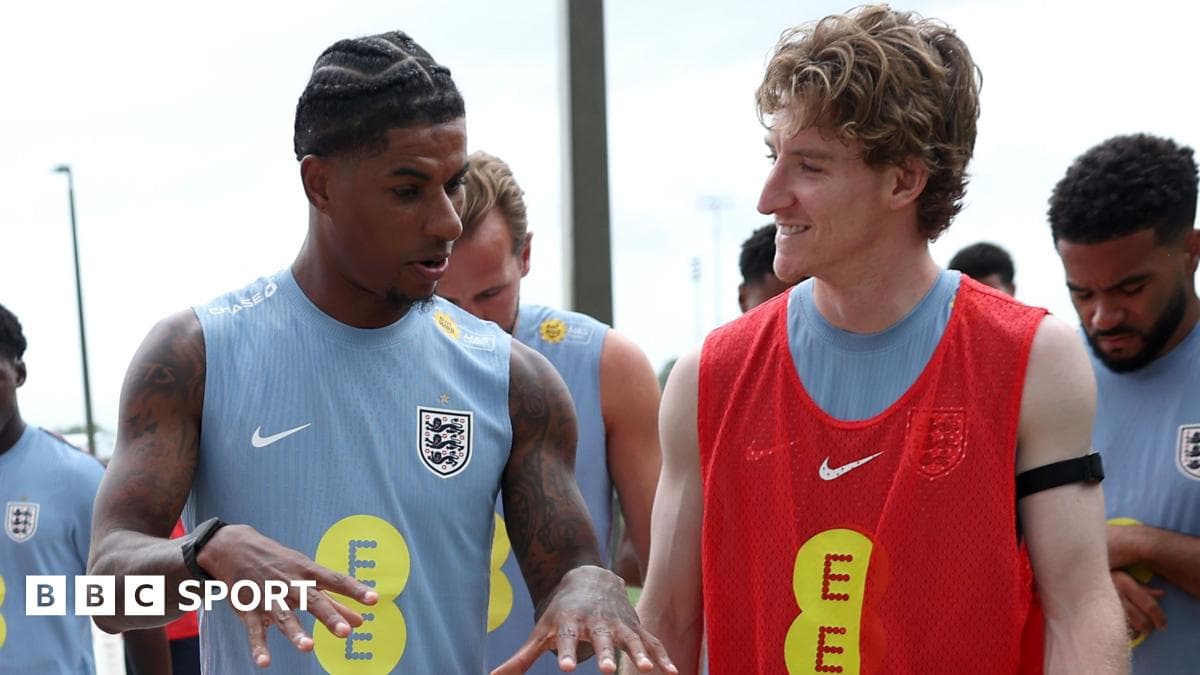
Thomas Tuchel has taken a 26-man squad to chase history, yet a good slice of that group is also chasing – or being chased by – new employers. A five-week World Cup has dropped straight into the eye of a transfer storm, and England’s camp in West Palm Beach feels as much like a high-end brokerage hub as a base for a title challenge.
Phones will not stay silent. Agents will not wait. Clubs will not pause their plans just because the calendar says World Cup.
Tuchel knows it.
“If I said to the players not to deal with it now, their telephone will still blow up,” he said, cutting through the fantasy that a national team manager can simply ban the outside world. “Of course it is a distraction. It’s a reality, though.”
He would rather every player walked into camp with their future boxed off. That, he admits, is rarely how this business works.
A shop window and a minefield
World Cups make and remake careers. They always have.
James Rodriguez lit up Brazil in 2014 and was in a Real Madrid shirt before the summer was out. Enzo Fernandez rode a surge from Qatar to Chelsea. Harry Maguire’s 2018 displays turned him from Leicester stalwart into Manchester United’s marquee centre-back.
Those are the poster cases: a golden month, a golden move.
But the same spotlight that inflates reputations can also warp priorities. Whispered offers, half-formed promises and the constant hum of speculation can pull a player’s gaze away from the only thing that truly matters for four weeks – the next game.
Tuchel is trying to keep England’s eyes fixed on the pitch while the market buzzes in their ears.
“The best thing we can have is clarity,” he said. “If anyone has a chance to complete a change of club and a transfer we will not stand in their way. But it has to align with our schedule and our goals which is to be focused and prepared for matches.”
So he draws a line: not the day before a match, never on a matchday. Away from that, deals can be done – quietly, efficiently, out of the team’s eyeline.
That is the theory. Reality is more complex.
Elliot Anderson and the £100m question
Under the Florida sun, one of the most closely watched players in the squad is Elliot Anderson.
The midfielder arrives off a superb season with Nottingham Forest and finds himself at the centre of a tug of war that could reshape the top end of the Premier League. Both Manchester clubs are circling. Manchester City have already tested Forest’s resolve with an opening bid, turned away earlier this week. The 23-year-old is believed to favour a move to Etihad Stadium.
If City, or anyone else, land him, the fee will be seismic. The numbers being discussed could surpass the £105m Arsenal paid West Ham for Declan Rice in 2023, setting a new record for a British player.
That kind of talk seeps into a camp, no matter how many times players insist they are shutting it out. Anderson’s every touch in training, every pass in a warm-up game, comes loaded with the knowledge that sporting directors across Europe are watching.
Morgan Rogers and the £80m price of potential
On the other flank of England’s attacking options, Morgan Rogers is living a different version of the same story.
The Aston Villa midfielder has just come off a gruelling, impressive campaign: 55 appearances, 14 goals, 12 assists. He has played himself into the World Cup squad and into the notebooks of the game’s biggest recruiters.
Arsenal, fresh from a title, are interested. Manchester United are in the conversation. Chelsea and Manchester City are tracking him.
But this is no bargain hunt. According to BBC Sport’s senior football correspondent Sami Mokbel, any club wanting Rogers will need to go north of £80m. That figure alone changes the atmosphere around a player. It places him in a bracket where every decision – stay, move, wait – carries consequences for his career and for the club that currently pays his wages.
Rogers must now balance the temptation of a giant leap with the need to perform in the most unforgiving tournament on the calendar. One bad game can linger. One brilliant performance can harden the resolve of a selling club or push a buying club to go all in.
Gordon done, Rashford waiting
Not everyone boarded the plane with their future up in the air.
Anthony Gordon closed his chapter at Newcastle United last month, sealing a move to Barcelona. He arrives in Florida with clarity, his domestic story neatly tied off so his World Cup story can begin.
Marcus Rashford does not enjoy the same certainty.
The forward is on loan at Barcelona from Manchester United, and a clause in that deal gives the Catalan club until 15 June – just two days before England open their World Cup campaign against Croatia – to make the move permanent for £26m.
Barcelona want Rashford. They just do not want the current terms. The club has been trying to renegotiate, probing for a better deal, while the clock ticks down. There remains a genuine possibility that the deadline comes and goes without agreement, leaving Rashford’s future unresolved as the tournament starts and talks rumbling on in the background.
It is exactly the kind of slow-burning saga that can gnaw at a player’s focus, however hard he tries to block it out.
Stones closes a chapter
At the other end of the age and experience spectrum, John Stones has chosen a clean break.
After a decade at Manchester City, he will leave the club this summer. In that time he has stacked up a medal haul that places him among England’s most decorated modern players: six Premier League titles, a Champions League, two FA Cups, five League Cups and more.
Now he goes into a World Cup knowing he will not be going back to the only club he has known at the very top level. For some, that might feel unsettling. For Stones, it can also be liberating – one final tournament as a City player, then a blank page.
The next move will define the final phase of his career. But it will not be decided in Manchester. It will be decided while he is trying to stop the world’s best forwards.
This has all happened before
None of this is new to England.
The national team has long been a backdrop for transfer drama. Ashley Cole spent the 2006 World Cup with his Arsenal future hanging by a thread, locked in a saga that eventually ended with a deadline-day move to Chelsea. His medical for the swap deal involving William Gallas had to be squeezed in while he was on England duty in Manchester.
Four years later, Joe Cole flew to South Africa without a club. Released by Chelsea, he chose to hand his fate to his agent and shut out the noise.
“I just want to get my head down and try and train and play well. My future will sort itself out. It won’t distract me,” he said at the time.
Some players can compartmentalise like that. Others struggle. The modern game, with its 24-hour news cycle and social media glare, makes it even harder.
Tuchel’s tightrope
So Tuchel walks a tightrope in Florida.
He cannot pretend the transfer market does not exist. He cannot tell his players to ignore calls from clubs that might change their lives. He can only set boundaries, demand honesty and insist that any business is done away from the matchday spotlight.
“If it’s done privately, efficiently and quietly then we are always happy to help,” he said. That is his bargain with the squad: sort your future, but do not let it derail ours.
The heat in West Palm Beach is unforgiving. The travel demands of this World Cup will test even the fittest squads. On top of that, England’s players must navigate the invisible pressure of valuations, clauses and deadlines.
For some, this tournament will be a springboard. For others, it may be a distraction they have to fight every day.
The question now is simple and brutal: in a summer when careers can change with a single phone call, can England keep their minds on the only prize that really matters?