World Cup Showdown: Argentina vs Egypt and More
The World Cup has tightened into its sharpest edges now. Every game carries a legacy, every mistake a consequence that will echo for years. On Tuesday, the spotlight splits across two continents and several storylines: Argentina’s title defence, Egypt’s greatest night, Colombia’s charge, Switzerland’s stubbornness, and the lingering aftershocks of Cristiano Ronaldo’s farewell, a broken American dream, a political stand from Egypt’s dugout, and Kylian Mbappe’s fight against racism.
This is where the tournament stops being a festival and becomes a reckoning.
Argentina, Egypt and the weight of history
Atlanta will feel like the centre of the football world at noon local time when Argentina meet Egypt in a round-of-16 tie that is loaded with imbalance on paper and danger in reality.
The numbers are blunt. The Opta supercomputer ran the match 25,000 times and handed Argentina a 69.1 percent chance of winning inside 90 minutes. Only 12.3 percent of simulations gave Egypt the upset. The remaining 18.5 percent dragged the game into extra time.
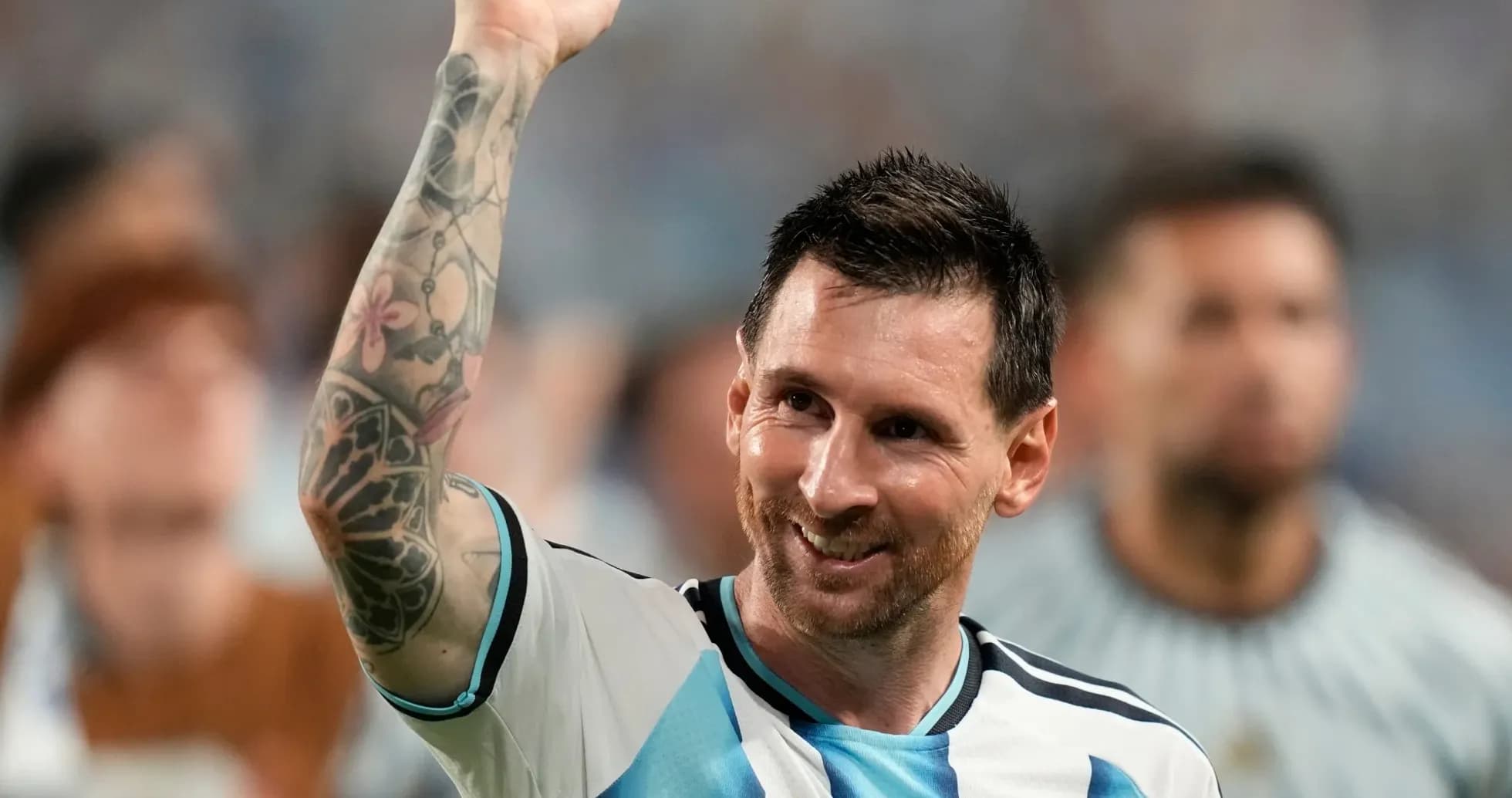
Argentina have long enjoyed their assignments against African opposition at World Cups, and the historical ledger between these two nations leans heavily sky blue and white. The last time they met, in a Cairo friendly in 2008, Argentina won 2-0 thanks to Sergio Aguero and Nicolas Burdisso. Lionel Messi missed that game through injury. He will not be missing this one.
Yet the story is not as simple as a reigning champion rolling over a plucky outsider. Egypt arrive chasing the biggest win in their footballing history, the chance to step into a quarterfinal for the first time. They carry a nation’s expectation and something more complex: a political voice that has echoed beyond the pitch.
Head coach Hossam Hassan has used this World Cup not just to talk about tactics and lineups, but to speak about Palestine. After Egypt’s win over Australia in the previous round, he raised a Palestinian flag. On Monday, in a press conference that should have been about Argentina, he spent more than four minutes on the suffering in Gaza.
“If there is anyone in the world who does not feel for the Palestinian people, then they are not human, whether they are Arab, European, or American,” he said, before comparing the global response to civilian deaths with the outrage reserved for animal welfare. For Hassan, the idea that thousands can die in a single day without the world stopping is intolerable.
So Egypt go into the biggest match of their sporting history with more than just football on their minds. Argentina, chasing a second straight world title, must navigate not only a disciplined opponent, but a team fuelled by something deeper than statistics.
Colombia edged ahead, Switzerland refuse to go quietly
Later, in Vancouver’s BC Place, Switzerland and Colombia will test each other’s nerve for a place in the last eight. It is a meeting that lacks the star wattage of Argentina’s tie, but not its tension.
The past between these two is modest. Three of their four previous meetings were friendlies, the latest in March 2007. That day, Colombia won 3-1, with Edixon Perea, Jhon Viafara and Andres Chitiva scoring for Los Cafeteros.
This time, the margins are finer. Opta’s model tilts slightly towards Colombia, giving them a 41.9 percent chance of winning in normal time. Switzerland stand at 28.2 percent, with a draw the most likely single outcome at 29.9 percent.
Colombia bring their usual cocktail of intensity and attacking ambition, a team that can overwhelm opponents in bursts. Switzerland bring what they always bring: structure, resilience, and an ability to drag supposedly superior teams into uncomfortable, narrow contests.
One nation will step into the quarterfinals with momentum. The other will go home knowing they were close enough to touch it.
Ronaldo’s last World Cup bow
Away from Tuesday’s fixtures, one of the game’s defining careers has closed its World Cup chapter.
Cristiano Ronaldo has played his final match on football’s biggest stage. Six World Cups, countless memories, a career that helped shape an era. It ended not with a trophy lift, but with a defeat that left him reflective and raw.
“I’m sad to be leaving the World Cup like this,” he admitted after Portugal’s exit. “I gave everything I had, I did my best, and I leave with a clear conscience. It was my last World Cup, yes, but now I’ll have time to reflect and spend time with my family. I won’t make any decisions in the heat of the moment.”
At 41, he chose his words carefully. He stopped short of confirming whether this was also the end of his international career, refusing to let his own future overshadow Portugal’s collective story. The World Cup, though, will not see him again.
A generation that grew up measuring time in Ronaldo and Messi moments has just watched one of those clocks stop.
USA’s home dream shattered by ruthless Belgium
For the United States, this was supposed to be the World Cup where home advantage and a maturing core pushed them deep into the tournament. Instead, Monday brought a brutal reality check.
Belgium tore through them 4-1, with Charles De Ketelaere the conductor and executioner. He scored twice and set up another as the Red Devils surged into the last eight, leaving the USA scattered in their wake.
The images told the story. Christian Pulisic on the turf, clutching his ankle. Matt Freese frozen, hands on his head after a costly mistake. Chris Richards crumpled on the grass in frustration. On the touchline, Mauricio Pochettino’s composure snapped as he lashed out at a rack near the bench, sending bottles flying.
“It stinks,” Tyler Adams said bluntly. “This was a moment to have an opportunity to advance and really try and do something special. We fell short.”
The return of Folarin Balogun, cleared to play after FIFA lifted his red-card suspension amid controversy, was meant to be a boost. Instead, defensive errors opened the door early, and Freese’s second-half mistake flung it wide. Belgium did not hesitate.
For a team dreaming of a landmark run on home soil, the exit cuts deep. The question now is whether this is a harsh but necessary step in their evolution, or a warning that the gap to the world’s elite remains wider than they thought.
Hassan’s stand, Mbappe’s line in the sand
Hossam Hassan is not the only figure using this World Cup to speak beyond football.
Kylian Mbappe has stepped into a different kind of fight, responding directly to racist abuse from Paraguayan senator Celeste Amarilla after France’s round-of-16 win over Paraguay.
Amarilla posted a long, slur-filled tirade on X, describing Mbappe as a “colonised Cameroonian, desperately trying to pass himself off as French” and a “brute” who had not learned to write. She even suggested Paraguay’s players should have slapped him after the match.
Mbappe did not let it pass. In a statement on X, he called her “despicable” and “unworthy” of her position, and accused her of allowing racism to overshadow Paraguay’s achievements at this World Cup.
“Madame Celeste Amarilla, you are a despicable woman and unworthy of your position. You do not represent Paraguay, that country which has sweated passion and honour throughout the competition,” he wrote, before condemning her “recklessness” and “brazen racism” for erasing the memory of the team’s historic effort and replacing it with the image of “an incompetent woman who gives the worst possible image of her country.” He ended with a promise: he would never allow people like her the freedom to spread hatred and racism across the world.
Amarilla later deleted her posts and issued an open letter to Mbappe, saying she regretted using the same kind of insults she had experienced as a mixed-race person. The damage, though, had already sparked a global debate.
France move on to face Morocco in the quarterfinals on Thursday, their captain juggling the demands of carrying a nation’s hopes with the responsibility he clearly feels to confront racism head-on.
On Tuesday, as Argentina and Egypt walk out in Atlanta and Switzerland and Colombia emerge in Vancouver, the football will take centre stage again. But this World Cup is no longer just about who survives and who falls. It is about what players and coaches choose to stand for when the world is watching, and how those choices will define this tournament long after the final whistle.