World Cup 2026 Knockout Stage Predictions and Insights
The World Cup knockout stage has finally bared its teeth, and with it comes a fresh set of numbers, nerves and narratives. Opta’s latest projections for the 2026 title paint a familiar picture at the top: one heavyweight nation stands out as the clear favourite to lift the trophy, even as the bracket tightens and the margins shrink.
The data models lean heavily on form, squad depth and historical performance. They don’t feel pressure, but the players do. Every pass, every sprint, every hesitation now feeds into a live calculation of who is most likely to be standing on the podium when the confetti falls. The gap between the leading contender and the chasing pack remains real, but it is not untouchable. One red card, one injury, one bad 10‑minute spell can rip those percentages to shreds.
Away from the cold numbers, the World Cup delivered one of those wonderfully human moments on Sunday during South Africa vs Canada. Just as the stadium rose in unison for a Mexican wave, a spectator’s phone slipped from her hands and tumbled onto the pitch. A tiny object on a massive stage, yet for a few seconds it stole the show. Players glanced over, the crowd laughed, and the great theatre of a World Cup game briefly paused for a scene that could have happened in any ground, anywhere. Then the wave rolled on, the phone retrieved, and the match snapped back into its tense rhythm.
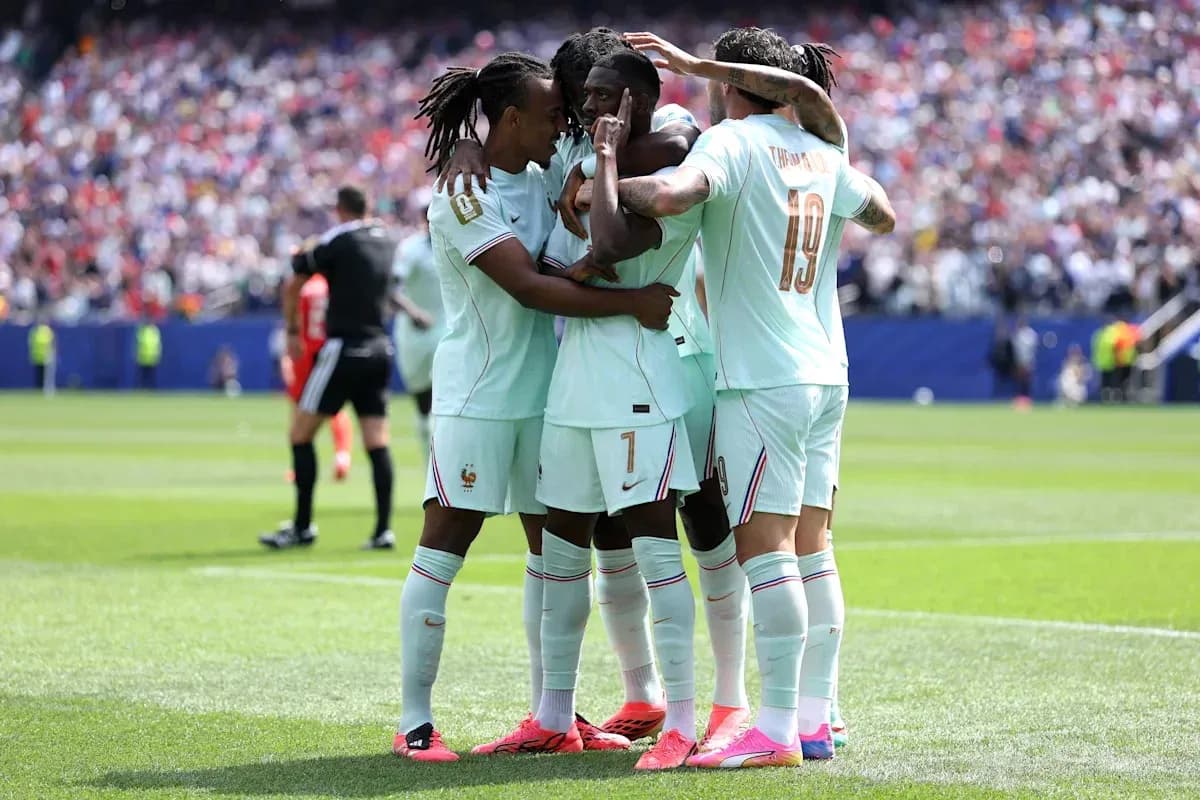
While the knockout ties gather pace, France have been handed a significant boost. Didier Deschamps is back with the squad, returning just hours before a crucial phase of their campaign. His presence alone changes the temperature around the camp. Deschamps knows tournament football inside out; he reads pressure like others read a team sheet. His return steadies the group at a time when every decision, from the starting XI to a late substitution, can tilt a nation’s fate.
Yet even with their coach back on the touchline, France are not without concern. A forward could miss the game against Sweden, a potential blow to Deschamps’ attacking plans. One absence at this level can force a complete rethink: different runs, different combinations, a different way to stretch a defence that will not give an inch. France have the depth to adjust, but the clock is ticking and knockout football rarely waits for anyone.
Canada, meanwhile, have wasted no time announcing themselves. They are the first team to book a place in the round of 16, a landmark moment that underlines their rapid rise on the international stage. Qualification this early does more than secure progression; it sends a message. Canada are not just here to fill the bracket. They arrive in the last 16 with energy, confidence and the freedom of a side that has already made history and now wants more.
Off the pitch, the club game keeps humming in the background. PSG and Yan Diomandé have reached an agreement, a move that slots neatly into the Parisian club’s ongoing rebuild. While the World Cup dominates the headlines, decisions like this quietly shape the next few seasons of European football. For PSG, it is another piece in a puzzle that stretches far beyond one summer.
All of this unfolds against a packed television schedule that keeps the global audience locked in. At 7 pm, Brazil face Japan, a fixture that promises contrast and intrigue: Brazil’s star power and improvisation against Japan’s organisation and relentlessness. Later, at 10:30 pm, Germany meet Paraguay, a tie that carries its own tension. Germany, with their tournament pedigree, cannot afford a misstep. Paraguay, stubborn and disciplined, know that one well‑timed punch can turn a giant’s night into a nightmare.
Predictions say one thing. The pitch often says another. With the knockout stage underway, favourites are under the spotlight, underdogs are sharpening their knives, and every match now asks the same question: who truly looks like a world champion when the pressure bites hardest?