Virgil van Dijk Faces Criticism After World Cup Exit
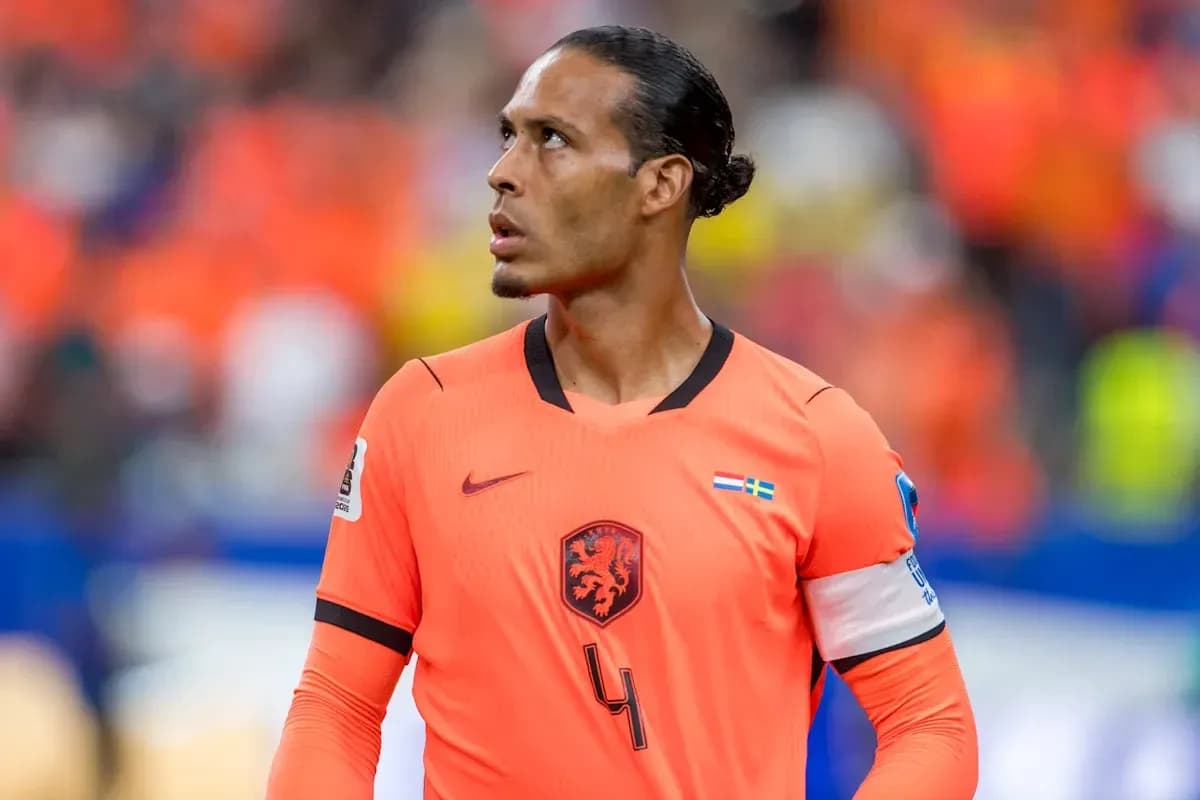
The Netherlands flew home with a sense of waste. Not just because they let a semi-final slip away in the dying seconds against Morocco, but because the inquest back home quickly found its main target: Virgil van Dijk.
A late equaliser, extra time, a penalty shootout, and then the door slammed shut on Dutch hopes. Within hours, the country’s most outspoken columnist had gone for its captain with both barrels.
Driessen turns on Van Dijk and Koeman
De Telegraaf’s Valentijn Driessen did not bother with nuance. He went straight for the jugular, accusing both Van Dijk and outgoing manager Ronald Koeman of betraying the essence of Dutch football.
“Ronald Koeman and Virgil van Dijk have betrayed everything our national team stands for,” he wrote, in a line that landed like a punch across the front pages.
Driessen argued that the switch to a back three during the tournament was not a tactical masterstroke but a concession to a problem: Van Dijk, in his view, had failed to marshal the defence convincingly in the group stage. The captain, he suggested, had dragged the team into compromises that cut against the traditional Dutch blueprint.
Then came the decisive moment against Morocco. Stoppage time, nerves fraying, Morocco flooding forward. Driessen laid the blame squarely at Van Dijk’s feet, accusing him of losing his man and allowing the move to unfold that led to the dramatic equaliser. His verdict was brutal: the defender’s “time is up.”
For a player who has come to symbolise calm and control at the back, it was a stunning public rebuke. The tone of the criticism captured the wider mood: this was a campaign many in the Netherlands believed should have gone much deeper.
One lapse, or something more?
On the tape, the key moment is stark. Morocco pour bodies into the box in stoppage time, the cross comes in, and Van Dijk cannot shut down the run that turns the game on its head. For a centre-back whose game is built on reading danger early, owning his area and winning those decisive duels, it was a rare and costly lapse.
Yet to boil the entire elimination down to one defensive error strips away the complexity of knockout football. The Dutch had chances to kill the tie long before that ball hit the net. They did not take them. Fine margins, again, deciding a tournament.
Across most of the night, Van Dijk still looked like the leader this team leans on. He stepped in with clearances, dominated in the air and kept Morocco’s threat at arm’s length for long stretches of normal time. Then, in the space of seconds, the narrative flipped.
That is the cruelty of this stage. Ninety minutes of control can be eclipsed by one mistimed step.
Injury revelation changes the picture
After the match, Koeman added a detail that complicates the story. Van Dijk, he revealed, had been struggling physically as the game wore on. The defender’s calf, the coach said, had been “bothering him badly” during the latter stages, yet he stayed on through extra time, trying to drag his country into the last four.
For a central defender, a calf issue is not a minor inconvenience. It hits acceleration, recovery runs, the ability to twist and react in those frantic moments when the box is crowded and the clock is red. That does not erase the error, but it does frame it.
Van Dijk had a choice. Signal to come off or push through the pain in a World Cup quarter-final. He chose to stay, limping through the most intense minutes of the tournament with the armband on his sleeve and the responsibility on his shoulders.
Some will say he should have stepped aside for a fully fit replacement. Others will see a captain refusing to abandon his team when it mattered most. Either way, it underlines the physical strain behind the frozen image of that equaliser.
Reputation under attack, legacy intact
Van Dijk has spent more than a decade building a reputation as one of Europe’s outstanding centre-backs: Champions League winner, Premier League champion, the defensive cornerstone of Liverpool and the natural leader of his national team.
One bad night does not erase that. It does, though, open the door to questions he has largely avoided throughout his career with the Netherlands. Is he still the undisputed reference point at the back? Can he carry this side through another cycle? How much of the tactical reshaping around him has actually helped?
Those are the debates now raging across Dutch football, fuelled by Driessen’s column but not limited to it.
What comes next for Van Dijk and the Netherlands?
For now, the captain’s immediate task is simpler: rest, recover, reset. A draining World Cup exit, the emotional toll of a penalty shootout defeat, and the noise back home will take their toll as much as the calf problem.
The new domestic season will arrive quickly, and with it another examination of his form and fitness. Every aerial duel, every one-on-one, every slip will be measured against the criticism now hanging over him.
At national-team level, a new cycle will begin. Fresh plans, perhaps fresh faces, and certainly fresh scrutiny. Koeman will move on, but the spotlight on Van Dijk will only intensify the next time he pulls on the orange shirt.
When that moment comes, the question will not be about a columnist’s verdict or a single misplaced step in stoppage time. It will be whether the captain who once redefined calm at the back can still impose that authority when the margins narrow and the knives are already out.