Vinicius Jr and the Premier League's Superstar Dilemma
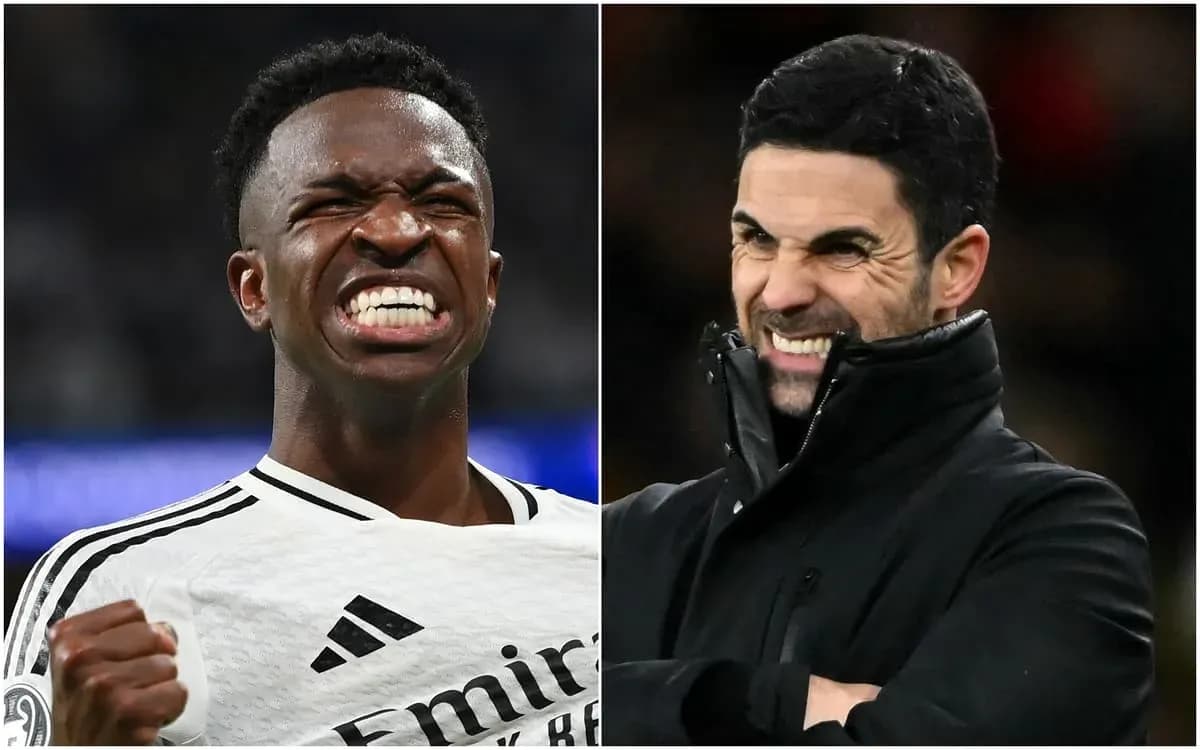
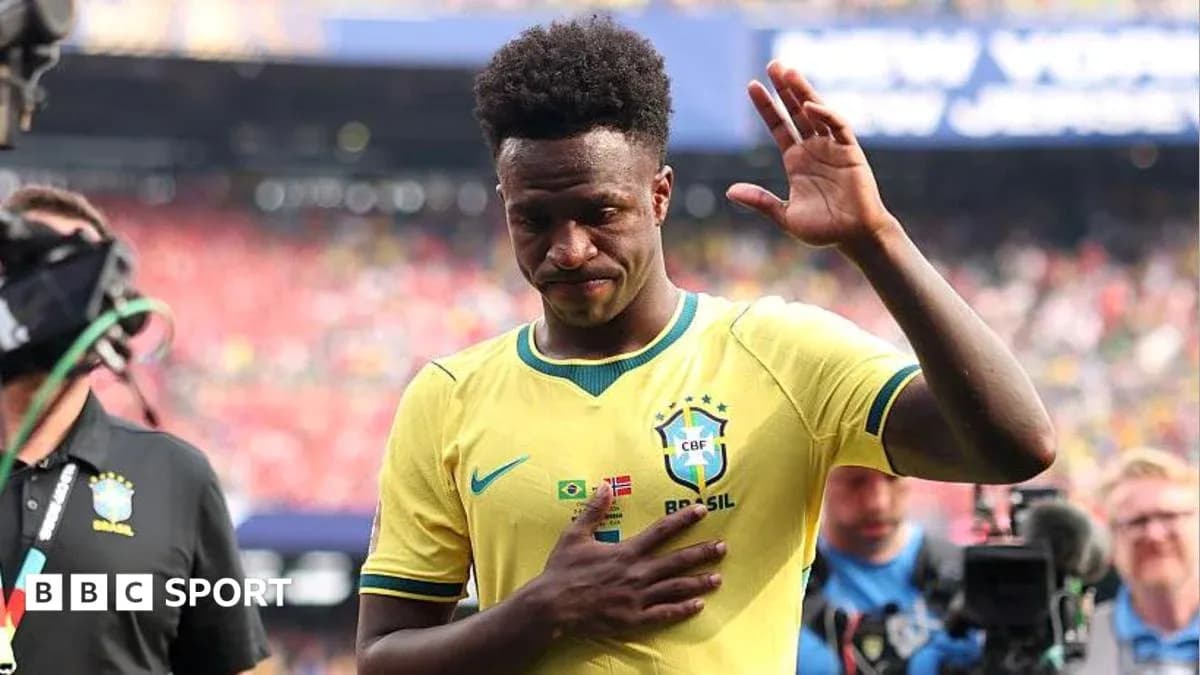
If Vinicius Jr had walked into London Colney this summer, it would have felt like a rupture in the natural order.
Not just a big signing. A genuine, in-his-prime, global superstar choosing Arsenal over Real Madrid. A player already at the summit, not one climbing towards it.
Arsenal were ready. Vinicius was open to listening. The Premier League, for once, stood on the brink of landing a Ballon d'Or-level forward at the absolute height of his powers.
Then he signed until 2032 at the Bernabeu.
And with one pen stroke, the old truth reasserted itself.
England’s richest league, missing the biggest names
No competition spends like the Premier League. No domestic league is as deep, as relentless, as commercially powerful. It hoovers up talent from every corner of the globe, pays salaries few can match and builds squads of extraordinary depth.
Yet when it comes to the very top shelf – the established Ballon d'Or contenders, the forwards who define an era – England still often watches from the outside.
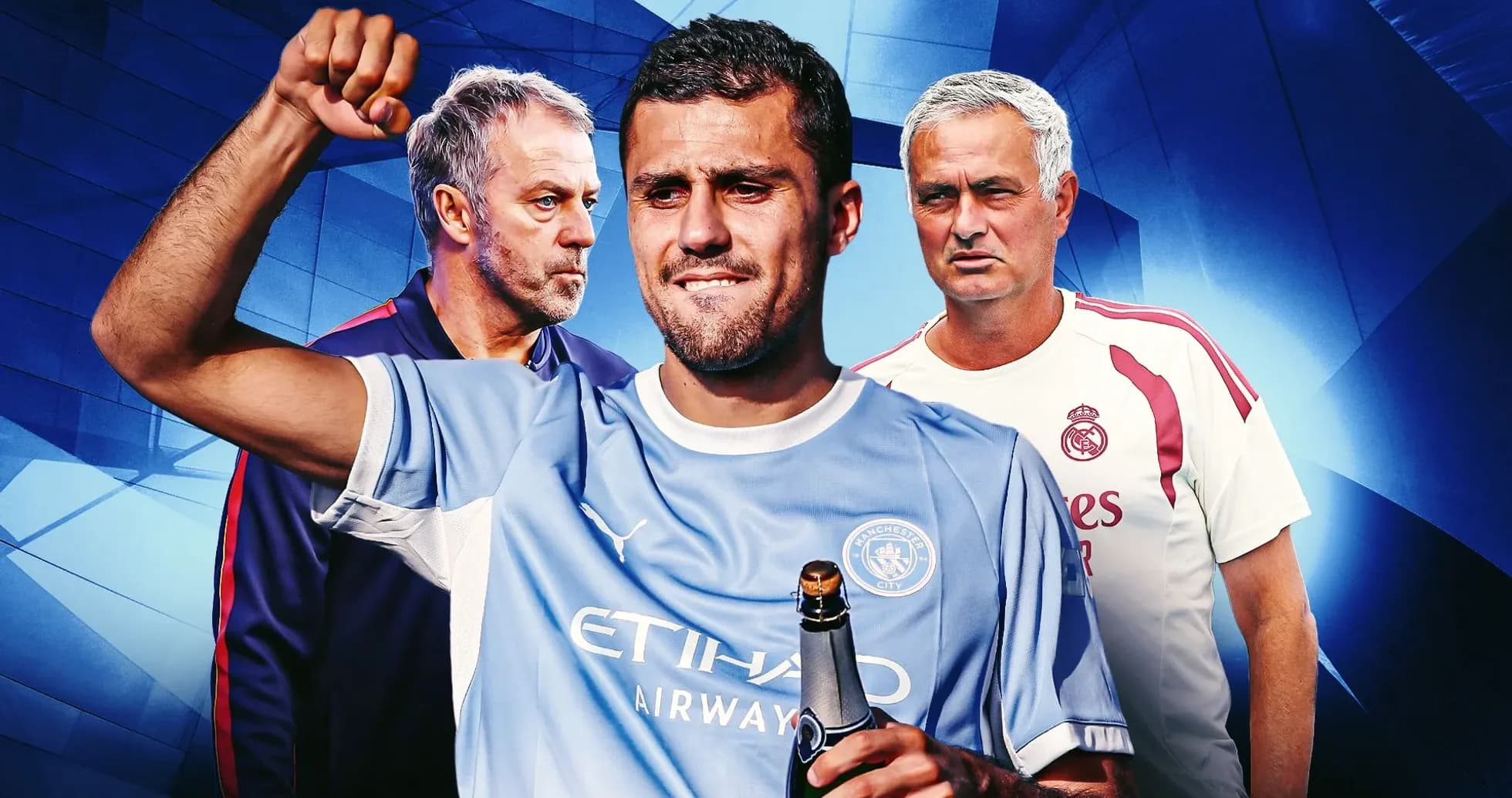
Since 1992, only three men have lifted the Ballon d'Or while playing in the Premier League: Michael Owen in 2001, Cristiano Ronaldo in 2008, Rodri in 2024. Three decades of dominance, three winners.
Centre-backs and goalkeepers? No problem. The league is stacked with them. The real scarcity lies higher up the pitch, in that rarefied air where the game’s most coveted attackers and creators operate. When those players reach their peak, they tend to be wearing different colours, in different stadiums, in different leagues.
Vinicius staying at Real Madrid only underlines it. A 26-year-old, multiple Champions League winner, one of the sport’s most recognisable faces, looked at his options and chose to remain where Ballon d'Or campaigns are practically a club tradition.
The league that makes stars, not one that takes them
If the Premier League struggles to import ready-made global icons, it excels at something else: turning potential into superstardom.
Dennis Bergkamp arrived at Arsenal after a bruising spell at Inter Milan and reinvented himself as one of the most influential players of the modern era. Eric Cantona had shown flashes in France and at Leeds, but it was at Manchester United that he became the symbol of a new dynasty.
Thierry Henry’s Juventus stint was forgettable. His Arsenal career was anything but. He left north London as one of the defining forwards of his generation.
Cristiano Ronaldo came to Old Trafford as an 18-year-old with tricks and promise from Sporting. Five years later he was a Ballon d'Or winner, and then he was off to Real Madrid.
Erling Haaland fits the pattern perfectly. When Manchester City signed him from Borussia Dortmund in 2022, he was already one of Europe’s most coveted young strikers. He was not yet the force of nature who would tear through English defences, rewire scoring records and dominate headlines on a weekly basis.
England, time and again, has provided the finishing school. The stage where raw talent hardens into global superstardom.
What it rarely does is sign a Vinicius-type figure after the ascent is complete.
The rare exceptions – and their timing
There have been attempts to bend that rule.
Andriy Shevchenko is the closest comparison to the Vinicius that Arsenal dreamed of. Chelsea prised him from AC Milan in 2006 when he was 29, only two years removed from winning the Ballon d'Or and fresh from a fifth-place finish in 2005. He arrived as a fully formed global icon, still close to his peak, and one of the very few who chose the Premier League while his star still burned at maximum brightness.
Others came later, when the peak had already passed. Ruud Gullit and George Weah both joined Chelsea, but as veterans. Ronaldo returned to Manchester United at 36. Zlatan Ibrahimovic walked into Old Trafford at 34. Jurgen Klinsmann signed for Tottenham at 30.
Big names, huge reputations, but not quite the same as luring a 26-year-old Vinicius away from Madrid at the height of his powers.
From Serie A’s era to England’s new model
Wind back to the 1980s and 1990s and there was no debate. Serie A was the centre of gravity.
Diego Maradona left Barcelona for Napoli. Ronaldo, Brazil’s phenomenon, moved from Barcelona to Inter at his explosive peak. Michel Platini, Marco van Basten, Lothar Matthaus, Zinedine Zidane – some of the finest years of their careers were played out in Italy. The best players gravitated there almost by instinct.
The Premier League’s financial dominance has created a different landscape. English clubs now spend sums that would have stunned even that era’s Italian giants, but the money is spread in a different way.
Instead of one or two Galactico-style signings, the cash gets pushed into depth and internal trading. Alexander Isak, Morgan Rogers, Elliot Anderson, Moises Caicedo, Declan Rice, Jack Grealish – all have moved between Premier League clubs for fees north of £100m. Enormous outlays, but largely within the same ecosystem.
From abroad, players such as Liverpool’s Florian Wirtz arrive with big reputations but still with a sense of “next step” about them. The best years are expected to come in England, not before it.
The model has shifted. It is less about unveiling a single global face on a billboard and more about assembling 18 to 22 elite players capable of surviving a 60-game season, three competitions and an injury crisis.
Haaland, Madrid, and the ceiling question
Haaland remains the powerful counterpoint. City signed him at 21, watched him explode into one of the most feared number nines in world football and built a system around his ruthless finishing.
Yet even his story points back to that familiar gravitational pull.
During the 2026 World Cup, his father Alfie spoke to DAZN and was asked about the idea of the striker one day playing for Real Madrid. His answer was calm, but telling: Haaland was happy at City, he had a long contract – but any player, he said, wants to play for Real Madrid.
It was not a transfer tease, not a coded message that a move was imminent. It was something more revealing: an admission of hierarchy. For all the Premier League offers – the money, the visibility, the competition – Madrid still represents the pinnacle in the minds of many of the game’s biggest stars.
Vinicius knows it. Haaland’s camp clearly feels it. Plenty of others before them have acted on it.
So the pattern endures. England remains the league where superstars are made, where promising talents become global faces and where Ballon d'Or campaigns are launched. But persuading those already at the top of the mountain to swap Madrid, or to resist it when it calls, is another challenge entirely.
The question now is whether the Premier League ever truly breaks that spell – or whether it learns to live with being the world’s greatest stage, without always owning its brightest leading men.