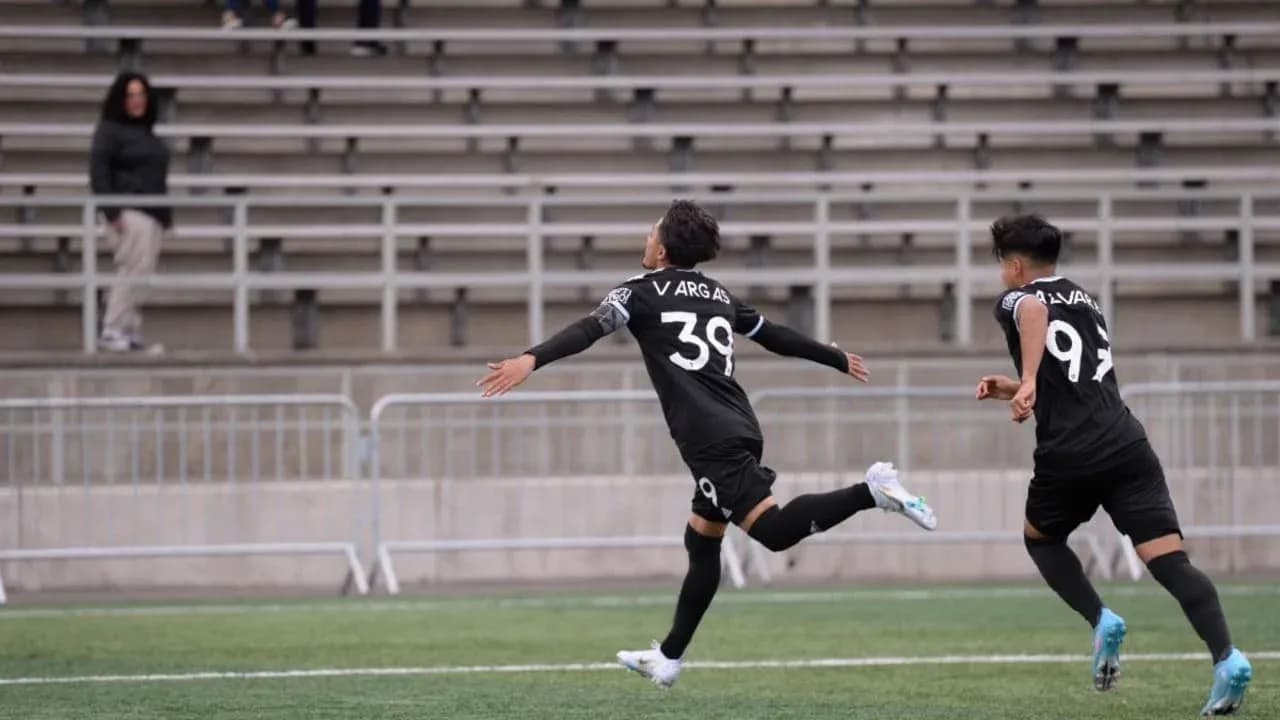
Ventura County's 2–1 Victory Over Vancouver Whitecaps II: A Tactical Analysis
Under the late‑night lights at Dignity Health Sports Park, Ventura County’s 2–1 win over Vancouver Whitecaps II felt less like a routine group‑stage outing and more like a statement about where these two MLS Next Pro projects currently stand.
I. The Big Picture – Two Clubs on Diverging Tracks
Following this result, Ventura County consolidate their rise as one of the sharper outfits in the Pacific Division. In total this campaign they have taken 22 points from 14 matches, winning 8 and losing 6 with no draws. Their goal difference in total league play is +2, built from 23 goals for and 21 against in the standings snapshot, while the broader season statistics show 26 scored and 22 conceded across all competitions logged. At home they remain volatile but dangerous: 3 wins and 3 defeats from 6, with 12 goals for and 10 against.
Vancouver Whitecaps II, by contrast, sit in a far darker place. In total this campaign they have 9 points from 13 matches, with 3 wins and 10 losses, and no draws. Their goal difference is a stark -14, the product of 17 goals scored and 31 conceded in the standings, and the detailed stats underline the same theme with 18 goals for and 32 against. On their travels they have been brutally exposed: 7 away games, 7 defeats, 9 goals scored and 20 conceded.
This match, finished in regular time after 90 minutes, followed that pattern almost to the letter. Ventura County, fifth in the Eastern Conference group and second in the Pacific Division group, leaned into their attacking DNA. Vancouver, 13th in the Eastern Conference group and seventh in the Pacific Division group, again showed flashes of promise but were undone by familiar structural flaws.
II. Tactical Voids – Discipline, Risk and the Missing Safety Net
Both squads came into this fixture without any formally listed absentees in the data, meaning the tactical “voids” are less about who was missing and more about how each club’s season‑long tendencies shape their risk profile.
Ventura County’s aggression without the ball is etched clearly into their disciplinary record. In total this campaign they have taken most of their yellow cards late: 30.00% between 46–60 minutes, another 30.00% from 61–75, and a peak 35.00% from 76–90. That late‑game surge in cautions tells a story of a side that pushes the line in the final third of matches, pressing high, making recovery fouls, and living with the consequences. The absence of any red cards suggests control within that chaos, but it also hints that tight leads can easily turn frantic.
Vancouver’s card profile is more evenly spread but equally revealing. In total this campaign 16.00% of their yellow cards arrive between 16–30 minutes, another 16.00% from 46–60, 16.00% from 76–90, and a further 16.00% from 91–105. That distribution points to a team that struggles to reset emotionally after setbacks, picking up cards in waves across the match rather than in one concentrated phase. With no clean sheets at home or away and a goals‑against average on their travels of 3.0 per game, they lack the defensive safety net to absorb those moments of indiscipline.
III. Key Matchups – Hunter vs Shield, and the Engine Rooms
Without explicit positional data in the lineup grids, the matchups are best read through roles and patterns.
For Ventura County, the front line built around S. Conlon, D. Vanney and E. Preston represents the “Hunter” unit. Heading into this game Ventura County were averaging 2.0 goals at home and 1.8 on their travels, for 1.9 in total per match. That is the profile of a side confident in creating volume and variety of chances. The supporting cast of Pepe, V. Garcia and I. Luna in midfield gives them vertical thrust and second‑ball presence, crucial to sustaining pressure.
The “Shield” Vancouver tried to erect against this comes from a back line anchored by P. Amponsah and M. Garnette, with Trevor Wright – listed as a defender in the league’s top‑performer tables – part of that defensive identity. Yet the numbers are unforgiving. On their travels Vancouver concede 3.0 goals per game, and in total this campaign 2.5 per match. Even when they attack reasonably well away (1.3 goals scored per game on their travels), the defensive block simply cannot withstand sustained waves of pressure.
In midfield, the “Engine Room” battle featured Ventura County’s central trio – Pepe, V. Garcia and E. Martinez – against Vancouver’s blend of Y. Tsuji, C. Bruletti and C. Rassak. This is where the game tilted. Ventura County’s season‑long record of failing to score only once in total, combined with 4 clean sheets that often come from controlling central spaces, suggests their midfield is adept at both ball recovery and progressive passing. Vancouver, with 2 matches in total where they failed to score and no clean sheets at all, lack that same two‑way balance.
Trevor Wright’s presence on the league’s scoring, assists, and card leaderboards, even without standout raw numbers, hints at his centrality to Vancouver’s structure. As a defender with recognition across multiple statistical categories, he is likely tasked with stepping into midfield lines, breaking up play and initiating counters. Against Ventura County’s aggressive press and direct running, that dual responsibility becomes a heavy burden.
IV. Statistical Prognosis – xG Logic and Defensive Solidity
We do not have explicit xG values, but the season data allows a reasoned tactical prognosis. Heading into this game, Ventura County’s attacking averages (1.9 goals in total per match, 2.0 at home) against Vancouver’s defensive frailty (2.5 goals conceded in total per match, 3.0 on their travels) all but guaranteed that the hosts would generate a higher‑quality shot profile.
Ventura County’s own defensive numbers – 1.6 goals conceded in total per match, 1.8 at home – are not elite, but when set against Vancouver’s attacking output of 1.4 goals in total per match and 1.3 on their travels, the balance still tilts toward the home side. Add in Ventura County’s four clean sheets in total this campaign versus Vancouver’s zero, and the underlying defensive solidity clearly resides with the hosts.
The 2–1 scoreline fits this statistical logic almost perfectly: Ventura County create and convert enough to outstrip their own defensive concessions; Vancouver score, as they often do, but cannot hold the line. In narrative terms, this was a match where the Hunter’s numbers overwhelmed the Shield’s intentions, and where the engine room in yellow and blue simply had more gears than the one in white and navy.
Following this result, Ventura County look every inch a play‑off‑calibre side in MLS Next Pro, capable of riding their attacking wave deep into the season. Vancouver Whitecaps II, still searching for their first away point and still leaking goals on their travels, face a more sobering reality: until the Shield is reforged, even bright individual talents like Trevor Wright will be fighting uphill battles week after week.