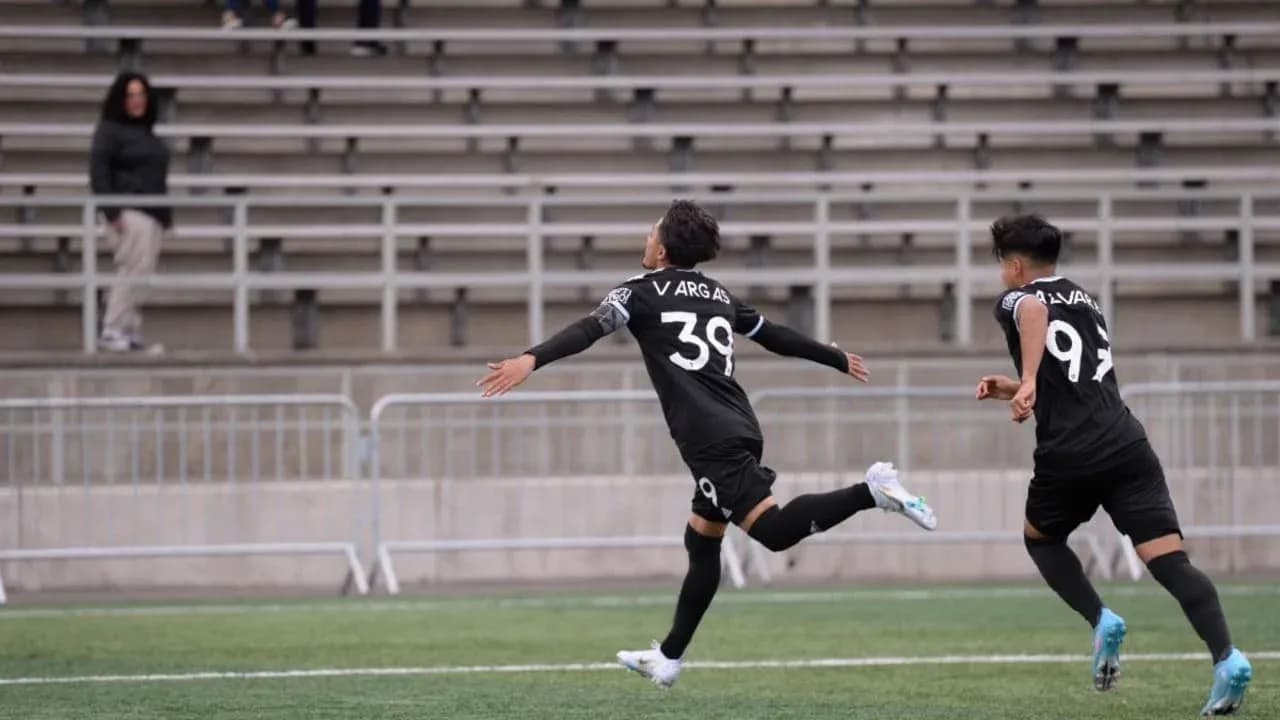
Vancouver Whitecaps II vs Real Monarchs: Season Patterns Confirmed
Under the lights at Swangard Stadium, this MLS Next Pro Group Stage clash finished with a stark verdict: Vancouver Whitecaps II 1–3 Real Monarchs. Following this result, it felt less like an isolated defeat for Vancouver and more like a confirmation of the season’s underlying patterns for both sides.
I. The Big Picture – Two Diverging Trajectories
Vancouver entered the night as a team searching for stability. Overall this campaign they have played 12 matches, winning 3 and losing 9 with no draws, scoring 17 and conceding 30 for an overall goal difference of -13. At home, though, there had been a semblance of refuge: 3 wins and 3 defeats from 6, with 9 goals scored and 11 conceded, an attacking average at home of 1.5 goals per game against 1.8 conceded.
Real Monarchs arrived with a very different profile. Overall they had played 11 matches, winning 7 and losing 4, with 22 goals scored and 17 conceded, giving them an overall goal difference of +5. On their travels they had already shown teeth: 2 away wins and 2 defeats from 4, scoring 9 and conceding 6, an away scoring average of 2.3 goals per game against 1.5 conceded.
The full-time scoreline mirrored those numbers almost too neatly. Vancouver’s fragile defensive structure, conceding an overall average of 2.5 goals per game, again bent and broke under a side that has made a habit of hitting the 2-goal mark or better.
II. Tactical Voids – Structures Without Shape
Both lineups were announced without explicit formations, but the personnel choices told their own stories.
Rich Fagan leaned into youth and continuity. S. Rogers anchored Vancouver from the back, flanked by the likes of T. Wright and M. Garnette, with Y. Tsuji and C. Bruletti asked to stitch phases together. Up front, the responsibility fell on players like C. Rassak, Y. Zuluaga and K. Podgorni to convert the limited momentum this team has been able to generate all season.
The tactical void for Vancouver is not about missing stars – the “missing players” list is empty – but about a structure that never quite protects its own vulnerabilities. Overall this campaign they concede an average of 3.2 goals per game on their travels and 1.8 at home; the defensive habits that leak goals away from Swangard have clearly seeped into their home performances as well. With zero clean sheets in total, the back line is constantly firefighting.
Discipline has been another quiet drain. Vancouver’s yellow-card distribution shows a spread of risk across the match, but with distinct spikes: 17.39% of their yellows arrive in the 46–60’ window, another 17.39% between 76–90’, and a further 17.39% in 91–105’. That late-game surge in cautions speaks to a side that tires, chases, and fouls when stretched, eroding any chance of a composed late push.
Mark Lowry’s Real Monarchs, by contrast, look like a team comfortable in their own skin. R. Alphin provided presence at the back, with K. Henry and G. Calderon central to their defensive line. The midfield axis of G. Villa, L. Moisa and L. O’Gara, supported by I. Amparo and V. Parker, gave the visitors a platform to play higher up the pitch, while F. Ewald offered a focal point.
Lowry’s bench – O. Anderson, L. Rivera, Z. Gozo, O. Marquez and D. Kropp – underlined a clear tactical identity: pace and verticality ready to be injected late. That dovetails neatly with a card profile that spikes late but with control: 28.57% of their yellows arrive between 76–90’, another 14.29% in 91–105’, yet they have only 1 red card overall, shown in the 31–45’ window. They flirt with the edge but rarely topple over it.
III. Key Matchups – Hunter vs Shield, Engine Room vs Engine Room
The “Hunter vs Shield” battle here was less about a single prolific striker and more about collective output. Real Monarchs came in averaging 2.0 goals per game overall, Vancouver conceding 2.5. On their travels, Real Monarchs’ 2.3 goals per game met a home defence that concedes 1.8 at Swangard. Over 90 minutes, the visitors’ attacking rhythm simply overwhelmed a back line that has yet to find a reliable shield.
In the “Engine Room” duel, Vancouver looked to T. Wright as a defensive anchor and transitional outlet. Listed as a defender in the league’s top charts, Wright embodies the dual role this side needs: break up play and start it again. Yet the structural context around him is unforgiving. With no clean sheets and 2 matches overall where Vancouver have failed to score, the margin for error is razor-thin.
On the other side, the Real Monarchs midfield of Villa, Moisa and O’Gara controlled tempo and territory. Their team profile – only 17 goals conceded overall at an average of 1.5 per game – suggests a unit that knows when to compress space and when to absorb. Even when they lose, it tends to be within a narrow band; their heaviest away defeat is 3–1, while their biggest away win is a 0–5 statement. This is a side that can both suffocate and explode.
IV. Statistical Prognosis – Why This Result Made Sense
Following this result, the numbers and the narrative align. Vancouver, with an overall attacking average of 1.4 goals per game, hit their approximate ceiling with a single goal against a defence that usually allows 1.5. Their overall concession rate of 2.5 almost perfectly matches the three they shipped here, especially against a Real Monarchs side that habitually plays in the 2+ xG band.
Real Monarchs’ season arc – four straight wins, four straight losses, then three more wins – paints a volatile but high-ceiling team. When their press connects and their midfield sets the line of engagement high, they look like one of the division’s most dangerous travellers. Their away scoring power, their compact defensive record, and their capacity to manage late-game chaos through controlled aggression all pointed toward the kind of away performance they delivered at Swangard.
For Vancouver Whitecaps II, the task now is clear and unforgiving: transform a leaky structure that has yet to record a single clean sheet into something sturdier, without sacrificing the modest attacking gains they enjoy at home. For Real Monarchs, this felt less like a surprise and more like confirmation that, on their travels, they possess both the Hunter’s instinct and a Shield robust enough to carry them deep into this MLS Next Pro campaign.