USA Defeats Bosnia & Herzegovina 2–0 in Tactical Showdown
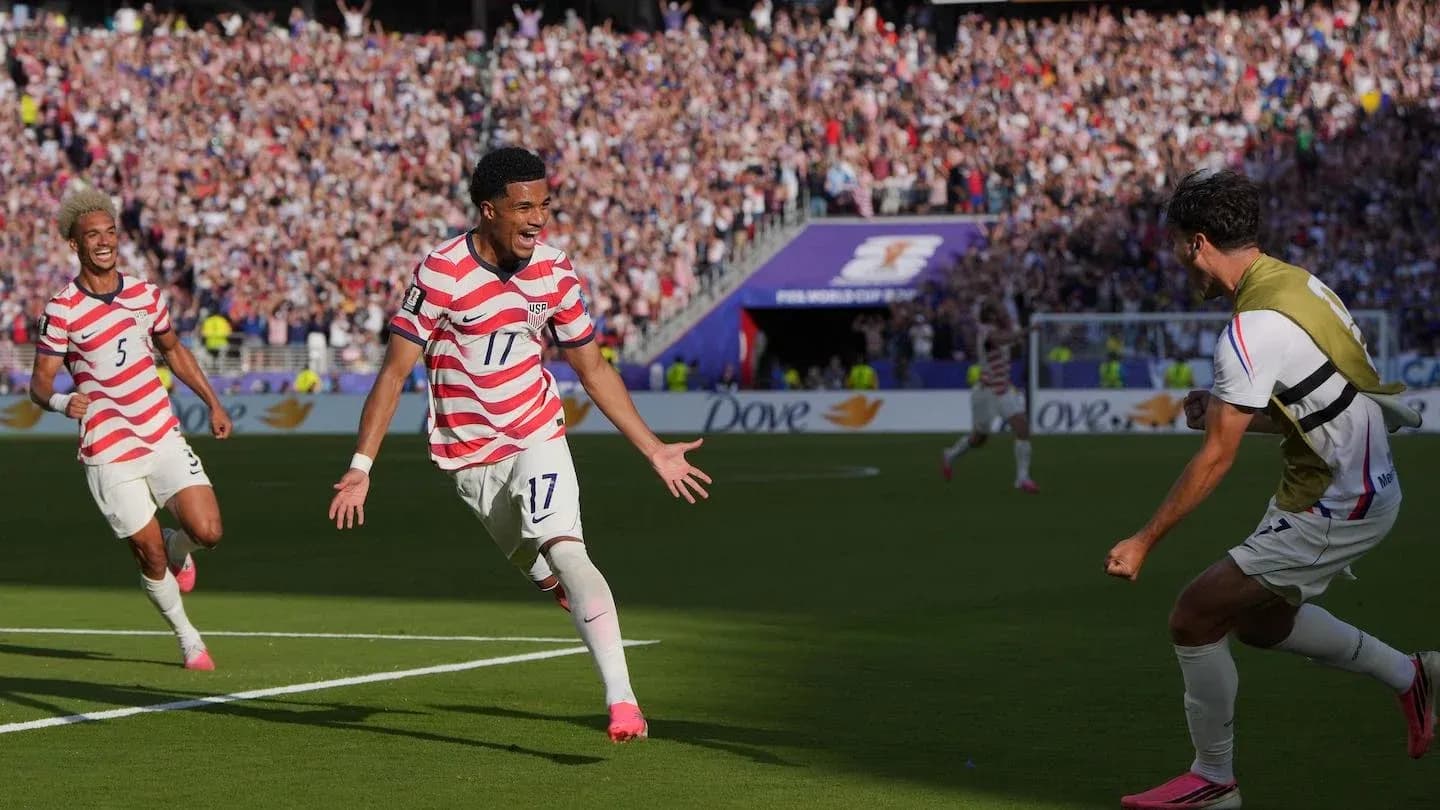
Under the lights of Levi’s Stadium, the Round of 32 between USA and Bosnia & Herzegovina felt like a tactical referendum on two very different World Cup journeys. The Americans arrived as group winners from Group D, with 6 points and a goal difference of 4 after 3 matches, their form line of WWLW underlining a side that has learned to embrace chaos and come out on top. Bosnia & Herzegovina, third in Group B with 4 points and a goal difference of -1 from their 3 outings, carried the scars of a tougher route, their form DLWL hinting at inconsistency wrapped around moments of promise.
This knockout fixture finished 2–0 to USA, a scoreline that neatly echoed their broader seasonal DNA. Heading into this game, USA had played 4 matches overall, winning 3 and losing just once. Their attack has been relentless: 10 goals in total, with 8 of those coming at home and 2 on their travels. The Americans’ home scoring average of 2.7 goals per game, combined with just 0.3 conceded at home, painted the picture of a side that expects to dictate proceedings. Bosnia & Herzegovina, by contrast, had managed 5 goals in total across their 4 matches, but conceded 8 overall. On their travels they averaged only 0.7 goals for and 2.3 against, a vulnerability that would be ruthlessly exposed.
USA’s Formation
Mauricio Pochettino doubled down on USA’s attacking identity with a bold 4-3-3. M. Freese started in goal behind a back four of A. Robinson, T. Ream, C. Richards and A. Freeman. In front of them, the midfield trio of T. Adams, W. McKennie and M. Tillman offered a blend of control, aggression and verticality. The front line of S. Dest, F. Balogun and C. Pulisic was pure intent: three players comfortable drifting between lines, interchanging, and stretching a defensive block to breaking point.
Bosnia & Herzegovina’s Response
Across from them, Sergej Barbarez sent Bosnia & Herzegovina out in a 5-3-2, a clear reaction to both the opponent and their own away frailties. N. Vasilj marshalled a back five of S. Kolasinac, S. Radeljic, T. Muharemovic, N. Katic and A. Dedic. In midfield, A. Gigovic, I. Sunjic and K. Alajbegovic were tasked with compressing central spaces and denying USA’s interior passing lanes, while E. Dzeko and E. Demirovic formed a front two designed to hold counters and punish any American overcommitment.
The absences mattered. USA were without M. McKenzie (bruised foot) and C. Roldan (muscle bruise), both ruled out for this fixture. Neither is a guaranteed starter, but in a tournament where accumulated minutes weigh heavily, losing two rotational options quietly reshaped Pochettino’s risk calculus. It meant greater reliance on the starting back line and central midfield, and less flexibility if the match turned into a physical, card-laden grind.
Disciplinary Considerations
Discipline, though, has been an area where both sides walk a fine line. Heading into this game, USA’s yellow cards skewed heavily toward the middle and late phases: 40.00% of their yellows arrived between 46–60 minutes, with another 20.00% between 76–90 and 20.00% in the 91–105 window. More tellingly, their only red card this tournament had come between 61–75 minutes. Bosnia & Herzegovina’s profile was even more volatile: 37.50% of their yellows landed between 76–90 minutes, and their solitary red card also arrived in that same 76–90 band. In a knockout context, those patterns suggested a combustible final half hour, with fatigue and scoreboard pressure amplifying every duel.
Key Matchups
Within that disciplinary frame, the duel between USA’s talismanic scorer and Bosnia’s defensive anchor stood out as the “Hunter vs Shield” subplot. F. Balogun arrived as one of the World Cup’s more efficient forwards: 3 goals in total from 3 appearances, backed by 8 shots (4 on target) and a rating of 7.23. He is not just a finisher but a constant irritant, drawing 7 fouls and engaging in 27 duels, winning 10. His aggression has a cost — 1 yellow and 1 red card already this tournament — but it speaks to a striker who lives on the edge of contact and chaos.
Tasked with repelling him, T. Muharemovic embodied Bosnia & Herzegovina’s defensive resistance. Across 3 appearances and 260 minutes, he had completed 157 passes at 84% accuracy, intercepted 8 balls, and blocked 1 shot. His own disciplinary line was thin: 5 fouls committed and a red card already on his record. In a back five that needed to stay compact and mistake-free, Muharemovic’s front-foot defending was both their best hope and their greatest risk. Every time Balogun attacked the space between Muharemovic and Radeljic, the game hovered between a clean intervention and a catastrophic card.
Engine Room Confrontation
Behind those individual battles, the “Engine Room” confrontation was no less decisive. For USA, T. Adams and W. McKennie were the twin pistons. Adams, stationed as the deepest midfielder, set the press triggers and controlled rest defence, ensuring that when USA’s front three overloaded one side, the team’s structure behind the ball remained intact. McKennie, more advanced, thrives in broken play — second balls, late runs, aerial duels. His presence allowed M. Tillman to find pockets between Bosnia’s midfield three and their back five, dragging markers out of line and creating channels for Pulisic and Dest to attack.
Bosnia & Herzegovina’s response came through I. Sunjic and A. Gigovic. Sunjic, the enforcer, was tasked with disrupting USA’s rhythm, stepping aggressively into passing lanes and contesting every central reception. Gigovic offered a more progressive outlet, trying to link with Dzeko and Demirovic whenever Bosnia could escape the press. Yet their structural challenge was immense: with USA averaging 2.5 goals per game overall and conceding only 1.0, any prolonged spell without the ball risked turning the match into a siege.
Statistical Outlook
From a statistical standpoint, the prognosis before a ball was kicked leaned heavily toward USA. At home they had 3 wins from 3, with 8 goals scored and just 1 conceded, plus 2 clean sheets. They had yet to fail to score in any match, and their biggest home win — 4–1 — showed how quickly they could accelerate once in front. Bosnia & Herzegovina, by contrast, had failed to keep a single clean sheet overall and had already failed to score once on their travels. Their heaviest away defeat, 4–1, underlined how exposed they could become when chasing games.
Layer onto that the disciplinary volatility — late yellow surges and red cards for both sides, no penalties taken or missed by either team so far — and the contours of the contest were clear. USA’s high-tempo, front-foot football was always likely to generate more territory, more shots, and more cumulative xG, even if the raw xG numbers are not explicitly provided here. Bosnia & Herzegovina’s path to an upset depended on compressing central zones, surviving the first wave, and hoping that Dzeko’s penalty-box craft could turn low-volume chances into high-value goals.
In the end, the 2–0 scoreline felt like the logical extension of the underlying numbers and tactical shapes. USA’s superior attacking volume, defensive solidity at home, and the cutting edge of F. Balogun and C. Pulisic overpowered a Bosnia & Herzegovina side whose structural caution could not fully mask their away fragility. In a tournament that often punishes recklessness, this tie instead rewarded the side most capable of sustaining pressure without losing balance — and on this night in San Francisco, that side was unmistakably USA.