Tottenham's Ambitious Plan for Women's Football
Tottenham mean business. You can see it in the transfer fees, in the profile of the players arriving, and in the way the club now talks about its women’s team. This is no longer a side content simply to survive in the Women’s Super League. It is a project being tooled, piece by piece, for Europe.
Last season’s fifth-place finish was a marker. The year before, Spurs were glancing nervously over their shoulders at relegation. Now they are staring upwards.
And they are spending like it.
A new kind of Spurs
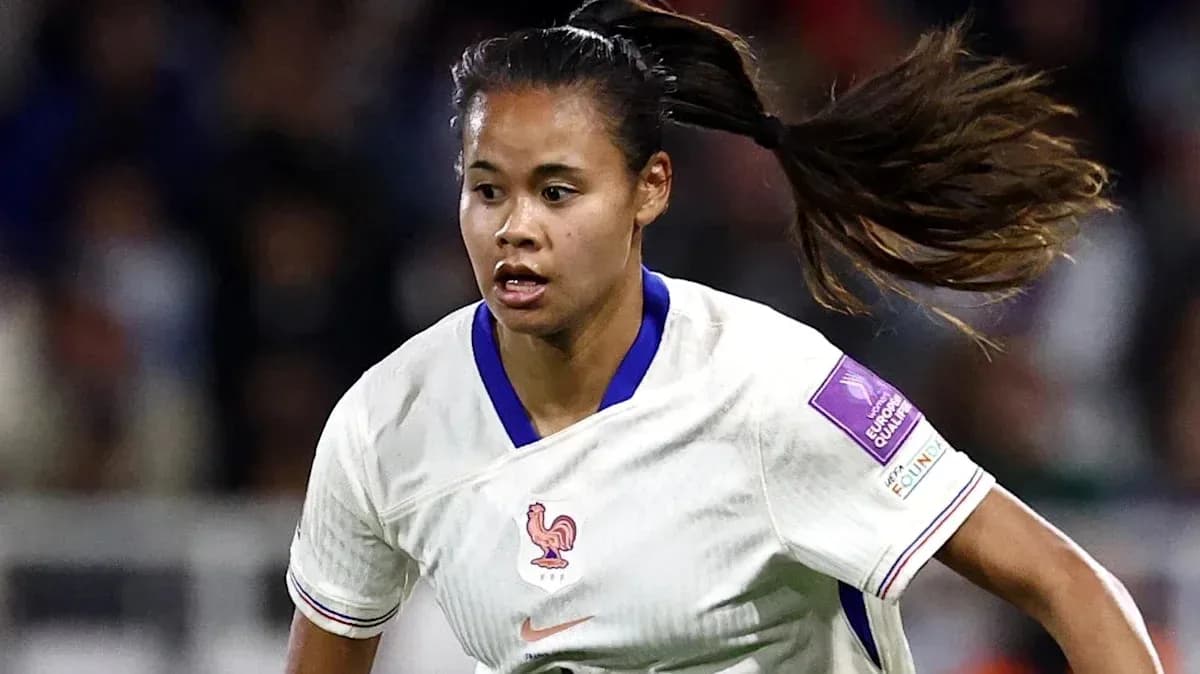
Tottenham have smashed their club-record fee to bring in France defender Alice Sombath from Lyon, just months after paying around £375,000 for Signe Gaupset in January. Those are the kind of numbers that once belonged almost exclusively to the traditional elite. Spurs are putting themselves in that conversation.
Sombath is the headline, but she is far from alone. Forwards Shekiera Martinez and Kirsty Hanson, defender Caitlin Dijkstra, midfielder Victoria Pelova and goalkeeper Selma Panengstuen have all arrived to deepen and sharpen the squad. On paper, this is a group built not just to compete with the top four, but to irritate them, to take points off them, to force their way into the Champions League debate.
Martin Ho has been central to that shift. His arrival, after a disappointing 2024-25 campaign under Robert Vilahamn that cost the Swede his job, reset the tone. In his first season, Spurs climbed back up the table. Now the club is backing him heavily.
A plan, not a scramble
This is not a scattergun summer. Since Ho walked through the door in July 2025, Tottenham have worked to a 12‑month recruitment plan, mapping out three transfer windows in advance. Targets were identified early. Conversations were started early. Deals have been closed early.
Cathinka Tandberg and Toko Koga are the clearest examples of that joined-up thinking. Talks with both were already advanced before Ho had even signed his contract, yet they have become key figures for him. The club knew what it wanted; Ho knew how he wanted to use it.
He spent his first summer taking stock, deciding who could grow with him and where the gaps were. After that, the evolution began in earnest. Internally, Spurs are adamant: they landed all their priority targets in January and have done the same again this summer, even though the window does not shut until 3 September.
The strategy is obvious. Get the business done, get the coach on the grass with a full group, and let pre-season do its work. No late scrambles, no last-minute panic loans. Just a squad built to a clear idea.
Behind Ho, managing director Andy Rogers has been steering the operation. A Spurs man for 24 years, he has overseen this summer’s transfer work with one eye on the future, determined to leave the women’s side in a strong position before he steps down. It is a quiet but significant passing of the baton.
Built for Europe
So what does all this actually buy Tottenham?
For a start, stability. This is their seventh season in the WSL, and the growth has been striking. Staff numbers have swelled, training facilities have been upgraded, and the women’s team has its own base at the club’s Hotspur Way training centre. Plans for a new women and girls academy facility were blocked in court this week, a setback that underlines how fast the club is trying to move, and how not everything can be smoothed with money alone.
The ambition, though, is crystal clear. Ho has not ducked the question: he wants Tottenham competing with the league’s best and pushing into Europe. The club has the infrastructure, the backing, and now the kind of recruitment to make that more than just a slogan.
The obstacle is brutal. Only the top three in the WSL qualify for the Women’s Champions League, and those places are habitually occupied by Arsenal, Chelsea, Manchester City and Manchester United. Cracking that cartel is not a tweak; it is a leap.
And Spurs are not the only ones stretching for it. London City Lionesses and Brighton are spending, talking, planning like clubs who also expect to break through. Their investment has had a galvanising effect. Tottenham know that standing still now is the same as sliding backwards in a league where transfer records are being rewritten almost every window.
A race against time and regulation
All of this is happening in a women’s game still working out its financial rules. Salary caps and broader financial regulations remain at an early, tentative stage. For now, clubs with the appetite and the means can inject serious money with little resistance. That freedom may not last.
Tottenham are moving while they can. The women’s team’s aggressive window mirrors an ambitious summer for the men’s side, who are trying to recover from a Premier League campaign so poor it almost ended in relegation. The message from the boardroom is unmistakable: both arms of the club are being reshaped.
The departure of long-serving chairman Daniel Levy in September 2025 marked a clear break. What has followed is a recalibration of strategy, with new faces and new priorities. Among them is chief executive officer Vinai Venkatesham, who arrived from Arsenal in April 2025 carrying the weight of his role in the Gunners’ women’s success. Tottenham hired him to replicate that impact in N17.
The recruitment model reflects that ambition. Young, high-ceiling talent from across Europe – Gaupset, Sombath and others – is being blended with proven WSL end-product in Hanson and Martinez. Ho is being given a squad he can shape, not just manage.
The missing piece: a crowd to match the vision
One challenge remains stubbornly unresolved: the stands.
Spurs averaged just 1,734 fans in the WSL last season, a figure that includes spikes from occasional games at the main Tottenham Hotspur Stadium. This is a club that once drew almost 40,000 for a north London derby against Arsenal in 2019, and that has played in a Women’s FA Cup final. The potential is obvious. The reality, for now, is a core support that does not yet reflect the scale of the investment.
Tottenham have pushed hard on the pitch and in the boardroom to close the gap to the game’s elite. The squad looks stronger, the structure more sophisticated, the ambition louder. The question that will define this season is simple: can they turn all of that into results, into European football – and into a fanbase that grows at the same speed as their ambition?