Tottenham's Transformation: From Relegation Fear to Ambitious Rebuild
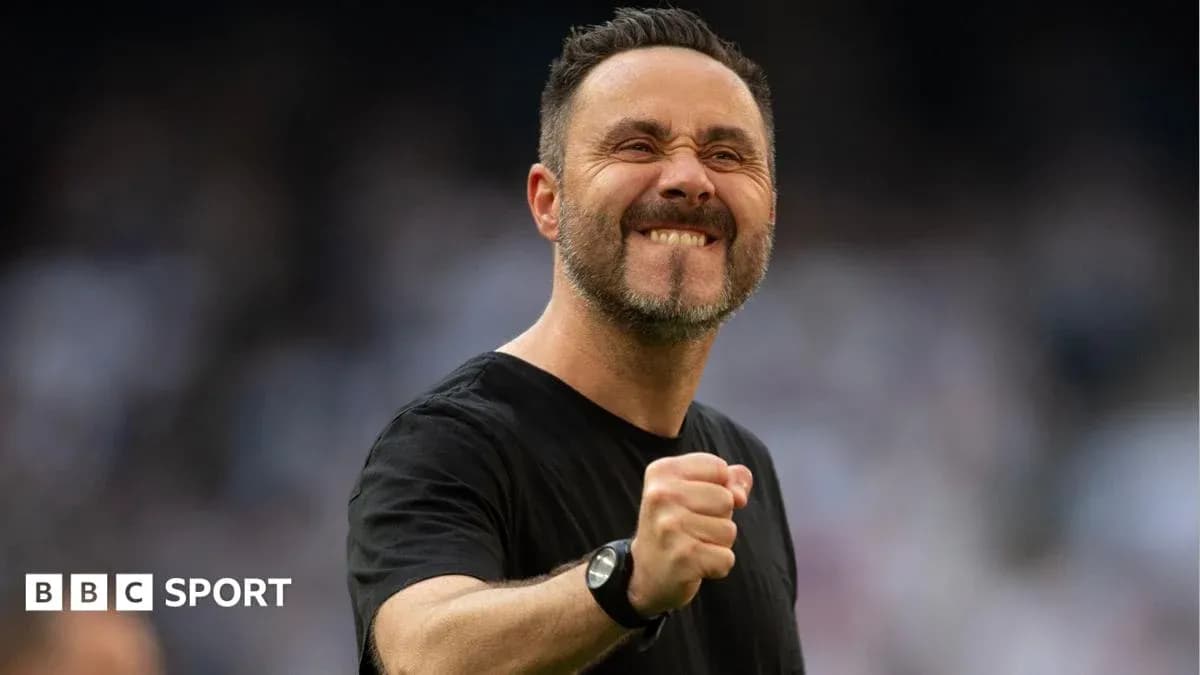
There was a point last season when Roberto de Zerbi looked around the Tottenham dressing room and wondered aloud: “Did we pass away?”
Players were flat on their backs at the Stadium of Light. Some were in tears. A 1-0 defeat at Sunderland had left Spurs staring into the abyss with seven games to save their Premier League status, and a new head coach trying to revive a squad that looked emotionally spent.
They survived, but only just, on the final day. The scars of that escape still sit close to the surface. The mood around the club, though, has been transformed.
From tears in Sunderland to table tennis in Sydney
Fast forward four months and the scene could hardly be more different. In a hotel in Sydney, a short walk from the Harbour Bridge and Opera House, the same squad is unrecognisable.
On a private floor, players drift between coffees made by their own barista and fiercely contested games of table tennis. There is laughter, noise, a sense of a group that actually enjoys being together. A club-record £237m worth of new signings move among them, trying to blend into a squad that suddenly dares to talk about trophies again.
Sandro Tonali, the new headline act, is there. So are Mateus Fernandes, Jan Paul van Hecke, Andrew Robertson and Martin Dubravka, all involved on the pre-season tour of Australia and New Zealand. Marcos Senesi, fresh from a World Cup final with Argentina, was given extra time off and has only just started work at Hotspur Way, the lone new recruit yet to feature on tour.
De Zerbi, now 47 and emboldened by survival, is unapologetic about the scale of the rebuild.
“I deserve to want the top players, because now Tottenham deserves to build up a top team,” he says.
Two plans, one escape
Spurs entered the summer in an unusual position. Inside the club, two transfer blueprints sat on the table: one for relegation, one for survival. De Zerbi insists he would have stayed even if they had gone down, but he is more than happy to be operating from Plan A.
That means trying to keep key figures such as captain Cristian Romero and goalkeeper Guglielmo Vicario, while accepting that both could still leave if the right offers land. It also means dealing head-on with a squad that, when he arrived in April, was fractured and fearful.
“At the beginning of my time in April I had one million individual meetings,” he jokes. The message in those conversations was blunt. If a player wanted out, there was a deal to be made.
“They told me if they didn’t want to be here. I said: ‘Yes, help me to stay up, and then I help you to leave. If you don’t help me to stay up, you stay underwater with me.’”
The threat was half in jest, half deadly serious. Spurs stayed up. Some of those players will now get their move. Others have decided the project is worth sticking around for.
A new power structure
While De Zerbi has become the public face of Tottenham’s reset, the club has changed significantly behind the scenes as well.
New chief executive Vinai Venkatesham now runs the operation on behalf of the Lewis Family Trust. Alongside him, technical director Johan Lange – the only senior survivor from the previous regime – handles recruitment, supported by director of football operations Rafi Moersen and performance director Dan Lewindon, both hired from City Football Group.
Lewindon’s remit is clear: fix a damaging injury record. De Zerbi’s remit is broader. He has made it clear he wants a say in everything, especially transfers.
“In the transfer market, when I want one player, I become like a shark,” he says. “No chance to say no.”
The “shark” has already helped land Fernandes from West Ham for £85m and Tonali from Newcastle for £100m, both record deals. He relishes it.
“I love working in the transfer market. It’s not a pressure, it’s one of the nicest parts in my work, in my job.”
Where does that come from? De Zerbi points to the responsibility. When the coach picks the player, the coach owns the decision. It also allows him to build a relationship before a signing even walks through the door.
“With Mateus Fernandes, I spoke with the mum, with the father,” he says. He told Fernandes’ father he would be a “second dad” in England, a personal pledge as much as a sales pitch.
Winning races, sending messages
That personal touch has become a theme of Tottenham’s summer. Spurs beat Manchester United and Manchester City to their two new midfield lynchpins. They signed Van Hecke despite interest from Chelsea.
Transfers, as one insider put it, are game theory. Spurs decided they had to be aggressive and quick. Aggressive with fees. Aggressive with wages. Aggressive with De Zerbi’s direct involvement.
The coach has not been shy. After a 2-2 draw with Brighton in April, when Georginio Rutter’s 95th-minute equaliser damaged Spurs’ survival hopes, De Zerbi went straight to his phone. Van Hecke had supplied the cross.
“You wanted to push down Tottenham for Brighton when you made the assist to Rutter, now you have to come to me, you have no choice,” he later revealed.
Tonali received a similar level of attention. De Zerbi messaged him the day after Spurs secured survival with a final-day win over Everton. Then he flew to Brescia to sit in the midfielder’s home and talk through the project. That meeting proved decisive. Club staff handled the rest.
Now De Zerbi is hinting at one more flourish – a final attacking “bomba”, as he calls it. Two forwards are expected, with one move aimed at Manchester City’s Savinho.
Spending big, thinking long
From the outside, Spurs’ outlay looks lavish. De Zerbi rejects the idea that the club is gambling recklessly.
He says he is under “no pressure” despite the Lewis family injecting £100m into the club in June, arguing that Chelsea, Arsenal and Liverpool have all made similar moves to reset their squads in recent years.
Tottenham have also sold. Luka Vuskovic’s £45m move to Brighton brought in a substantial fee. The futures of Lucas Bergvall and Djed Spence remain uncertain.
“We assessed the request of Vuskovic [to join Brighton], with Vinai, with Johan together, because I consider Tottenham’s money my money,” De Zerbi says. “It’s like the owner is my father, I think you don’t want to ask your father to lose money.
“Like all the big clubs, we have to sell a player at as big of a price as possible and we have to bring a player with a small price, we are starting for a plan of five seasons because we are building.”
The club also walked away from Joao Palhinha. The Fulham midfielder, on loan at Bayern Munich last season, was admired, but the overall financial package did not stack up. It was a cold, calculated decision, not a judgement on his quality.
Changing the mood, not just the squad
The rebuild is not only about contracts and spreadsheets. After that grim afternoon in Sunderland, the gloom spread beyond the dressing room. Staff at the training ground felt it too.
“The day after I organised a meeting without players and I said, ‘The first one I see say something negative, I send you home immediately’,” De Zerbi recalls.
He wants to change “behaviour, attitude and spirit” across the club. Spurs had finished 17th the previous season, but that campaign ended with a Europa League triumph under Ange Postecoglou and never carried the same suffocating fear of relegation. Last season did. The trauma was real.
To start the healing, De Zerbi took his players out of the bubble.
“One big dinner in Mayfair, with alcohol,” he says, smiling. He believes Spurs were unlucky in their final matches and could have secured survival earlier, but he also knows how fragile the group felt.
“I think they considered themselves in that moment worse than the people thought,” he admits.
The process is ongoing. He wants the players to reach the point where they arrange the dinners and drinks themselves, where the dressing room polices its own standards and joy.
“With love, friendship and care, you become top, top, top,” he says.
From the brink of the Championship to baristas and “bombas” in Sydney, Tottenham have chosen their path. Now they have to live up to the coach who promised to be their second father, their shark in the market, and the man who refused to let them lie on the floor and feel dead.