Tottenham's Season Review: From European Aspirations to Survival
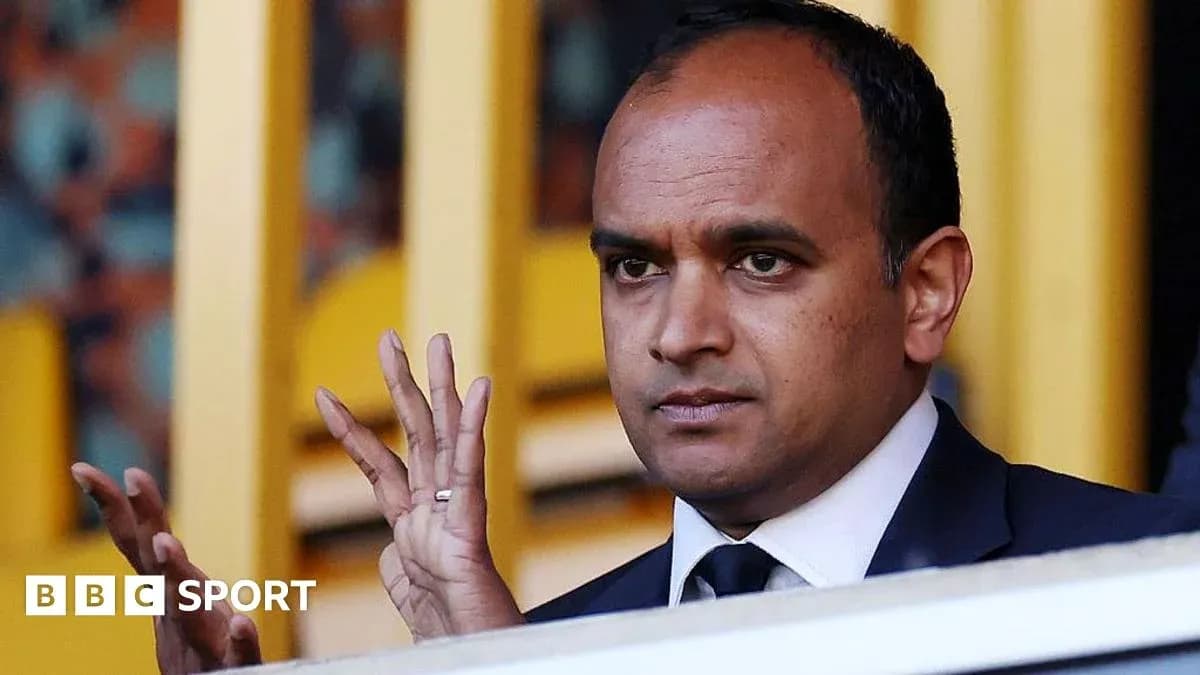
Vinai Venkatesham walked into Tottenham Hotspur last June talking about European football. He ended his first season clinging to Premier League status on the final day, drenched not in glory but in relief.
The mood has shifted. So has the language. This is no longer about fine-tuning. In his own words, Tottenham need “a complete reset”.
From European ambitions to survival scramble
On day one, Venkatesham thought the target was obvious.
“Competing for European places,” he said of his expectations for the men’s first team when he started on 1 June last year.
It sounded reasonable. Spurs had just finished 17th under Ange Postecoglou, but they had also lifted the Europa League – their first trophy since 2008 – and the squad contained seasoned internationals. On paper, it looked like a platform.
Reality, he discovered, lived elsewhere.
“A few months after I joined, when I was no longer an outsider, I would have told you the club was in a significantly worse state in some places than I thought,” he admitted. What he found was not a club in need of a tweak, but one crying out for that “complete reset”.
The contrast was stark. Off the pitch, he describes stadium operations and commercial as “really strong”. On the football side, over a five-year span, the rest of the Premier League had accelerated away.
Tottenham had improved, but not enough. “There was a significant gap,” he said. “In some areas really quite worryingly so.”
He talks about an absence of “relentless obsession with football success”. The training centre, he says, is “amazing… one of the best, if not the best in the world”, but it “looks more like a five-star hotel than it does a performance environment”.
That, he promises, “will change over the summer”. Expertise will be brought in. Comfort will give way to edge.
Frank, Tudor and a season of wrong turns
The season itself played out like a cautionary tale in decision-making.
Thomas Frank’s reign, on the surface, began with promise. One defeat in the opening 10 games in all competitions hinted at stability. Beneath that, the foundations were cracking.
By February, when Tottenham finally sacked Frank, the only real surprise among supporters was that it had taken so long. Venkatesham and sporting director Johan Lange were accused of drifting, of passivity, of watching the season burn.
He rejects that outright.
“Plenty of coverage that the club was passive during this period. And that’s absolutely not true,” he insisted.
The club weighed up everything: results, the chances of Frank turning it around, the disruption a change might cause in the January window, the fixture list, and the risk of plunging into the thin, unpredictable interim market.
They went for it. And then they missed.
Venkatesham confirms Tottenham tried to lure Roberto de Zerbi, who was leaving Marseille, as full-time head coach after Frank’s dismissal. De Zerbi, though, did not want to walk into a job mid-season. That hesitation sent Spurs down a different path.
They chose Igor Tudor.
It was a left-field call and, as it turned out, the wrong one. Tudor arrived with experience of high-pressure clubs and a reputation for making an immediate impact. His personality contrasted sharply with Frank’s. Spurs wanted someone who would not “wilt under that pressure”.
They also knew he had no Premier League experience. “Was it a risk in appointing him? Absolutely,” Venkatesham said.
Seven games later, Tudor was gone by mutual consent.
Asked if it had been a mistake, Venkatesham did not dance around it. “It didn’t work out. I think it’s very clear it didn’t work out. And I don’t think that is in question.”
Abuse, anger and a fanbase out of patience
For years, Daniel Levy absorbed most of the fury. The former executive chairman, who left the club in September after 25 years, was the lightning rod.
With Levy gone, the glare shifted. Venkatesham has felt it sharply.
Two consecutive 17th-place finishes have hardened the mood. Survival at Everton on the final day brought relief, not forgiveness.
“I understand the frustration around supporters,” he said. “This is two 17th-place finishes in a row. It’s clearly not good enough.”
He calls that reaction “rational, normal, sensible”. He also knows words will not be enough.
“The club had some serious challenges that it needs to address on the football side. We know what those are. We are addressing them. We are fixing them,” he said. But those problems “built up over many years” and cannot, as he put it, be solved with a “magic wand”.
In the meantime, he has to stand in the storm.
“It’s not easy. You have to develop a thick skin,” he said of the personal abuse. Fifteen years in football, including a long stint at Arsenal, have toughened him, but the line, he believes, is being crossed more and more for players, referees and executives alike.
Criticism, he accepts. The rest, he endures.
De Zerbi’s shock therapy
If the season was dominated by missteps, its final act offered something different: clarity.
Roberto de Zerbi arrived into chaos and imposed order. Eleven points from seven games were enough to drag Tottenham over the line and preserve their Premier League status. The impact, internally, goes deeper than the table.
“I think he has made an extraordinary impact so far,” Venkatesham said.
He stresses it is “early days” and that De Zerbi walked into a “very specific situation”, but those inside the club talk of a transformation in the dressing room. Belief has returned. Standards have risen.
“It is hard to underestimate the scale of the challenge he walked into,” Venkatesham said. Just as hard, he suggests, to overstate how quickly the Italian has imposed himself.
De Zerbi brings a clear identity and a style of football Venkatesham believes “our supporters and the broader football public want to see”. He is expected to be fully involved in recruitment this summer, shaping the squad in his image rather than inheriting someone else’s half-finished project.
Behind the scenes, Tottenham have already spoken to Borussia Dortmund’s departed sporting director Sebastian Kehl. The club have also raised their wage ceiling to compete for higher-calibre players. For a club long accused of blinking in key moments, it is a notable shift.
A critical window and a brutal diagnosis
Venkatesham does not sugar-coat what comes next.
“The squad needs work and the squad hasn’t got the right balance,” he said. Spurs, he argues, lack experience, leadership and the physical robustness required “to play in the most demanding league that exists”.
This will not be fixed in one summer. He talks about strengthening “over multiple transfer windows”, but he is clear: this one “is going to be critical”.
The training ground will look less like a luxury resort and more like a workplace. Expertise will be hired. Structures will be rebuilt around De Zerbi’s football.
Tottenham survived. That is all. Now comes the harder part: proving this was the bottom of the curve, not the new normal.