Toronto II Edges Philadelphia Union II in Playoff Dress Rehearsal
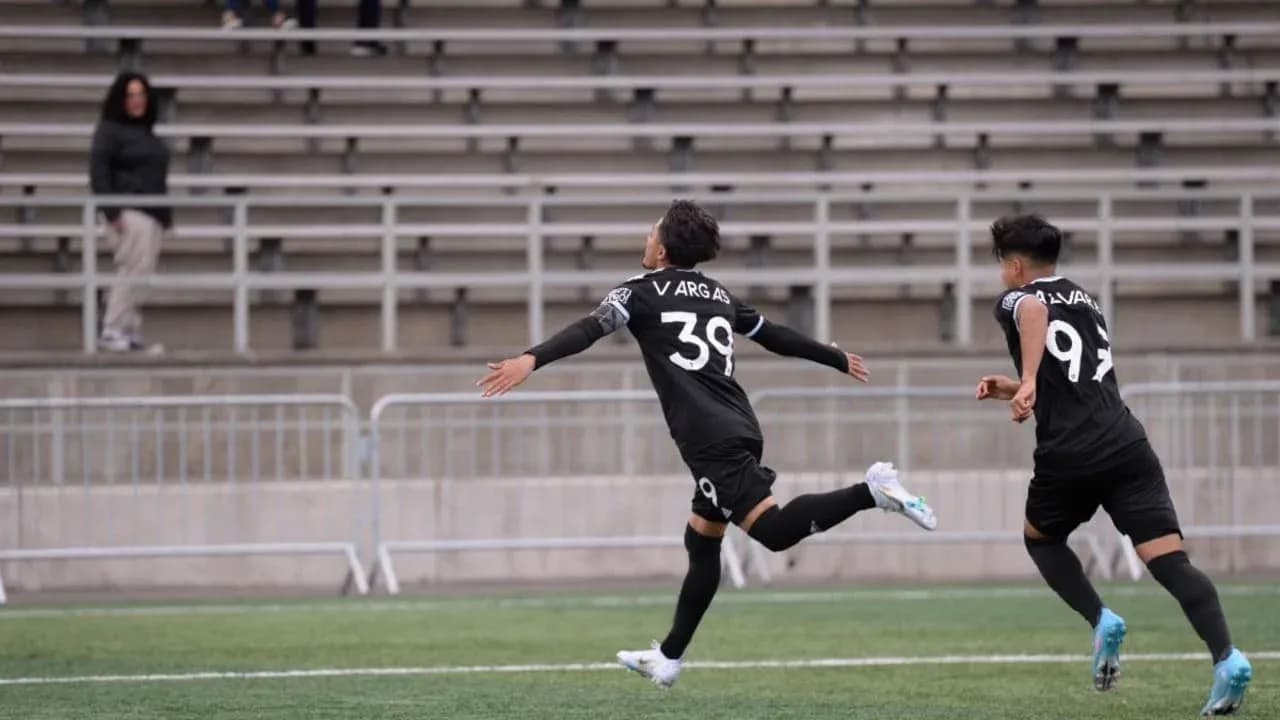
Under the lights at York Lions Stadium, this MLS Next Pro Group Stage meeting between Toronto II and Philadelphia Union II had the feel of a playoff dress rehearsal. Two sides locked in the same Eastern Conference race, separated by a single point in the standings, went toe-to-toe – and over 90 minutes Toronto II edged a 2–1 victory that said as much about their evolving identity as it did about the table.
Following this result, Toronto II’s season narrative sharpens. In total this campaign, they have played 12 matches, winning 6 and losing 6, with no draws. Their overall goal difference in the standings sits at +2, built from 20 goals for and 18 against, and their broader statistical profile shows 21 goals scored and 20 conceded across all venues in league data, for an overall scoring average of 1.8 goals for and 1.7 against. At home, across 5 league fixtures, they have produced 9 goals for and 8 against, averaging 1.8 scored and 1.6 conceded. It is a profile of volatility: high-event football, streaky form, and a group that leans into chaos rather than shying away.
Philadelphia Union II arrive at a similar crossroads. In total this season, they also have 12 matches played, with 6 wins and 6 defeats, no draws, and a goal difference of +2 from 15 goals for and 13 against in the standings. Their broader statistical ledger shows 16 goals scored and 14 conceded overall, an attacking output of 1.3 goals per match and 1.2 conceded. On their travels, they have played 4 games, winning 2 and losing 2, scoring 5 and conceding 5 at an average of 1.3 for and 1.3 against. Their recent form – LWLLL – speaks of a side that has drifted from its early-season balance, conceding just enough and scoring just too little to fall on the wrong side of fine margins.
The tactical voids in this fixture are less about missing personnel – there is no formal list of absentees – and more about structural risk. Toronto II’s disciplinary map is revealing: their yellow cards spike in two windows, 31–45 minutes and 76–90 minutes, each accounting for 23.81% of their bookings. This is a young side that plays on the edge, especially as halves close. In contrast, Philadelphia Union II spread their cautions more evenly, but their most combustible windows are 16–30 minutes and 61–75 minutes, each at 17.65%, and a notable late push from 91–105 minutes also at 17.65%. More concerning for Ryan Richter’s group is the red-card profile: they have seen dismissals in the 31–45 and 61–75 windows, each accounting for 50.00% of their reds. That hints at emotional flashpoints precisely when games are tilting.
Within that landscape, the lineups tell their own story. Gianni Cimini’s Toronto II XI, built around the spine of Z. Nakhly, R. Fisher, S. Kapor, M. Chisholm, and A. Bossenberry, looks like a side comfortable defending space and then breaking quickly. The presence of ball carriers such as T. Blyth, M. Stojadinovic, and B. Boneau suggests a willingness to commit numbers through the middle third, while F. Bank and J. Nolan offer the running power to stretch and disrupt. The bench – with options like D. Dixon, D. Barrow, and K. Kerr – gives Cimini late-game verticality, the ability to turn a tight contest into a track meet in the final quarter-hour.
For Philadelphia Union II, the shape around P. Holbrook at the back, with F. Sundstrom, R. Uzcategui, J. Griffin, and O. Benitez, is built on a slightly more conservative platform. K. LeBlanc and M. De Paula anchor the midfield, while M. Jakupovic, W. Ferreira, and E. Davis III bring the creative and finishing edge. Off the bench, C. Lorent, K. Moore, and G. Sequera offer different profiles to chase or protect a result, but the away side’s lack of clean sheets on their travels – 0 in 4 away games – underlines the fragility that ultimately cost them here.
The “Hunter vs Shield” matchup in this tie was less about a single marksman and more about collective patterns. Heading into this game, Toronto II were averaging 1.8 goals per match overall, with their biggest away win a ruthless 5–0 and their best home result a 2–1 scoreline. They had failed to score in 3 games in total, all on their travels, and had yet to draw a blank at home. Against that, Philadelphia Union II’s defensive record on their travels – 5 goals conceded in 4 matches at 1.3 per game – looked solid but not impermeable. Over 90 minutes, Toronto’s attacking depth and willingness to commit runners from midfield proved too much, and the 2–1 scoreline mirrored their most common winning pattern: concede, but outgun.
In the “Engine Room” duel, the contrast in midfields was stark. Toronto II, who have kept 3 clean sheets in total, rely on collective pressing and high-tempo transitions rather than a single enforcer. Their yellow-card surges at 31–45 and 76–90 minutes underline a group that raises the intensity just as others tire. Philadelphia Union II, by contrast, try to control tempo more methodically, but their card distribution – with significant spikes at 16–30, 61–75, and 91–105 minutes – suggests a midfield often forced into reactive fouls when their shape is stretched.
From a statistical prognosis standpoint, the result aligns with the underlying numbers. Toronto II’s overall goals-for average of 1.8 and goals-against average of 1.7 forecast high-variance matches; a 2–1 home win sits right on that curve. Philadelphia Union II’s away profile – 1.3 scored and 1.3 conceded – pointed toward a narrow, low-scoring margin, and that is exactly how it played out, only tilted in the hosts’ favor.
Crucially, Toronto II’s penalty record – 1 taken, 1 scored, a 100.00% conversion rate with no penalties missed – adds another layer of threat in tight games, while Philadelphia Union II have yet to take a spot-kick this season. In contests decided by one goal, that edge from the spot can be decisive.
Following this result, Toronto II consolidate their place in the upper half of both the Northeast Division and the Eastern Conference playoff picture, sitting 4th in their division and 7th in the conference with 19 points and a goal difference of +2. Philadelphia Union II, 5th in the Northeast and 10th in the conference with 18 points and a goal difference of +2, are left to confront a form line of LWLLL that now feels like a genuine slide rather than a blip.
In narrative terms, this was a night where Toronto II embraced their volatility and made it a weapon. Philadelphia Union II, still structurally sound on paper, could not quite match the hosts’ intensity in the decisive moments. As the Group Stage grinds on toward the playoff cut, this 2–1 at York Lions Stadium may be remembered as a hinge: the evening when Toronto II’s chaotic energy began to look like a plan, and Philadelphia Union II’s fine margins finally turned against them.