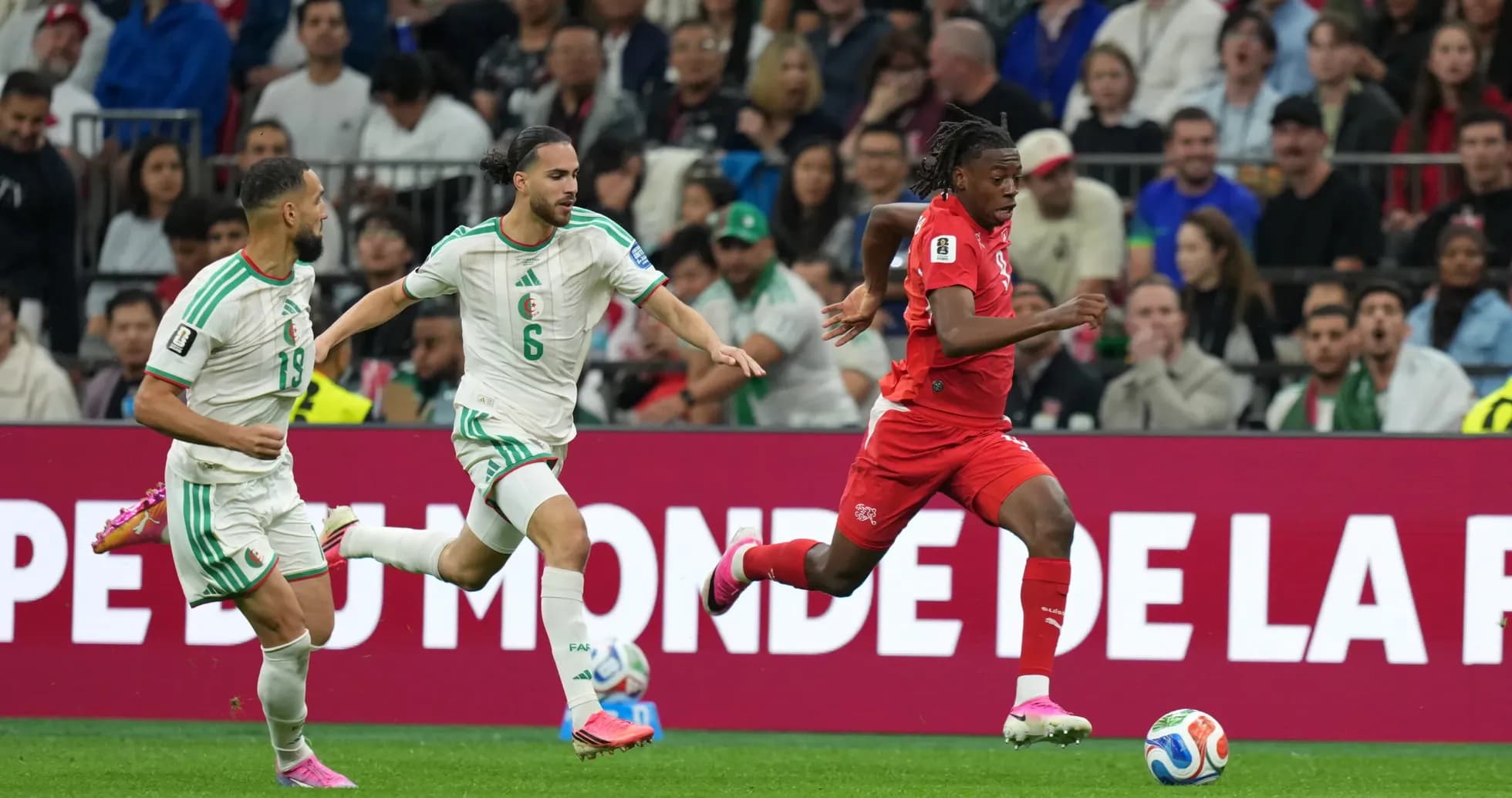
Switzerland vs Algeria: Tactical Analysis of Round of 32 Clash
BC Place in Vancouver staged a Round of 32 tie that felt, even before kick-off, like a clash of contrasting footballing identities. Switzerland arrived as Group B winners, carrying a controlled swagger from a group campaign that yielded 7 points and a total goal difference of +4, built from 7 goals for and 3 against. Algeria, third in Group J with 4 points and a total goal difference of -2 (5 scored, 7 conceded), came in as the more volatile force: capable of three total goals at home in a single outing, but leaking too much at the other end.
Over 90 minutes, the balance of those trends told the story. Switzerland’s 2–0 win, built on a 1–0 half-time lead and calmly managed through the second period, felt like the logical extension of their broader tournament profile: efficient, structured, and rarely flustered.
I. The Big Picture: Structures and Season DNA
The lineups underlined the tactical intentions. Murat Yakin doubled down on Switzerland’s most trusted shape of this World Cup: a 4‑2‑3‑1, the formation they have used most often across the campaign. It fits the season numbers. Heading into this game, Switzerland had played 4 fixtures in total, winning 3 and drawing 1, with no defeats. At home they had played 3, winning all 3; away they had been tested once and drawn. Their attacking output has been relentless at home: 8 goals at home from those 3 matches, an average of 2.7 per game, with just 2 conceded at home (0.7 on average). Overall, they had 9 total goals for and only 3 against, an overall average of 2.3 scored and 0.8 conceded.
Algeria, by contrast, are a team of split personalities. Their World Cup campaign before this knockout had been built on a 4‑3‑3 and 4‑2‑3‑1 mix, used twice each, but the numbers show a side still searching for balance. In total they had played 4 fixtures: 1 win, 1 draw, 2 defeats. At home, they had been explosive but fragile, scoring 3 total goals and conceding 3, an average of 3.0 scored and 3.0 conceded at home. On their travels, however, they had only 2 total goals from 3 away matches, an away average of 0.7, while conceding 6 in those away fixtures, an away average of 2.0. Overall, that left them with 5 goals for and 9 against, an overall average of 1.3 scored and 2.3 conceded.
Against a Swiss side that had yet to lose and had failed to score in exactly zero matches, Algeria were always going to be walking a tightrope.
II. Tactical Voids and Absences
Both sides were missing a piece, but the impact felt asymmetric. Switzerland were without L. Jaquez, ruled out with a muscle bruise. Given the depth of Yakin’s defensive and midfield options, and the fact that Jaquez was not central to their established core, the Swiss structure remained intact.
Algeria’s absence was A. Benbouali, sidelined by a wound. In a squad already struggling for a consistent attacking reference point away from home, losing another forward option subtly narrowed Vladimir Petkovic’s ability to change the game state from the bench if they went behind—which they eventually did.
Discipline-wise, both teams came into this tie with a similar pattern: their yellow cards in this World Cup have clustered in the 31–45 minute window, with 66.67% of their cautions arriving just before half-time and another 33.33% in the 61–75 minute range. That late-first-half spike hinted at a potential flashpoint if the game tightened around the interval; instead, Switzerland’s control of tempo kept emotions largely in check.
III. Key Matchups: Hunter vs Shield, Engine Room vs Enforcer
The attacking headline for Switzerland was clear: Johan Manzambi. The 20‑year‑old, starting as the central attacking midfielder in the 4‑2‑3‑1, came into this match as one of the World Cup’s most efficient young attackers. Across the tournament he had 4 appearances, 200 minutes, and already 3 total goals and 2 assists, with a 7.7 average rating. He had produced 4 shots in total, 3 on target, and 55 total passes with 3 key passes and 78% accuracy.
Behind him, Breel Embolo led the line as the lone striker, a forward whose World Cup numbers are quietly elite: 4 appearances, 2 total goals, 2 assists, 6 total shots with 4 on target, and 8 key passes from 49 total passes. His duels total of 35 with 18 won underlines his role as both finisher and first defender.
Together, Manzambi and Embolo formed Switzerland’s “Hunter” axis, targeting an Algerian defensive record that had conceded 9 total goals in 4 fixtures, with no clean sheets and 2 total matches in which they failed to score. Algeria’s back four of Rayan Ait‑Nouri, Ramy Bensebaini, Aissa Mandi, and Rayan Belghali shielded L. Zidane, but the season data suggested strain: on their travels they had already endured a 3‑0 away defeat, their heaviest loss, and their biggest away win (1‑2) felt like the exception rather than the rule.
The engine room battle was equally decisive. Switzerland’s double pivot of Remo Freuler and Granit Xhaka offered a blend of distribution and control. Xhaka, stationed as the left-sided holding midfielder, anchored the tempo, while Freuler provided the vertical shuttling that allowed Manzambi, Dan Ndoye, and Ruben Vargas to stay high and aggressive between the lines.
Opposite them, Algeria’s trio of R. Zerrouki, Nabil Bentaleb, and Fares Chaibi were tasked with both screening the back four and connecting to the front three of Riyad Mahrez, Houssem Aouar, and I. Maza. On paper, that is a technically gifted unit, but the season metrics warned of imbalance: Algeria’s midfield has been unable to prevent games from becoming stretched, as reflected in that overall average of 2.3 goals conceded per match.
In practice, Switzerland’s structure compressed Algeria’s space. With Denis Zakaria stepping out from right-back into midfield zones and Ricardo Rodriguez tucking in on the left, Yakin often created a back three in possession, freeing Xhaka to dictate and allowing the front four to overload central pockets. Algeria’s 4‑3‑3, pinned back by the Swiss full-backs, too often left Mahrez and Aouar isolated, receiving the ball with their backs to goal rather than running at defenders.
IV. Statistical Prognosis and Tactical Verdict
Following this result, the numbers and the eye test converge. Switzerland’s season profile—9 total goals for, 3 total against, 3 total wins and 1 total draw, and a clean sheet count of 1 heading into this tie—was that of a side built for knockout football: ruthless in front of goal, sparing in concessions, and comfortable managing leads. Their penalty record remained spotless, with 2 total penalties taken and 2 scored, 100.00% conversion and no misses, reinforcing a theme of composure in decisive moments.
Algeria’s elimination can be traced back to the same structural flaws that their statistics had flagged. No total clean sheets, 9 total goals conceded, and two total fixtures in which they failed to score made for a fragile foundation in a one-off knockout. Their away averages—0.7 goals scored and 2.0 conceded on their travels—translated almost literally into this neutral-venue defeat: too little threat, too much exposure.
The “Hunter vs Shield” duel was ultimately one-sided. Manzambi’s creativity between the lines and Embolo’s constant duels against Mandi and Bensebaini stretched an Algerian defense already carrying a negative overall goal difference. Behind them, the Swiss shield—Akanji, Elvedi, Zakaria, and Rodriguez in front of Gregor Kobel—snuffed out transitions before Mahrez could tilt the game.
In the engine room, Xhaka and Freuler outmanoeuvred Bentaleb and Zerrouki, turning what Algeria hoped would be a contest of equals into a controlled Swiss rehearsal. The statistical prognosis before kick-off pointed towards a Swiss side with superior defensive solidity and more reliable attacking output; the 2–0 scoreline merely confirmed the trajectory.
Switzerland leave Vancouver looking every inch a tournament machine: structurally sound, tactically coherent, and powered by a new creative star in Johan Manzambi, seamlessly integrated into a veteran core. Algeria depart knowing that their flair-rich front line needs a sturdier platform if they are to turn group-stage promise into knockout resilience in future tournaments.