Spain Dominates Austria 3-0 in World Cup Match
Spain’s 3-0 win over Austria at SoFi Stadium in this World Cup Round of 32 tie was a controlled, methodical dismantling built on territorial dominance and positional discipline. The 1-0 half-time lead reflected their grip on the game rather than any chaos; by full time, the 3-0 scoreline matched the underlying metrics and the visual impression of one side firmly in command.
Executive Summary
Spain used their technical superiority and structured pressing to suffocate Austria, owning 65% possession and outshooting them 23-5. The match never descended into an end-to-end contest: Austria finished without a single shot on target and with no corner kicks, forced to defend deep and long for most of the 90 minutes. Spain’s passing rhythm and wide overloads steadily wore down Ralf Rangnick’s side, with Luis de la Fuente’s bench contributing intelligently to maintain control and add late punch.
Scoring Sequence & Disciplinary Log
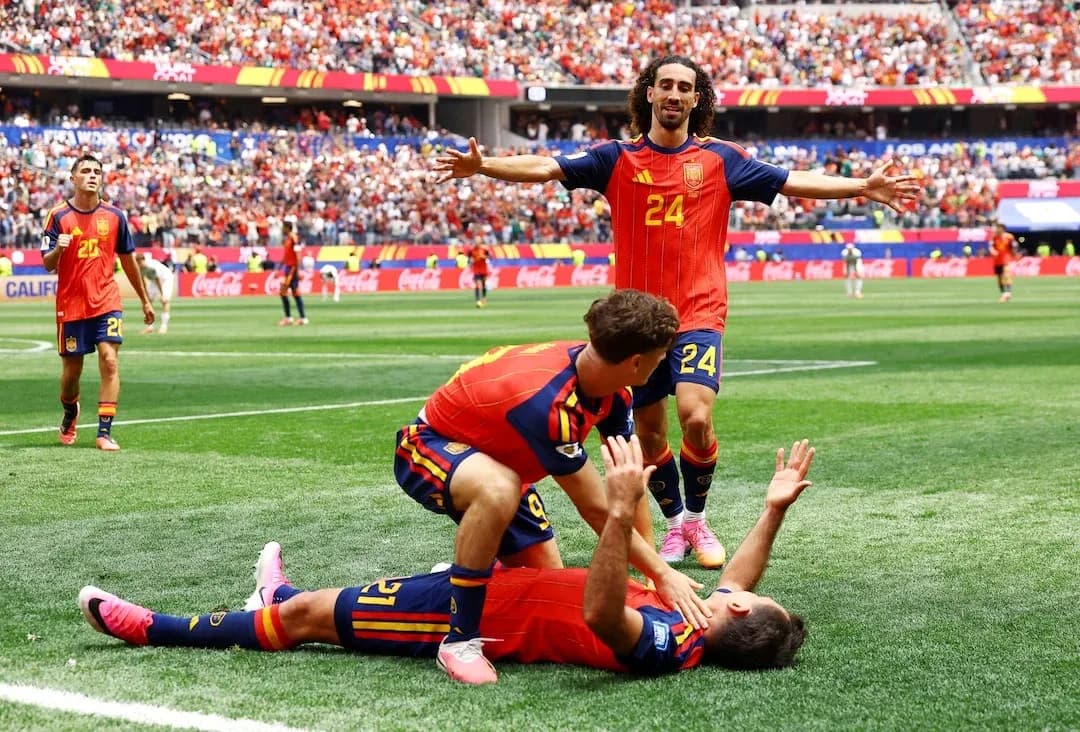
The opening goal on 36' crystallised Spain’s territorial pressure. Mikel Oyarzabal (Spain) finished a move engineered from the left, assisted by Marc Cucurella, whose advanced full-back positioning had been a constant outlet. The 1-0 at the break was fully aligned with Spain’s shot volume and Austria’s inability to progress the ball.
Austria tried to reset at half-time with an aggressive double change at 46': Carney Chukwuemeka (IN) came on for Nicolas Seiwald (OUT), and Florian Grillitsch (IN) came on for Xaver Schlager (OUT), seeking more ball-carrying and passing from midfield. Later, at 60', Marko Arnautović (IN) came on for Michael Gregoritsch (OUT), and Saša Kalajdžić (IN) came on for Romano Schmid (OUT), a move towards a more direct, target-man-oriented front line.
Spain responded by killing the contest with a second goal on 66'. Pedro Porro (Spain), pushing high from right-back, struck with a well-timed forward run, assisted by Alex Baena. This 2-0 cushion allowed Spain to lean even more heavily on their possession structure.
Luis de la Fuente then refreshed his midfield and attack on 71': Mikel Merino (IN) came on for Dani Olmo (OUT), and Ferran Torres (IN) came on for Alex Baena (OUT), preserving intensity and pressing triggers without altering the basic positional blueprint.
Austria’s only card came on 83'.
83' Stefan Posch (Austria) — Foul
This was followed by a defensive reshuffle at 85', with Alexander Prass (IN) coming on for Stefan Posch (OUT), an attempt to add fresh legs on the flank after sustained defensive work. Spain, meanwhile, introduced Pablo Gavi (IN) for Lamine Yamal (OUT) at 85', consolidating midfield control.
Spain’s third goal on 89' again underlined the left-sided pattern: Mikel Oyarzabal (Spain) scored his second of the night, once more assisted by Marc Cucurella. The same connection that opened the scoring closed it, exploiting Austria’s tired right side.
In the closing minutes, Spain made two final like-for-like changes at 90' to close the game out: Marc Pubill (IN) came on for Aymeric Laporte (OUT), and Fabián Ruiz (IN) came on for Pedri (OUT), locking in fresh defensive and midfield legs for the final phase.
Final card count: Spain 0, Austria 1, Total 1.
Tactical Breakdown & Personnel
With no explicit formations listed, the structure must be inferred from roles and patterns. Spain’s selection — Unai Simón in goal; Pedro Porro, Pau Cubarsí, Aymeric Laporte, Marc Cucurella at the back; Rodri, Pedri, Lamine Yamal, Dani Olmo, Alex Baena behind Mikel Oyarzabal — functioned like a flexible 4-3-3/4-2-3-1 hybrid.
In possession, Rodri anchored the first phase, often dropping between or just ahead of Cubarsí and Laporte to create a three-man build-up line. This freed both full-backs, particularly Cucurella, to advance aggressively and create wide overloads. Spain’s 629 passes, with 570 accurate (91%), illustrate how securely they circulated the ball, repeatedly moving Austria’s block side to side until gaps appeared.
The attacking pattern was clear: Cucurella and Baena combined on the left to pull Austria’s right-back and right-sided midfielder out of shape, while Oyarzabal drifted into half-spaces to link play. Both of his goals came from that left-sided synergy with Cucurella, whose delivery and timing of overlaps were central to Spain’s threat. On the opposite flank, Pedro Porro pushed high and wide, and his 66' goal reflected how often he arrived in advanced positions as an auxiliary winger.
Lamine Yamal and Pedri operated between the lines, offering short options to maintain tempo and prevent Austria from stepping out to press. With 15 of Spain’s 23 shots coming from inside the box, the positional play consistently generated high-quality central finishing positions rather than speculative efforts from distance.
Defensively, Spain’s rest defence was well-structured. With 8 fouls to Austria’s 15 and no cards, Spain defended largely through positioning and counter-pressing rather than emergency challenges. Their high line and compact midfield squeezed Austria into long balls and rushed clearances, explaining why Austria managed only 5 shots total, 4 inside the box but none on target. Unai Simón (Spain) did not record a single save, a testament to how effectively the outfield unit protected the penalty area and restricted shot quality.
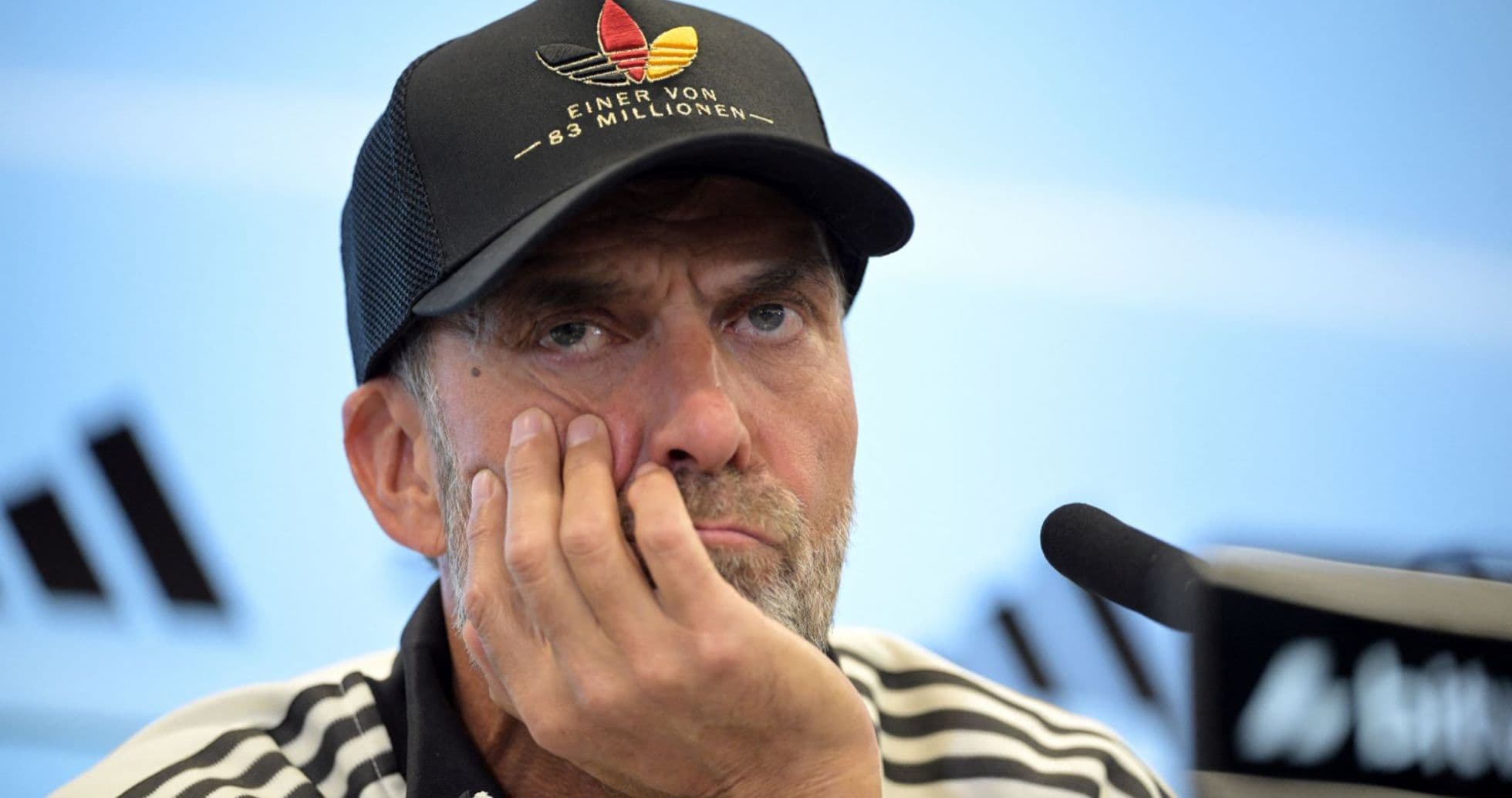
Austria’s initial setup, with Konrad Laimer and David Alaba in the back line and a midfield of Nicolas Seiwald, Xaver Schlager, Romano Schmid, Paul Wanner and Marcel Sabitzer behind Michael Gregoritsch, suggested an attempt to blend build-up quality with vertical running. However, they were pinned too deep for long stretches. Their 346 passes, 284 accurate (82%), show they could circulate under little pressure in deeper zones but struggled to progress beyond Spain’s midfield line.
Rangnick’s second-half changes aimed to alter the attacking reference points: Arnautović and Kalajdžić introduced more aerial and hold-up options, while Grillitsch and Chukwuemeka added passing and ball-carrying. Yet with no corner kicks and only 1 blocked shot, Austria never established sustained territorial pressure or crossing volume. Alexander Schlager (Austria) was far busier, making 6 saves, and his negative goals prevented figure (-0.57) indicates that Spain’s finishing marginally outstripped the underlying shot quality he faced.
The Statistical Verdict
The numbers align tightly with the narrative of Spanish control. Spain’s xG of 2.84 against Austria’s 0.32 mirrors the 3-0 scoreline: a comfortable win built on chance volume and quality rather than clinical finishing from few opportunities. A 10-0 advantage in shots on target, 9-0 in corners, and a 65%-35% possession split illustrate a one-sided territorial and attacking contest.
Spain’s passing dominance (629 passes, 91% completion) underpinned their ability to keep Austria deep and disorganised. Austria’s 15 fouls and single yellow card, compared to Spain’s 8 fouls and clean disciplinary record, reflect a defensive workload skewed heavily towards Rangnick’s side, often resorting to interventions to break Spain’s rhythm.
Both goalkeepers’ goals prevented figures are listed identically at -0.57, but the context differs sharply: Unai Simón (Spain) was largely a spectator with no saves required, shielded by a structure that allowed no shots on target, while Alexander Schlager (Austria) (6 saves) was repeatedly exposed by a stretched defensive block.
Overall, this was a textbook Spain performance in knockout football: territorial dominance, controlled tempo, low defensive risk, and a scoreboard that faithfully matched the underlying data.