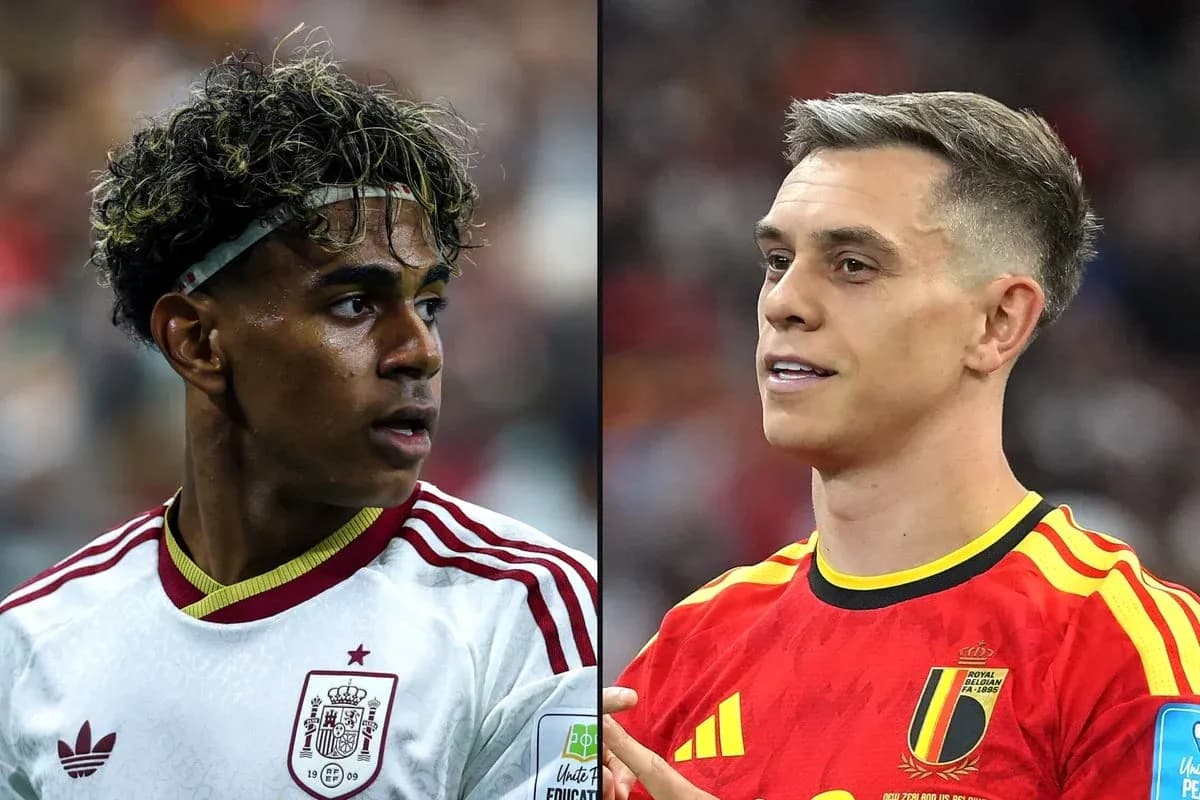
Spain vs Belgium: A Quarter-Final Showdown
The lights of SoFi Stadium will pick out two very different stories on Friday night. On one side, Spain: European champions, unbeaten, untouched, unbreached. On the other, Belgium: chaotic, controversial, and suddenly dangerous.
The prize is France in the semi-finals. The route there could not be more contrasting.
Spain: perfect at the back, imperfect up front
Spain have moved through this World Cup like a team on silent mode. No drama, no chaos, barely a scare.
Top of Group H with seven points, they eased past Cape Verde (0-0), Saudi Arabia (4-0) and Uruguay (1-0), then brushed aside Austria 3-0 in the round of 32. When the stakes rose against Portugal in the last 16, they still did it their way: control, patience, and a 91st-minute winner from Mikel Merino to edge a 1-0 victory.
The numbers behind that calm exterior are brutal. Luis de la Fuente’s side are the only team yet to concede a goal at this tournament. Unai Simon has five clean sheets and Spain have set an all-time World Cup record of 609 minutes without letting one in, a streak stretching back to 2022.
Aymeric Laporte and Pau Cubarsi have locked down the middle, but Spain’s security starts higher. They keep the ball, then win it back in a flash when they lose it. The high press is drilled, collective, merciless. No team has drawn more offsides (18), no team has won more possessions in the final third (36). Their reputation rests on passing, but their edge is what happens when they don’t have the ball.
The flaw? The goals have not always flowed. Mikel Oyarzabal hit doubles against Saudi Arabia and Austria, yet Spain drifted for long spells in attack versus Uruguay and Portugal, with their forward line short of incision.
Lamine Yamal, the Barcelona prodigy who turns 19 on Monday, has flickered rather than blazed. He was kept quiet by Nuno Mendes and then Nelson Semedo in the last 16. Dani Olmo has been one of the few consistent attacking sparks since coming into the XI, while Rodri is playing his way towards full sharpness at the base of midfield.
De la Fuente’s main puzzle lies at No 10. Olmo has had a solid tournament, but Merino’s late winner against Portugal presses his case. There is also the temptation to freshen the interior with Fabian Ruiz for Pedri, who has not hit his old heights. On the left, Alex Baena’s tidy work and understanding with Marc Cucurella should keep him in the side.
Spain are not yet the irresistible force that won the Euros. They have not needed to be. The question is whether Belgium can drag them out of their comfort zone.
Belgium: chaos, cuts and a new identity
Belgium’s route here has been anything but smooth.
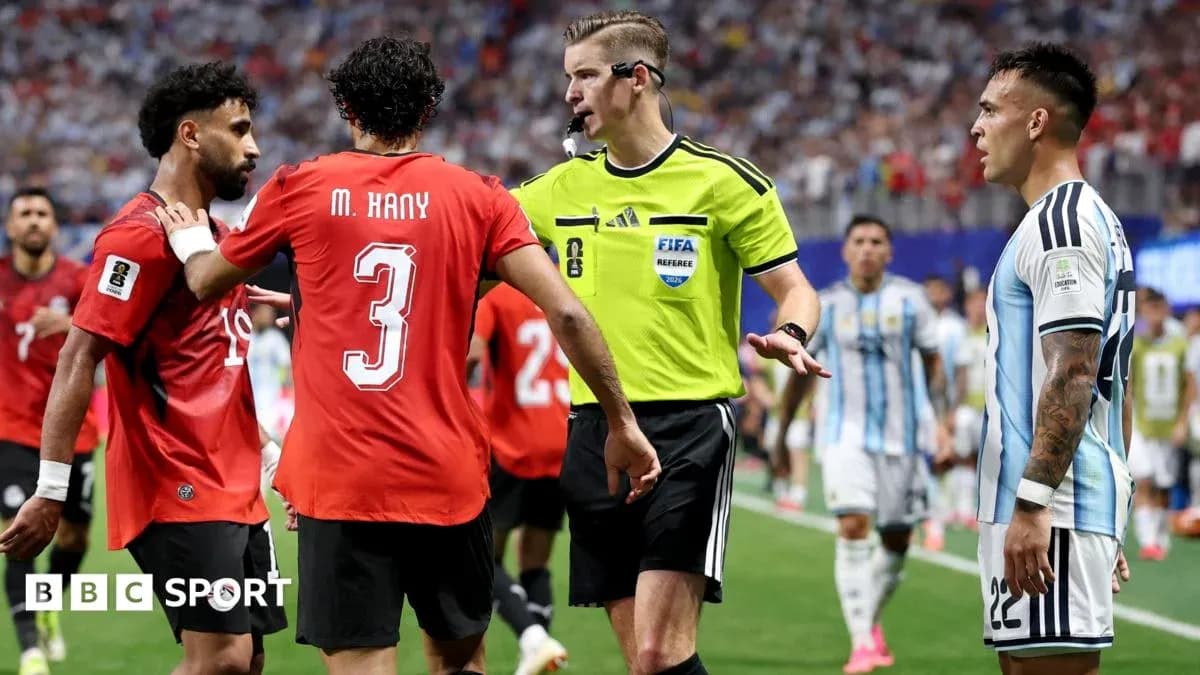
They topped Group G with five points, stumbling through draws with Egypt (1-1) and Iran (0-0) before finally cutting loose in a 5-1 dismantling of New Zealand. The real turning point came later, with the clock against them and the World Cup slipping away.
Two down to Senegal in the round of 32 with five minutes left, Rudi Garcia tore up his plan. He hauled off Kevin De Bruyne and Jeremy Doku, the two biggest names in his squad, and turned to Dodi Lukebakio and Nicolas Raskin. On paper it looked conservative: a ball-winner in midfield, a hard-running winger instead of a pure dribbler. On the pitch, it changed everything.
Romelu Lukaku and Youri Tielemans dragged them level, Tielemans then burying a late penalty in extra time for a 3-2 win. Belgium suddenly had a structure, legs in midfield, and a platform.
That platform held against the co-hosts. Their 4-1 win over the United States in the last 16 came under a cloud of controversy after FIFA suspended Folarin Balogun’s red-card ban, but Garcia’s reshaped side handled the noise. Amadou Onana’s first start of the tournament lasted only 21 minutes before an anterior cruciate ligament injury ended it, yet Hans Vanaken stepped in and Belgium kept control.
The impact of those choices has been stark. De Bruyne did not get off the bench against the U.S. Doku also started among the substitutes. Garcia appears ready to do it again against Spain, trusting the same base to absorb pressure and then unleash firepower later if the game opens up.
Belgium’s improvement has been collective rather than star-led. Leandro Trossard leads the entire tournament for chances created with 17, Tielemans has brought poise and late runs from midfield, and the full-backs’ aggressive off-the-ball surges have added an extra layer to their wide play.
There is a flaw here too, and it is significant. Belgium have conceded 53 shots — almost double Spain’s 29 — and committed six errors leading to shots, a total only the United States and Brazil have exceeded. They also lean heavily on volume in attack: 107 shots, but 32 of them blocked. Only 14 have been “clear” efforts with zero or one defender in the way, though they have scored with 13 of those — a ruthlessly efficient return that even France, England and Spain cannot quite match.
They are hard-running, brave, and brittle. Against Spain, that combination can be thrilling or fatal.
The flanks: where this quarter-final tilts
Strip this game down and one area keeps flashing red: the wings.
Lamine Yamal remains one of the most dangerous one-on-one players left in the competition. His tournament has been more tease than takeover, yet the signs are there — the tight control, the quick give-and-go combinations with right-back Pedro Porro, the willingness to attack his man again and again.
On the opposite side, Cucurella and Baena have formed an effective overload machine, dragging defenders wide and then slipping runners in behind. Spain are experts at working low crosses from those zones; they have created three chances from such deliveries, joint-top at the tournament. Belgium are right there with them, also on three, with both sides ranking among the best for first-time shots — Belgium first with 58, Spain third with 46.
Garcia’s full-backs are just as aggressive in their own way, constantly sprinting beyond wingers to hit the byline and flash balls across goal, as seen in the demolition of New Zealand. If this turns into a game of trading cut-backs and near-post runs, the scoreboard will move.
The other battleground is what happens when the ball changes hands. Spain’s counter-press is one of the sharpest weapons in this World Cup; they swarm immediately, suffocating counter-attacks before they form. Belgium, by contrast, have struggled to stop teams playing through their midfield. If that pattern holds, Spain will camp high and recycle pressure. Belgium will have to survive long stretches without the ball and hope their moments are clean when they come.
History, context and a familiar quarter-final stage
These two know each other well. Their first meeting came at the 1920 Olympics, Belgium winning 3-1 in Antwerp. Their most famous clash arrived in the 1986 World Cup quarter-finals in Mexico: Jan Ceulemans’ diving header, Juan Senor’s 30-yard equaliser, and a penalty shootout decided by Jean-Marie Pfaff’s save from Eloy Olaya. That defeat fed into Spain’s long, painful record in World Cup shootouts.
Spain took a small slice of revenge at Italia ’90 with a 2-1 group-stage win that sent both sides through. Since the turn of the century, though, the balance has shifted entirely. Spain have won all five meetings, including two qualifiers en route to the 2010 World Cup, the 5-0 in La Coruna a loud warning of what was to come in South Africa. Their last encounter, a 2-0 friendly win in Brussels in 2016, featured Thibaut Courtois, Lukaku, Thomas Meunier and De Bruyne.
The names have changed, the stakes have not. Quarter-final. One mistake from the door slamming shut.
The verdict: a favourite, a threat, and a thin margin
The experts are almost unanimous. Spain, they say, will go through.
Stuart James, Dermot Corrigan, Pol Ballús, Anantaajith Raghuraman and Phil Hay all land on the same scoreline: Spain 2-0 Belgium. A tight game, a Spanish defence that does not bend, and a sense that Belgium’s big moment may already have come against the United States.
Tomás Hill López-Menchero sees more chaos: Spain 3-1 Belgium, with the European champions stunned by an early Belgian goal before settling into their rhythm and Yamal finally exploding back onto the scoresheet.
What nobody expects is a Belgian domination. Spain’s superiority in control, defensive structure and tournament know-how is clear. Belgium’s path lies in disruption: in turning this into the kind of open, broken contest that suits Trossard, Tielemans and, later, perhaps De Bruyne and Doku.
Spain glide in with records, clean sheets and a sense of quiet inevitability. Belgium arrive bruised, patched up and emboldened by survival.
One side will walk out into the Texas heat to meet France on Tuesday. The other will leave California with the feeling that this World Cup was either a step towards something bigger — or the last stand of a generation that never quite got what it wanted.