Sergi Dominguez: From Barcelona to Dinamo Zagreb Star
La Masia rarely stops. The conveyor belt keeps turning out footballers shaped in Barcelona’s image, even if not all of them make it at the first attempt in the famous shirt.
Some, like Sergi Dominguez, have to leave home to find themselves.
From Barcelona prospect to Zagreb pillar
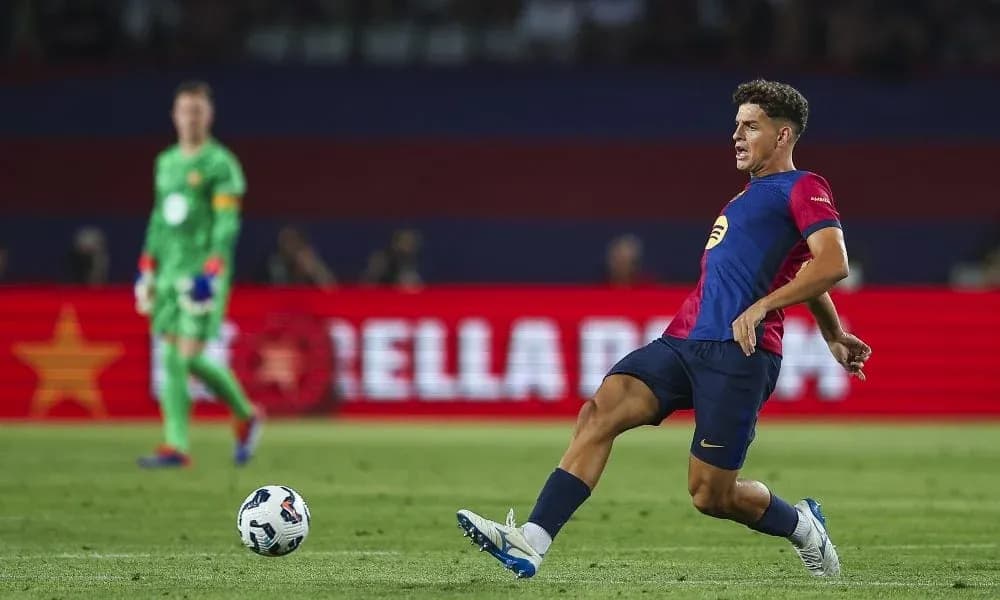
Last summer, Dominguez walked away from Barcelona in a €1.2 million deal, swapping Catalonia for Croatia and the blue of Dinamo Zagreb. At 21, he was hardly a headline departure, more a footnote in the club’s wider rebuild.
Twelve months on, that move looks anything but minor.
Dominguez has emerged as one of the standout defenders in the Croatian league, anchoring a Dinamo side that completed a domestic double – league and cup – and earning a place in the division’s Team of the Season. He didn’t just adapt; he imposed himself.
This was never the plan in his head.
“I finished the season with Barcelona and the idea was to leave on loan or permanently, but I never thought I would end up in Croatia. I thought I would play in the Spanish second division,” he told SPORT, still sounding faintly surprised by his own path.
The switch happened after conversations with Albert Capellas, the former La Masia coordinator now involved at Dinamo Zagreb. A familiar voice, a familiar philosophy, just in a very different footballing landscape.
A dream that never left
For all the progress in Zagreb, Dominguez talks like a man on a journey, not at a destination.
“I spoke to him before coming here. Dani came here, then went to Leipzig and then returned to Barcelona. That’s why I thought about him because, in the end, my dream is to play at home again,” he said, drawing a straight line between his story and Dani Olmo’s.
Olmo’s route – La Masia to Dinamo to the Bundesliga and back to Barça – has become a reference point, proof that leaving Barcelona does not mean slamming the door shut forever.
Dominguez does not hide behind clichés. He spells it out.
“My ultimate goal is to come back home and play for Barcelona. Hopefully it can happen. It’s difficult, but I’ll try. I still have time.”
There is no sense of bitterness, only a clear ambition and the realism of someone who has had to leave his comfort zone to grow.
Barcelona football, Croatian edge
Part of the reason the transition has worked is that, on the pitch, Dominguez has not had to abandon his footballing identity.
“Dinamo’s playing philosophy and Barcelona’s are very similar. Almost identical: 4-3-3, playing out from the back, high pressing.
“Obviously there are differences in the facilities and the budget, but Barcelona are, in my opinion, the best team in Europe,” he explained.
The structure is familiar. The demands are not. Croatian football has added a layer to his game that La Masia alone cannot provide.
“I’ve improved without the ball. I’ve gained experience in duels, in terms of aggression and positioning. It’s a tougher league in that respect,” the centre-back said.
The mix suits him: Barcelona’s ball-playing schooling fused with the physical, unforgiving reality of a league where defenders are tested every week.
Eyes on the Champions League – and old friends
Dominguez is not just looking back at Barcelona; he is also looking up, towards the Champions League, and the possibility of facing the club that formed him.
“It would be funny, above all, to play against Barcelona. I’d be facing friends of mine and all the members of the coaching staff that I know,” he admitted, half-smiling at the thought.
Those friends include Pau Cubarsi and Lamine Yamal, two La Masia products who have leapt straight from the academy to the elite and stayed there.
“What Pau Cubarsi and Lamine Yamal have done isn’t normal. It’s crazy. Cubarsi, at 19 years old, was one of the best players in Spain and at the World Cup.
“Lamine has also played an important role. Every time he gets the ball, it feels like something is going to happen,” Dominguez said, full of admiration rather than envy.
They are the ones who stayed. He is the one who left. All three are proving, in very different ways, that La Masia still shapes games at the highest level.
Barcelona’s quiet insurance policy
When Barcelona sold Dominguez, they did not cut the cord entirely. A sell-on clause was written into the deal, a financial lever that could make any future move more manageable if the club decide he is worth bringing back.
For now, that clause sits quietly in the background while Dominguez focuses on his second season in Croatia, intent on turning a breakout year into a sustained rise.
If a return to Barcelona feels distant, he knows the only way to drag that possibility closer is simple: performances, week after week, at a level that cannot be ignored.
Barcelona will be watching. Dinamo will be relying on him. Dominguez, still only 21, is playing for a present in Zagreb and a future that might yet lead him back through the doors of La Masia – this time as a finished defender, not a hopeful prospect.