Sebastian Pedersen Joins Orlando Pirates: What to Expect
Erling Haaland’s name was always going to find its way into the conversation. It usually does when a Norwegian striker pitches up with a decent scoring record and a bit of hype behind him.
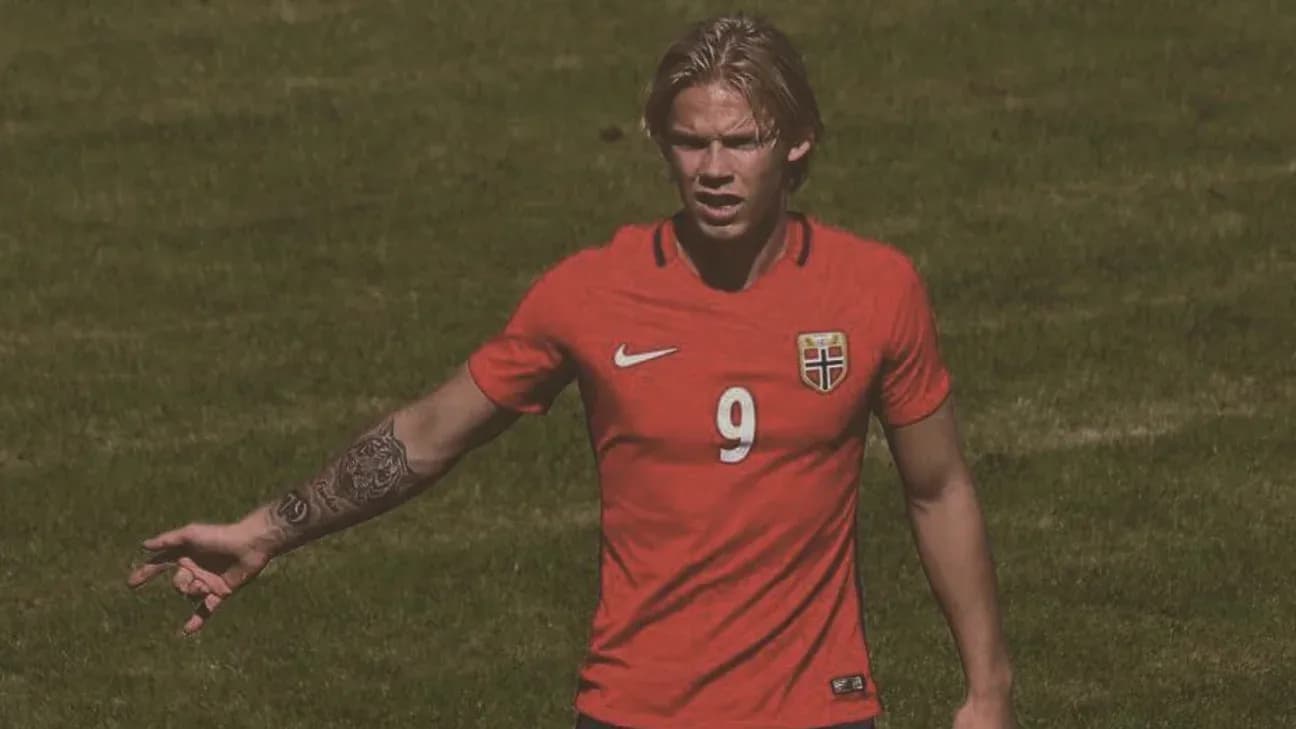
The social media joke is that Orlando Pirates’ new man Sebastian Pedersen is Haaland’s “cousin”. He isn’t. But they do share more than a passport and a position on the pitch.
For a spell, they were rivals for the same shirt.
From Norway’s talent line to Orlando
Pedersen and Haaland came through the same Norway youth system, fighting for minutes in the U18 and U19 national teams. According to Transfermarkt, they shared five squads, three of those games in UEFA Euro Under-19 qualifying. The pattern was clear: when one stepped on, the other stepped off. Two young centre-forwards, one spot, coaches rotating the options.
They never truly combined. They competed.
That background matters now because Pirates have not just signed a name, they’ve signed a profile they’ve been missing.
“Orlando Pirates Football Club is pleased to announce the signing of striker Sebastian Pedersen from Norwegian side Sogndal Fotball,” the club confirmed on Sunday. The 27-year-old has signed a two-year deal, with an option for a further season, and walks into Abdeslam Ouaddou’s squad as the Buccaneers gear up for a season in which they will be hunted, not hunting.
Pedersen arrives from what the club rightly call one of Norwegian football’s great talent factories. He has worn his country’s colours from U15 all the way to U21. That pathway does not guarantee stardom, but it does tell you he has lived in competitive, structured environments for over a decade.
And he brings numbers. Across his club career, Pedersen has produced 59 goals and 9 assists in 166 appearances. In his last 117 matches alone, he has found the net 51 times. He is not a bulldozer. He is a one-touch finisher, a penalty-box striker who thrives on timing, movement and service rather than sheer physical destruction of centre-backs.
For a Pirates side that often created enough but lacked a ruthless edge, that description will sound very familiar to what they have been searching for.
More than just a No. 9
There is versatility, too. Pedersen can operate from the flanks, particularly off the left, mirroring some of the positions Relebohile Mofokeng occupied before his departure. The early indication from within the club, though, is clear: he has been signed to play up front, not as a wide creator.
That decision speaks directly to the gap left by Tshegofatso Mabasa. With Mabasa spending the final half-season of his Pirates contract on loan at Stellenbosch, the champions leaned on Evidence Makgopa and Yanela Mbuthuma to lead the line. Both offered value – Makgopa with his hold-up play and link work, Mbuthuma with his tireless pressing and movement – but the cold numbers undercut the effort.
Makgopa finished last season with six goals. Mbuthuma with five. For regular starters in a side that still managed to win the Premiership, that return felt light.
Pedersen is being brought in to change that conversation.
Yes, there is a caveat. Most of his work has come in Norway’s second-tier OBOS-ligaen. His record in the top-flight Eliteserien is modest: one goal in 12 appearances, a total of 275 minutes. This is not a ready-made Champions League striker parachuting into Soweto. It is a calculated move for a player in his prime years, with a solid record in a competitive league just below the top rung.
For Pirates, who have often had to balance ambition with budget and squad chemistry, that kind of profile can be exactly where value hides.
The other Marcus Pedersen
The surname adds another layer of confusion.
Norway’s 2026 World Cup squad included Torino right-back Marcus Holmgren Pedersen. Some have mistakenly linked him as Sebastian’s brother. He isn’t.
Sebastian does have an older brother named Marcus, and he did play for Norway – but his story belongs to an earlier generation.
Journeyman forward Marcus Pedersen, now 36 and last seen in the Norwegian lower leagues, collected nine caps for the national team between 2013 and 2015, scoring once. He, too, could operate off the left, just like his younger sibling.
His career took him to Dutch side Vitesse, a loan spell at Barnsley, and stints at Vålerenga and Denmark’s Odense Boldklub. His most productive football came at Strømsgodset, where he enjoyed two spells between 2009–2010 and 2015–2019 and built a reputation as a reliable, hard-working striker.
That is the footballing lineage Sebastian steps out from. Not the shadow of Haaland, but the reality of a family that has quietly done its work across Europe’s middle tier.
The piece Pirates have been missing?
So what exactly are Pirates getting?
They are not signing Haaland. They are not selling that dream either. What they have acquired is a 27-year-old striker with a proven instinct in and around the box, a strong record in a demanding second division, and the experience of competing at every youth level for his country.
They have also taken a clear stance on what their attack should look like after a title-winning season in which the centre-forwards did not dominate the scoring charts. With Mabasa gone, Makgopa and Mbuthuma remain important pieces, but they now face a different kind of internal competition – from a player whose game is built on finishing, not facilitating.
If the supply line holds and the adaptation is swift, Pedersen has the profile to become the missing edge in a champion side. If he struggles to translate OBOS-ligaen efficiency to the intensity and physicality of South African football, Pirates will have a different debate on their hands.
For now, the equation is simple: a club that has been crying out for a penalty-box predator has finally gone out and signed one.
The rest will be decided where Pedersen and Haaland once jostled for minutes – on the pitch, in the space where one chance can turn a season.