Scottish Football's New Season: Challenges and Changes Ahead
Only the most deluded optimists can look at Scottish football this summer and see a clean slate. The new season is here, but the usual flutter of anticipation has been replaced by something darker: a hangover that will not shift, a sense that the problems exposed on the biggest stage are about to seep into every corner of the domestic game.
The World Cup was a shambles. The response has been worse.
From the Scottish Football Association, there has been no real explanation, no roadmap, no sense that anyone at the top truly grasps how damaging the campaign was. Mike Mulraney, the SFA president, last surfaced as a background extra in the photo-op circus at Trump Tower, lurking behind Gianni Infantino and the US president. Ian Maxwell, the chief executive, briefly emerged to complain about “hysterical commentary” after Steve Clarke resigned. Before that, both men had treated concerns over Clarke’s pre‑tournament four-year contract as a punchline rather than a risk.
Maybe they are now buried in the search for Clarke’s successor. They should be. The next coach inherits a squad that badly needs renewal, one that creaked through the World Cup and finally cracked. Yet the silence from Hampden on the wider malaise is telling. The leading clubs, too, have kept their heads down, content to ignore the structural issues that the World Cup ruthlessly exposed.
The anger has not gone away. It has simply changed shirts.
As the Premiership returns, there is a volatility in the air that feels different. This has the makings of a toxic, attritional season.
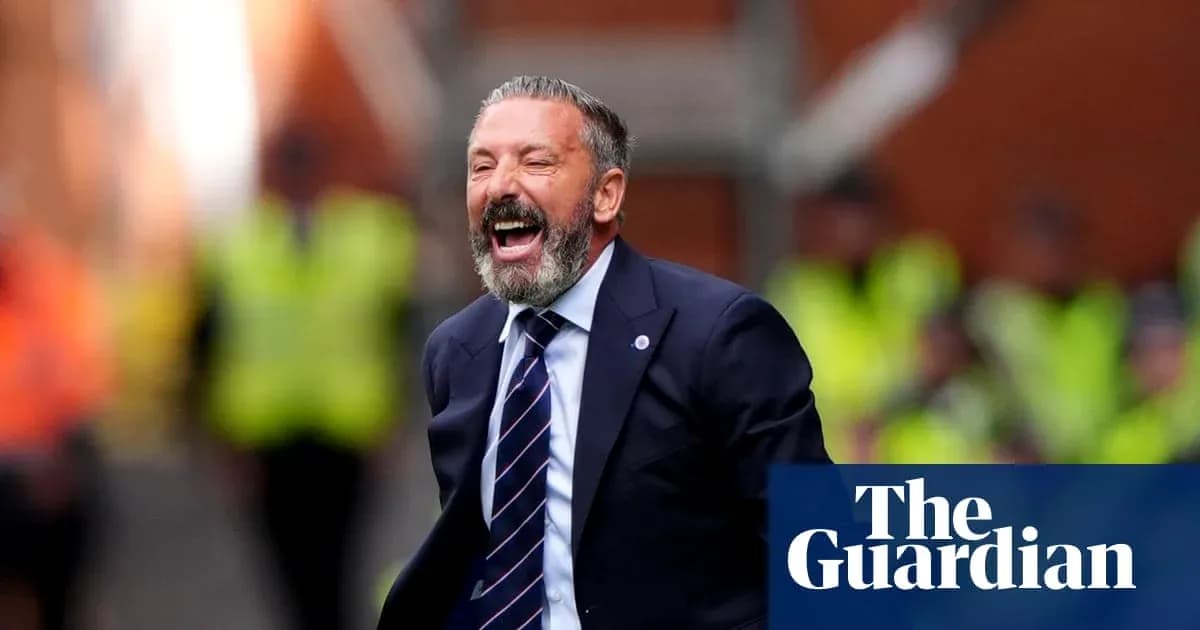
At Celtic, supporters remain furious with a board they see as smug, distant and too easily satisfied. Across the city, Rangers have turned to Derek McInnes, a manager who, for many Celtic fans, embodies everything they sneer at. His appointment has hardened lines rather than softened them.
Then there is Hearts. No club arrives at this season with more emotional baggage. They were minutes from a first league title in 66 years before the dream was ripped away. The fallout has not faded. The most galling moment came on 11 June, when the Scottish Professional Football League finally published its disciplinary findings on the pitch invasion that forced an early end to Celtic’s title-clinching match against the Edinburgh side.
Tucked into that statement were token punishments for Hamilton Academical, Inverness and Stenhousemuir, and a light slap on the wrist for Celtic: a small fine and a suspended, modest ticket reduction. For Hearts followers, it confirmed what they already believed. For Rangers fans, always primed to see bias, it was more ammunition – until McInnes himself was hit with a touchline ban for criticising a refereeing decision. Rangers have since bristled at elements of an independent report into the disorder that followed their Scottish Cup defeat to Celtic in March.
Discontent is not confined to Glasgow and Edinburgh. Motherwell are consulting lawyers after being fined by the SFA over a social media video. Hibs supporters, already raw from years of underachievement, watched their team lose 2-0 in Kosovo in a European qualifier and detonated online. These results no longer shock. They simply add to the sense of drift.
And yet, amid the gloom, some clubs have found reasons to push forward.
Celtic’s record signing of Kasper Høgh is the standout deal of the summer. It is the kind of financial muscle-flexing their fans have demanded more often, and it brings genuine intrigue. The Norwegian arrives from the rarefied, well-drilled world of Bodø/Glimt, a club whose players often find life harder once they leave that cocoon. If there were no doubts about whether his game translates, and if the fee was not one many English Championship sides would barely blink at, Høgh would have been gone long ago.
But Celtic believe they have found a striker with the physical tools and direct style to thrive in Scotland. The challenge now is to build around that, not cash in around it. Should irresistible offers land for Arne Engels, Alistair Johnston or other key figures, the club must replace quality with quality, not with another tidy line on the balance sheet. The Høgh deal has been warmly received. It cannot be the end of the ambition.
Across the city, Rangers have taken a different route. They have already burned through huge sums in recent years and watched Celtic collect the silverware. The stands have seethed while an American ownership has, curiously, chosen not to confront the anger or clearly define a new direction.
McInnes, though, is no vanity hire. Rangers, who open the campaign at Dundee United on Friday night, finally have a manager whose understanding of the club and its demands feels deeper than most of his recent predecessors. His first significant addition, Vanja Dragojevic from Partizan Belgrade, looks a shrewd move to harden the midfield. Rangers still lack attacking sparkle, but McInnes’s instinct to build a stronger spine first is entirely in character.
He has wanted this job for years. Nobody doubts his drive or his work rate. This version of Rangers should be tougher, more coherent, less brittle. Yet the reality remains: Celtic, with their recent record and squad depth, go into the season as favourites. Course and distance matters.
Hearts, still nursing the scars of last season’s near-miss, must live with a different kind of pressure. McInnes’s departure for Rangers, the arrival of Wouter Vrancken with a radically different style, and a fanbase whose expectations have soared overnight make for a volatile mix. Their title push came ahead of schedule and caught the imagination well beyond Scotland. That alone has altered how the club is perceived.
A heavy Champions League qualifying defeat to Sturm Graz underlined the size of Vrancken’s task. Hearts are not yet the finished article, not close. Time and patience will be required, even if neither is readily available in Gorgie right now.
Motherwell offer a rare, clear success story. Under Jens Berthel Askou and in the period that followed, they proved that clubs outside the traditional elite do not have to cling on grimly to survival. The football was bold, crowds grew, and scouts from broader markets began to pay attention. The sales of Elijah Just and Elliot Watt for multimillion-pound fees vindicate a model built on smart recruitment and a willingness to take calculated risks.
St Mirren want to follow a similar path, with a sharper focus on young players and a more attractive style. Kilmarnock hinted at that same evolution at the end of last season under Neil McCann. Aberdeen, with Stephen Robinson now fully bedded in, should be a more imposing force.
Even the pitch underfoot is changing. Only one artificial surface remains in the top flight, a small but symbolic victory for those who have long argued that the Premiership should look and feel more like a serious league.
Because football in Scotland still matters. Obsessively so. It fills stadiums, dominates conversations, shapes weekends and moods. Yet it also feels like a patient in need of urgent care, kept going by habit and passion while the underlying condition worsens.
A new season should bring hope. This one will only do that if those in charge can show something they have rarely displayed: genuine fresh thinking.