Santi Denia Appointed Head Coach of Czech Republic Football Team
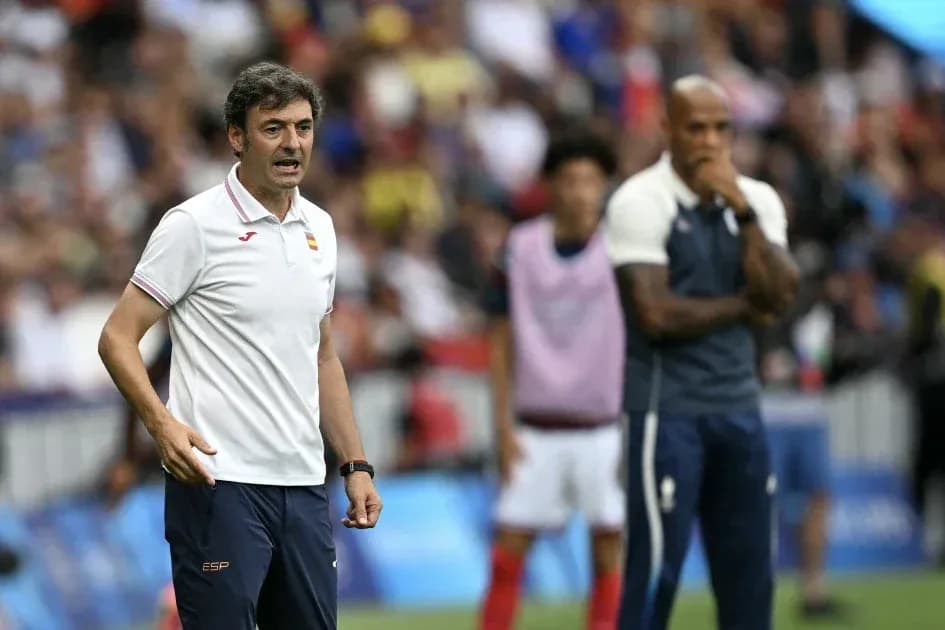
Santi Denia, the coach who led Spain to Olympic gold this summer, has taken on one of the most intriguing international jobs in Europe: he is the new head coach of the Czech Republic.
The appointment, confirmed by the Czech federation (FACR) on Friday, is historic. At 52, Denia becomes the first foreigner to take charge of the Czech national team, a bold break with tradition and a clear signal that the federation wants a new direction after a disappointing World Cup campaign that ended with the Czechs bottom of their group and Miroslav Koubek stepping down.
Denia has signed a two-year contract with an option to extend, a window that neatly covers the next Nations League cycle and the early stretch of World Cup qualifying. Beside him on the bench will be Pablo Amo, another Spaniard who, like Denia, worked in Qatar last season and now steps in as assistant coach.
This is not a gamble on an unknown name. Denia arrives with a reputation forged in tournament football. A rugged former centre-back for Albacete and Atletico Madrid, he has built his coaching career in the pressure-cooker of Spain’s youth system. He guided Spain to European titles at under-17 and under-19 level, then stepped up to the Olympic team, replacing Luis de la Fuente and driving a talented squad all the way to gold in Paris 2024.
That pedigree clearly appealed to Prague. The Czech federation is looking at a man used to shaping identities, not just line-ups.
Denia’s first words in the job carried the tone of a coach already itching to get on the grass. “I'm delighted to be here. And I'm extremely motivated, because I see the chance to lead the Czech national team as a great opportunity. Czech football has a glorious history,” he told the FACR website. “I have just one wish: to get down to work as soon as possible.”
The work will come at him fast.
The Czech Republic’s next competitive fixtures drop them straight into deep water in the Nations League, where they will face England, Croatia and Spain in late September and early October. For Denia, that means a reunion with his homeland almost before he has learned all the names in his new dressing room.
Those games will offer an immediate stress test of his ideas. Can he impose the structured, technically sharp style that underpinned Spain’s youth success on a squad built on Czech resilience and physical edge? Can he refresh a team still living in the shadow of its golden eras without losing the steel that once defined it?
Inside the federation, there is a clear belief that he can. Pavel Nedved, now general manager of the Czech national teams and long a symbol of the country’s footballing pride, spoke with conviction about the appointment. “I can sense that he is ready to get stuck in and will help us build a new identity for the national team,” he said.
A new identity. A foreign coach. A brutal Nations League group waiting on the horizon.
For Santi Denia, Olympic gold was the last chapter with Spain. The next one starts in Czech colours, under harsher scrutiny, against stronger opposition, with far less margin for error.