Ruben Amorim Reflects on Manchester United Tenure and Embraces AC Milan Challenge
Ruben Amorim doesn’t flinch when the subject turns to Manchester United. He doesn’t reach for excuses, or for the usual talk of “projects” and “timelines”. He goes straight to the point.
“I made a lot of mistakes.”
The numbers back him up. In the Premier League, Amorim left Old Trafford with the worst win ratio of any United manager in history – 32 per cent. His side conceded 1.53 goals per game, also a club low, and kept clean sheets in just 15 per cent of league matches. For a club built on authority and control, it was a brutal comedown.
The end came in January, after months of strain with the United board. The tension spilled into public view at Elland Road, when Amorim used his post-match comments after facing Leeds to question the decision-makers above him and suggest others should concentrate on their own jobs. The relationship never recovered. Nor, in truth, did his position.
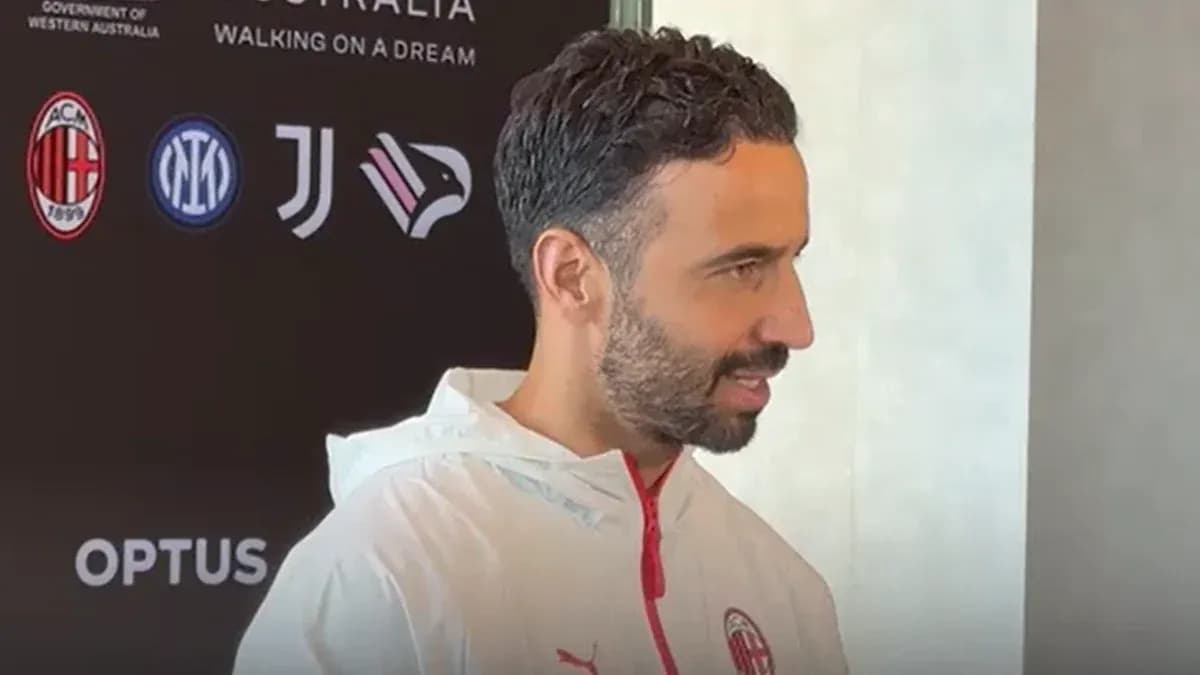
Yet his exile from the elite was brief. AC Milan moved quickly last month, convinced that a coach scarred by Old Trafford might be sharper for it. Now, on pre-season duty in Australia, Amorim looks and sounds like a man who has spent the last few months dissecting his own downfall.
“They appointed me because they felt I was the right guy for the way I want to play,” he told Sky Italia, outlining why Milan came calling. The Rossoneri, he explained, were drawn not only to his track record of success, but to what he had lived through at a club of United’s size – and what he had learned from it.
In meetings with owner Gerry Cardinale, Amorim laid out those reflections. The failure, the pressure, the missteps. The way a giant club bends everything around it – and how a coach either adapts or gets swept away. Milan listened and, crucially, liked what they heard.
“They understood that I was prepared for this job, not just because of my past success, but also because of my failures. I think it helped a lot in those meetings,” he said.
Asked to pinpoint what went wrong at United, Amorim refused to dwell on specifics or reopen old wounds.
“The first thing is that it doesn’t matter anymore. That is the feeling,” he said. “There’s a history, then something happens, the context changes, and you focus on the next challenge.
“I learned a lot. It would be hard to point to one thing, but the important thing that I clearly know is that I made a lot of mistakes. When you do this kind of reflection, and you understand that it was not just their fault, but also my fault, I think you can be a better coach and a better man.”
It is a rare admission in a business where the blame usually travels upwards or into the dressing room. Amorim is not rewriting the past to protect his reputation. He is using it as a reference point.
He remains respectful about his time in Manchester. “I was really honoured to be the manager of Man United at the time,” he said, before quickly bringing the conversation back to the present. Because his future now is painted in red and black, not red alone.
At Milan, the fit feels different. More natural. More personal.
He has already spoken with club figures such as Daniele Massaro and Franco Baresi, exchanging messages and tapping into the depth of Milan’s identity. This time, he insists, he understands the club from the inside out.
“That is the most important thing. To understand what kind of club I am and what the history of the club is,” he explained. “For me, it was easier this time, because I’ve been a Milan fan since I was a boy.
“I understand the culture of the club and their history. But that is the past. Our goal is to be the new future.”
That line is not accidental. United was a step into someone else’s story, a club wrestling with its own direction. Milan, for Amorim, is something closer to home – emotionally and tactically. He believes he has been chosen not just to steady a listing ship, but to rebuild it.
“They chose me for a reason, and one of the reasons is that I like to look at teams that are struggling,” he said. “I know it’s tough, but we want to rebuild something. We have many things in a good place. The staff is in a good place; the organisation is fantastic.”
There is steel behind the optimism. United’s decision to sack him came with a heavy price. The club faced a compensation bill of £15.9million to cover Amorim and his staff – Carlos Fernandes, Adelio Candido, Emanuel Ferro and Jorge Vital – a reminder of how hard they had pushed to bring him in, and how quickly they chose to walk away. That cost was reduced once Milan stepped in, but the episode underlined how expensive managerial miscalculations can be at the very top.
For Amorim, the fallout has become fuel. The scars from Old Trafford are there, but so is the clarity. He talks now like a coach who has seen what happens when a giant club and a strong-willed manager are not aligned, and who is determined not to repeat the same errors.
“If this is my final destination, I’ll be pleased because it’s a dream to coach this club,” he said of Milan.
A dream, yes. But also a test. The kind of test that either confirms a coach as elite or fixes his reputation in the opposite direction. Amorim has already lived through one brutal verdict in England. The next one will be written in San Siro.