Ronaldinho's Impact on Ravenna Football: A New Era Begins
On a searing afternoon in Ravenna, the heat seems to bend over the city’s mosaicked skyline, but nobody in the historic centre is talking about Byzantine art or Dante. Every conversation, every half-joking glance towards the streets, circles back to the same improbable name.
Ronaldinho.
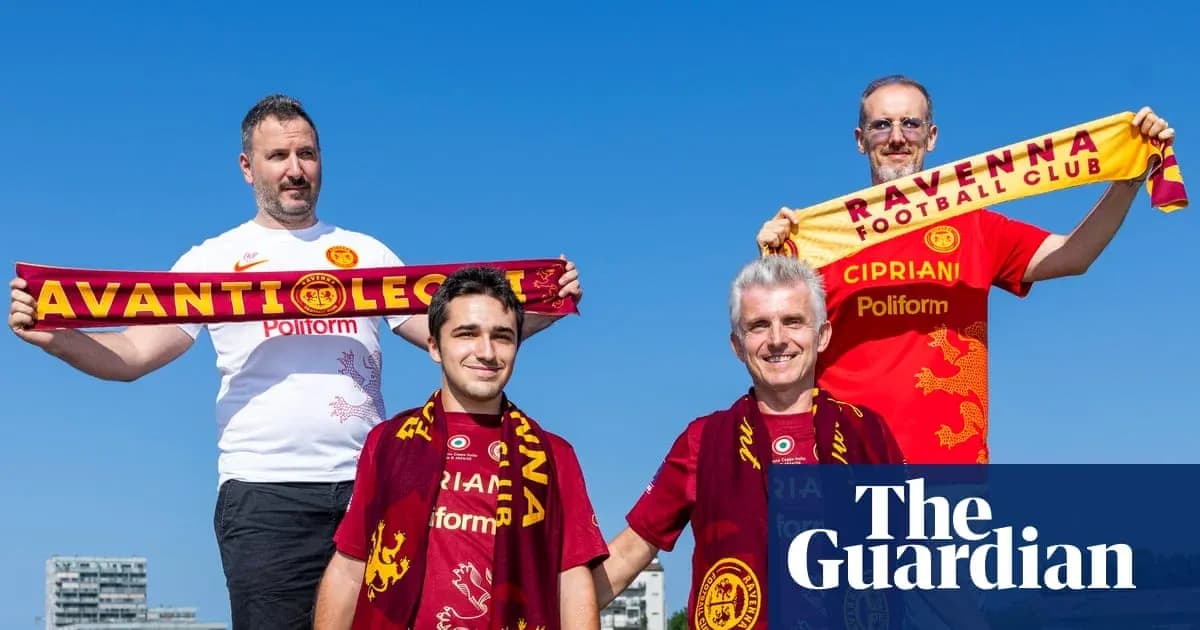
At a café table, four Ravenna supporters leaf through La Gazzetta dello Sport and smirk. They have heard it all before: big promises, grand projects, and a club that has too often crashed into harsh reality. They call the move a commercial play, a stunt. Yet as they talk, their fingers linger on the back page, on that familiar smile and that “R10” logo. Scepticism sits side by side with something more dangerous for a fanbase that has known mostly disappointment.
Hope.
From Harry’s Bar to Serie C
To understand why Ronaldinho-to-Ravenna is even a sentence that exists, you have to start with Ignazio Cipriani.
Heir to the Venetian hospitality empire behind Harry’s Bar, Cipriani took over Ravenna in 2024 when the club were in Serie D, a team more used to bus trips through the provinces than global headlines. He is also the grandson of Raul Gardini, the industrialist and sailor who drove Il Moro di Venezia to the America’s Cup final in 1992. Ambition runs in the family.
In his first year as president, Cipriani delivered the Serie D Cup and promotion to Serie C. That alone would have been enough to shift the mood in a city more accustomed to volleyball success and modest football budgets. He was not satisfied.
“Serie A is the goal I declared from day one because I intend to reach it,” he says. “And the Champions League remains the ultimate horizon we want to walk towards, step by step.” No hedging, no caveats. He talks about working with his back against the wall, about stripping away excuses and alibis. For a club that has twice gone bankrupt this century and peaked with seven seasons in Serie B, the words sound almost outrageous.
Then came the move that turned Ravenna into a headline around the world.
The day the prank became real
When the story first broke, many assumed it was a joke. A 46-year-old Ronaldinho, back as a registered player, in Italy’s third tier?
“We met through Lorenzo Tonetti and Ariedo Braida,” Cipriani explains, naming two former AC Milan executives who know Ronaldinho well. “The idea of involving him was a dream I cultivated as soon as I bought the club.” Meetings followed, then conversations, then what Cipriani describes as a genuine friendship. From that relationship came a series of ideas for how to grow Ravenna.
And finally, the question that everyone in the city keeps asking: will he actually play?
“I am happy to answer: Ronaldinho will wear the Ravenna shirt as a player, and he will try – maybe scoring the last goal of his career with us!”
The impact was immediate. A dedicated website launched a special-edition shirt with the “R10” brand. It sold out within hours. In one stroke, Ravenna became the unlikely intersection of global football iconography, small-town football, and razor-sharp marketing.
“If someone had told me three years ago that Ronaldinho was coming to Ravenna, I would have sent them straight to the psychiatric ward,” laughs Fabio, a lifelong supporter. “The night the news broke, international headlines everywhere read ‘Ronaldinho to Ravenna’. It was an extraordinary operation.”
Extraordinary, and for some, still faintly unreal.
A club of bankruptcies and dreams
Ravenna are no sleeping giant. This is not a fallen superpower trying to claw its way back. Twice, in 2001 and 2012, the club collapsed financially. Between those implosions and their aftermath, the team floated through the lower leagues, living off regional rivalries and survival budgets.
Seven seasons in Serie B remain the high-water mark. This is a city where volleyball has often taken centre stage and where the football club has rarely promised more than a decent Sunday out.
Now, with Ronaldinho’s name printed on a Ravenna shirt, the horizon looks different.
“Ronaldinho is a unique icon,” Cipriani says. “His way of playing made my generation fall in love with the game. We want him today to make the next generation of fans, in Italy and around the world, fall in love with Ravenna.”
He insists this is not just a visibility trick. The goal, he says, is to build a bridge between eras, to turn a club with local roots into one with a global fanbase, without losing the sense of who they are.
A stadium, a city, a brand
To match the ambition on the pitch and in the boardroom, the infrastructure has to move too. Ravenna are working with the municipality on renovating the Stadio Bruno Benelli, aiming to expand its current 6,300 capacity. Cipriani’s real dream stretches further: a multi-purpose venue open every day of the week, with shops, concert facilities, and a Hotel Cipriani embedded into the project, riding on the city’s growing tourism.
For mayor Alessandro Barattoni, the arrival of Ronaldinho fits neatly into a broader plan. Ravenna has been pushing to extend its global reach beyond beaches and ports. Recent years have brought renewed links with the English-speaking world, a visit from the British royal family, and the opening of the Lord Byron Museum.
“Ronaldinho brings a whole new level of global fame,” Barattoni says. When the news broke, his phone lit up with messages from former classmates. For kids who know the Brazilian mainly through YouTube compilations, the allure is still intact. Barattoni even jokes that, diary permitting, he would happily guide Ronaldinho through the city’s cultural landmarks himself.
But he is careful to draw a line. “Our common ground with the club is internationalisation: bringing Ravenna’s image to the world,” he says. Ronaldinho has been a global ambassador for countless brands, and the city wants to harness that reach without losing its own agenda. “Even before Ronaldinho’s arrival, the club did a fantastic job engaging younger generations. The average age in the stands is lower, more vibrant, and more engaged than ever before. A genuine sense of community is forming.”
The Curva’s caution
Not everyone is swept away by the glamour.
In the Curva Mero, where the hardcore support gathers, there is a wary edge to the conversation. Fabio, who revels in the audacity of the Ronaldinho move, also recognises the discomfort.
“There is a certain reluctance among some factions,” he admits. Modern football, with its rising ticket prices and polished commercial sheen, has often shut out lower-income families. Visibility and marketing can feel like code words for exclusion. For a fanbase that has stuck with the club through bankruptcies and obscurity, the fear is simple: that the people in the stands become an afterthought.
Cipriani knows he has to walk a tightrope.
“Without roots, no global project makes sense,” he says. “Ravenna is not a brand we are building from scratch; it’s a history and an identity that existed before us. Tradition isn’t a brake on ambition: it’s the foundation. A club without its people is worth nothing.”
Giovanni, another long-time supporter, hears that and chooses to believe. “I’m 50 years old and I’ve been coming to the stadium since my school days,” he says. “I’m rediscovering the enthusiasm of the past. If it takes an icon like Ronaldinho and a local entrepreneur to make us dream of Serie A, then so be it. The important thing is never to forget the people in the stands.”
The Ronaldinho Effect
For now, the numbers tell their own story. Riding the “Ronaldinho Effect”, Ravenna have launched their season-ticket campaign with a target of 2,800. Prices are up by an average of around 12%, varying by section, a clear test of how much this new wave of excitement can bear.
On the pitch, the club are assembling a squad designed not just to survive in Serie C but to challenge at the top. Off it, the city is counting down to 20 August, when Ronaldinho is expected to appear at a three-day summer festival in Marina di Ravenna, staged with Cipriani’s trademark flair.
The shirts are already sold out. The phones are still buzzing. The café conversations continue, half sceptical, half dreaming.
Somewhere between the mosaics and the sea, a small club with a fragile past is daring to ask a question that once sounded ridiculous.
What if the last great trick in Ronaldinho’s career is not a no-look pass, but putting Ravenna on the football map for good?