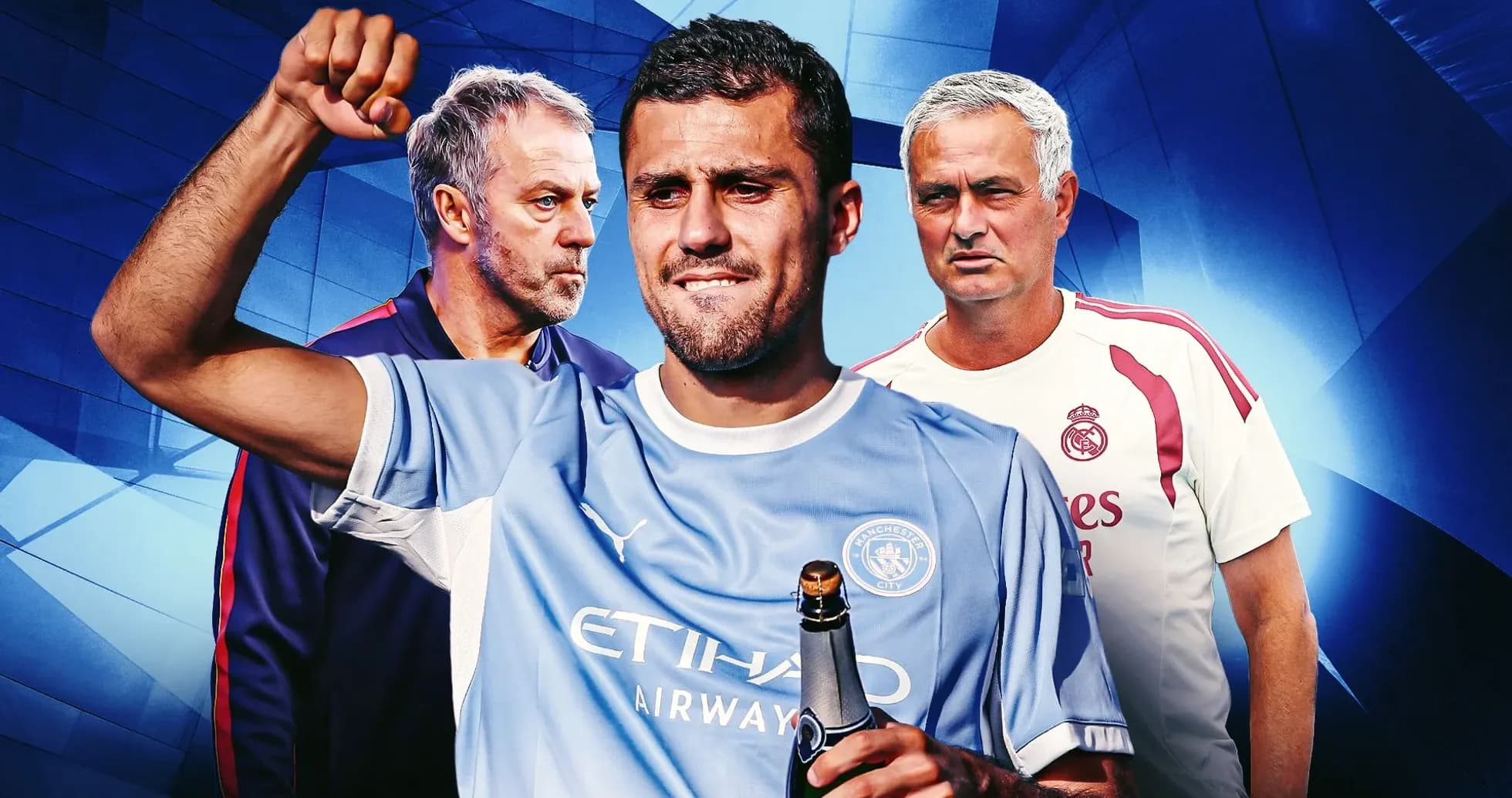
Rodri's Move to Barcelona: A Game-Changer for La Liga
It is not often that the best defensive midfielder on the planet is effectively placed in a shop window. Rarer still when he happens to be one of a nation’s finest players and available at what looks, in this market, like a clearance price.
Both sides of the Clasico divide saw the same opportunity. Only one moved quickly enough.
A £60m fault line in European football
Manchester City, weighed down by the calendar and the contract clock, are ready to accept as little as £60 million for Rodri, the 2024 Ballon d'Or winner, with only 12 months left on his deal. For a player who has spent years dictating the rhythm of title races, it is a fee that feels out of step with his influence.
Rodri, now 30, has hardly hidden his restlessness. He has openly flirted with the idea of going back to Spain, and the reasons to stay in Manchester are thinning out. Pep Guardiola’s departure has ripped up the old order at the Etihad. For key lieutenants like John Stones and Bernardo Silva, it already feels like a natural point of separation. Rodri is no different.
He knows his window. Two, maybe three years more at the absolute peak, if his body holds and his brain continues to stay two passes ahead of everyone else. This is his last giant move.
Real Madrid seemed to understand that faster than anyone.
Madrid hesitate, Barcelona pounce
For months, the Bernabeu hierarchy had been seen as favourites. Their interest in Rodri stretches back years, and his commanding World Cup — crowned with the Golden Ball — only hardened that admiration. On paper, it looked like the perfect succession plan: the best holding midfielder in the world anchoring the most demanding midfield in Europe.
Then Barcelona walked through the door.
Their entrance earlier this week changed the temperature of the whole saga. While Madrid’s talks with City and Rodri stalled over fee and personal terms, Barca moved with purpose. They spoke to the player. They opened a line with City. They acted as if they understood that this was a once-in-a-decade chance.
The motivation in Catalonia is obvious. Rodri has unexpectedly become available just as Frenkie de Jong faces a long spell out. The Dutchman returned from the World Cup with a torn medial collateral ligament, an injury that could keep him out for around four months and may yet require surgery. A hole opened up in Barca’s midfield. Rodri fits it perfectly.
The fit goes beyond need. Hansi Flick wants a ball-playing, possession-dominant pivot. Rodri is almost a modern remake of Sergio Busquets: tall, calm, ruthless in his positioning, and endlessly available for the ball. Several of his Spain team-mates are already at Camp Nou. The move almost sells itself.
It did not take long for Rodri’s preference to surface. Reports quickly indicated he favoured Barcelona. Then his agent, Pablo Barquero, removed any doubt. Speaking to Cadena SER, he said: “Out of respect for Madrid, as they have been class, Rodri informed them that his decision is to join Barca.”
That one sentence detonated across Spain.
A transfer storm and a bruised giant
The reaction was instant and chaotic. The Spanish media, never shy of a transfer drama, tore into the story from every angle.
One version claimed Real Madrid actually had an agreement with City, only to try to shave the price at the last moment, causing the deal to stall. Another insisted Rodri simply grew tired of waiting for Madrid to turn firm interest into a signed contract, and changed his mind. There were suggestions Real would not go beyond £34m, a figure that looks timid against City’s asking price and the player’s status.
Other reports went further. Some claimed Rodri never truly wanted Madrid at all, instead using their pursuit as leverage to draw Barcelona out. Others said he had an identical proposal from the capital but chose Catalonia for sporting reasons.
The most explosive theory? That City and Barca are working in tandem, nudging Real into a bidding war they do not want, or cannot win.
Inside the Bernabeu, the mood is said to be volcanic. José Mourinho, already a combustible presence in any transfer window, has reportedly been left furious by how the chase has unravelled. From being in pole position to watching the player walk into the arms of their greatest rivals, it is a scenario he was never likely to take quietly. A heated phone blast at chief scout Juni Calafat has been reported, with Calafat allegedly making it clear that Mourinho will have to live with his current midfield options.
Strip away the noise, and one truth remains: this is a heavy blow to Real Madrid’s pride and planning.
Rodri chooses Barca – and changes the title picture
What will sting most in Madrid is that Rodri himself had never disguised his openness to a move back to the capital. During the March international break he said: “Would I like to play in Spain again, in La Liga, in Madrid? I would like to return, yes, obviously.” On the prospect of joining Real specifically, he added: “You can't turn down one of the world's best clubs.”
Yet somehow, that is exactly what has happened. Real had the door open and still failed to walk through it.
The consequences could define the next few seasons in Spain. Rodri is not a luxury signing. He is a structural one. For Madrid, he would have been a major upgrade on Aurelien Tchouameni and Eduardo Camavinga in the pure holding role, a player to lock the back door while freeing the artists ahead of him.
Instead, he is poised to become the beating heart of Barcelona’s next iteration.
Imagine a fully fit Barca midfield of Rodri, Pedri, De Jong and Gavi, rotating and interchanging, all under a coach who wants the ball and hates giving it back. Rodri has already shown with City and Spain that he can orchestrate entire seasons from deep, turning games and title races with his positioning and passing rather than with spectacular moments.
Drop that level of control into a side chasing a third straight league crown and desperate to end a 12-year wait for the Champions League, and the impact is obvious. He does not just strengthen Barcelona. He weakens Real Madrid in the most direct way possible: by denying them the one player who could have tilted the balance of power back their way.
A rare defeat off the pitch
Real Madrid are not used to this. They rarely lose major transfer battles, and almost never to Barcelona. To be beaten now, for a player of this calibre, at a price that looks like a bargain, cuts deep.
This comes on the back of a painful domestic blow: surrendering the league title after a limp Clasico defeat in May. The club’s ego took a hit that night. This saga lands another punch.
Rodri’s decision is about more than one midfielder changing shirts. It is about momentum, about who moves fastest when the market suddenly opens, about which club can still convince the very best that their project is the one worth betting a career on.
Barcelona have made their case. Rodri has listened.
Now Real Madrid must live with the sight of the world’s leading defensive midfielder stepping out at Camp Nou in blaugrana, and ask themselves how they ever allowed it to happen.