Rodri's Journey: From Injury to World Cup Glory
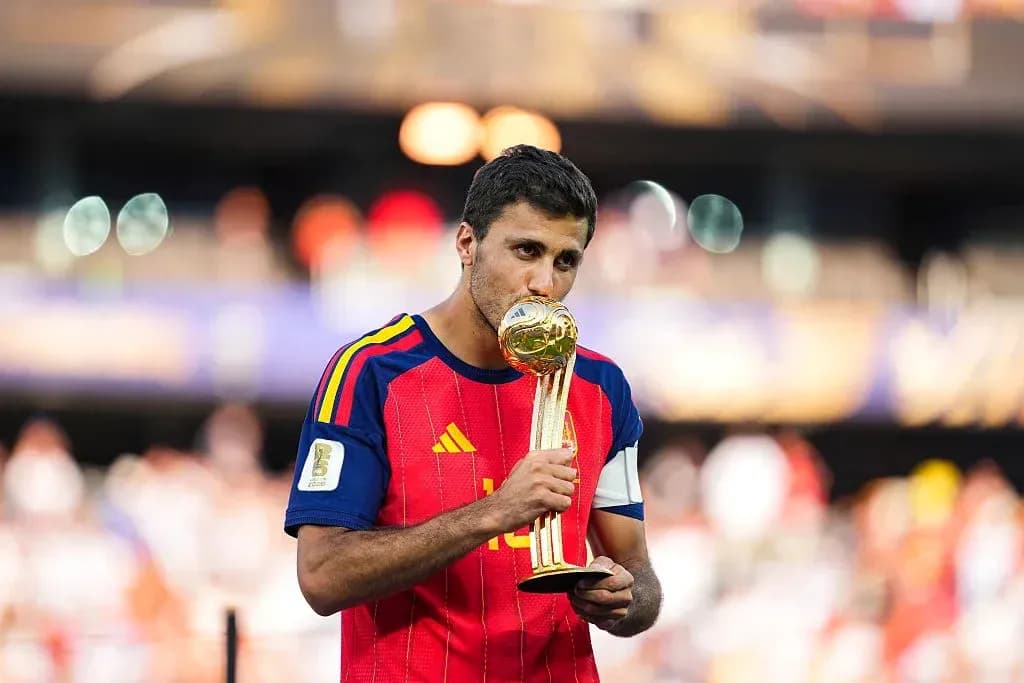
Rodri stands on the podium in a daze, World Cup trophy in one hand, Golden Ball in the other, and admits he can barely process any of it.
Spain have just beaten Argentina 1-0 in extra time to be crowned world champions. The player judged the best in the tournament is a midfielder who, less than a year ago, wondered if his right knee would ever let him play at this level again.
“We're a bit shocked right now, even myself,” he told Fox Sports, still on the pitch, still trying to catch his breath. “I cannot express with words. I think now we're like in a cloud but, for me, it's been a very tough time.”
From the treatment room to the top of the world
Rodri’s route to this night did not run in a straight line. In September 2024 he suffered a serious knee injury, the kind that changes seasons and, for some, careers. The recovery was not clean. Setback followed setback, each one dragging him back into the gym and away from the ball.
This World Cup, then, is not just a medal for him. It is a rebuttal.
He has dominated midfields all tournament, dictated tempo, and now carries the Golden Ball as confirmation of what the world has seen: Spain’s control has worn his fingerprints.
Yet when he spoke after the final, he did not linger on tactics or statistics. He went back to the lonely months.
“I just want the new generations to see my example as an opportunity,” he said. “When you go down, you can rise again. This is my philosophy for my entire life.
“Of course, sometimes things go well, things go wrong, but always the positiveness.”
A message to the dressing room – and beyond
Before kick-off, with Argentina staring them down in the tunnel and the noise pouring in from the stands, Rodri gathered his teammates. Spain, built on possession and patience, would not tiptoe into this final.
“I said to the lads before the game, ‘we have to go for the game,’” he revealed. “We need to face them, we have to look to their eyes. We want this game.”
It was a challenge as much as a speech. Spain took it on. They pressed, they passed, they suffered, and they kept going into extra time, where they finally found the goal that split the world champions from the contenders.
For Rodri, that courage on the pitch mirrored the courage he needed off it, in the quiet moments when doubts are loudest.
“And then life gives you the World Cup or not,” he said, “but we were brave and I was brave in that moment I was down, so I want to thank all the people that helped me.
“But I want to thank myself, to be honest, in those moments.”
It was a striking line. Honest. A little raw. Not arrogance, but recognition of the hours nobody else sees: the rehab, the repetition, the decision every day not to give in.
On a night when Spain climbed back to the summit of world football, their midfield leader held up more than a trophy. He held up a blueprint for every young player watching who has already heard the word “injury” spoken in a doctor’s room and feared what might come next.