Rodri's Future at Manchester City: A Pivotal Moment
Manchester City stand at a crossroads.
A decade of Pep Guardiola has given way to something new, something uncertain, and the scale of the change is brutal. This is not just a fresh face in the dugout. It is a Treble-winning core being dismantled in real time.
Manuel Akanji, Nathan Ake, Bernardo Silva and John Stones – four starters from the 2022-23 Treble side – have gone in a single summer. In their place, City have pushed £116m towards Elliot Anderson and placed a bold bet on 17-year-old Jeremy Monga. That is not gentle evolution. That is surgery.
And it might not be over.
Rodri: The piece everyone wants
At the centre of it all sits Rodri, or rather lies Rodri, heading into back surgery on Monday with just a year left on his contract and a cloud of speculation hanging over his future.
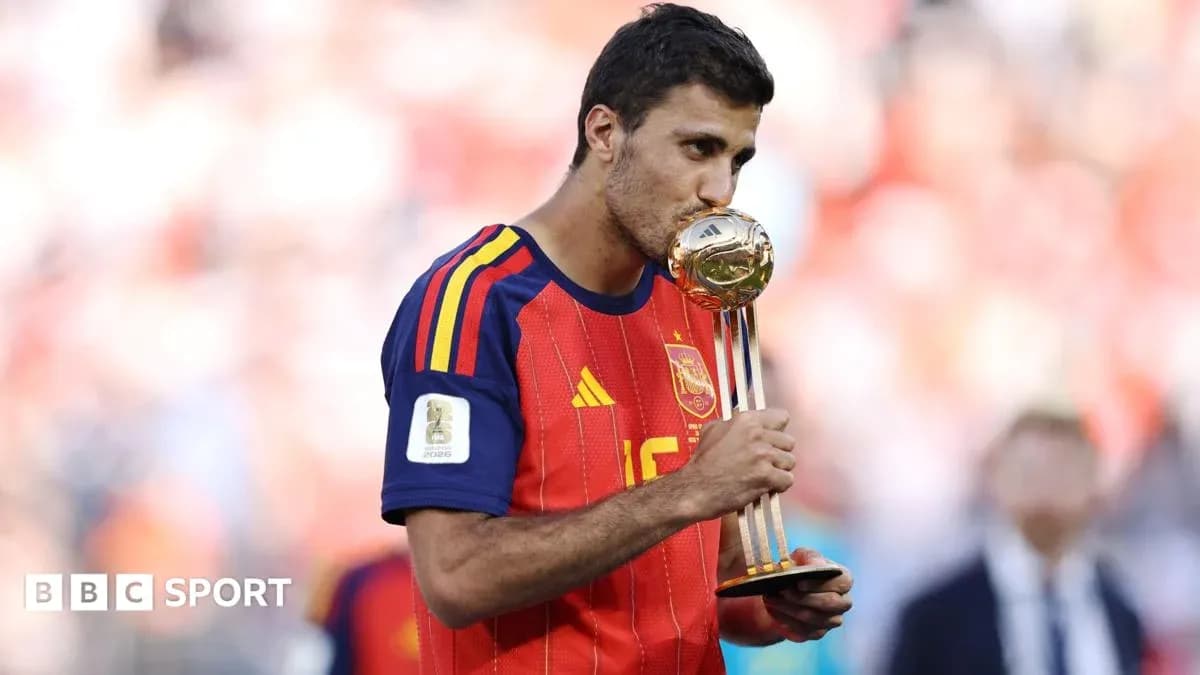
He is 30, fresh from captaining Spain to World Cup glory and walking away with the Golden Ball as the tournament’s outstanding player. At his peak, he looked like a Ballon d’Or contender before an anterior cruciate ligament injury stalled him last year. The question was whether he could ever get back to that level.
He answered it. Emphatically.
Guardiola predicted last October: “In the World Cup, he will be the best Rodri, and next season he will be the best Rodri.” The first half of that prophecy has already been banked.
Now, though, Guardiola is gone and Enzo Maresca is the man trying to hold this shifting squad together. On Friday, in his first news conference, Maresca did not bother to hide how he feels about his midfield anchor.
“I think every manager wants to have Rodri because he is a top player,” he said. “But now, surgery on Monday... he needs a holiday... he needs to rest and recover and then he will be back with us.”
The message was simple: City want to keep him. The reality is less straightforward.
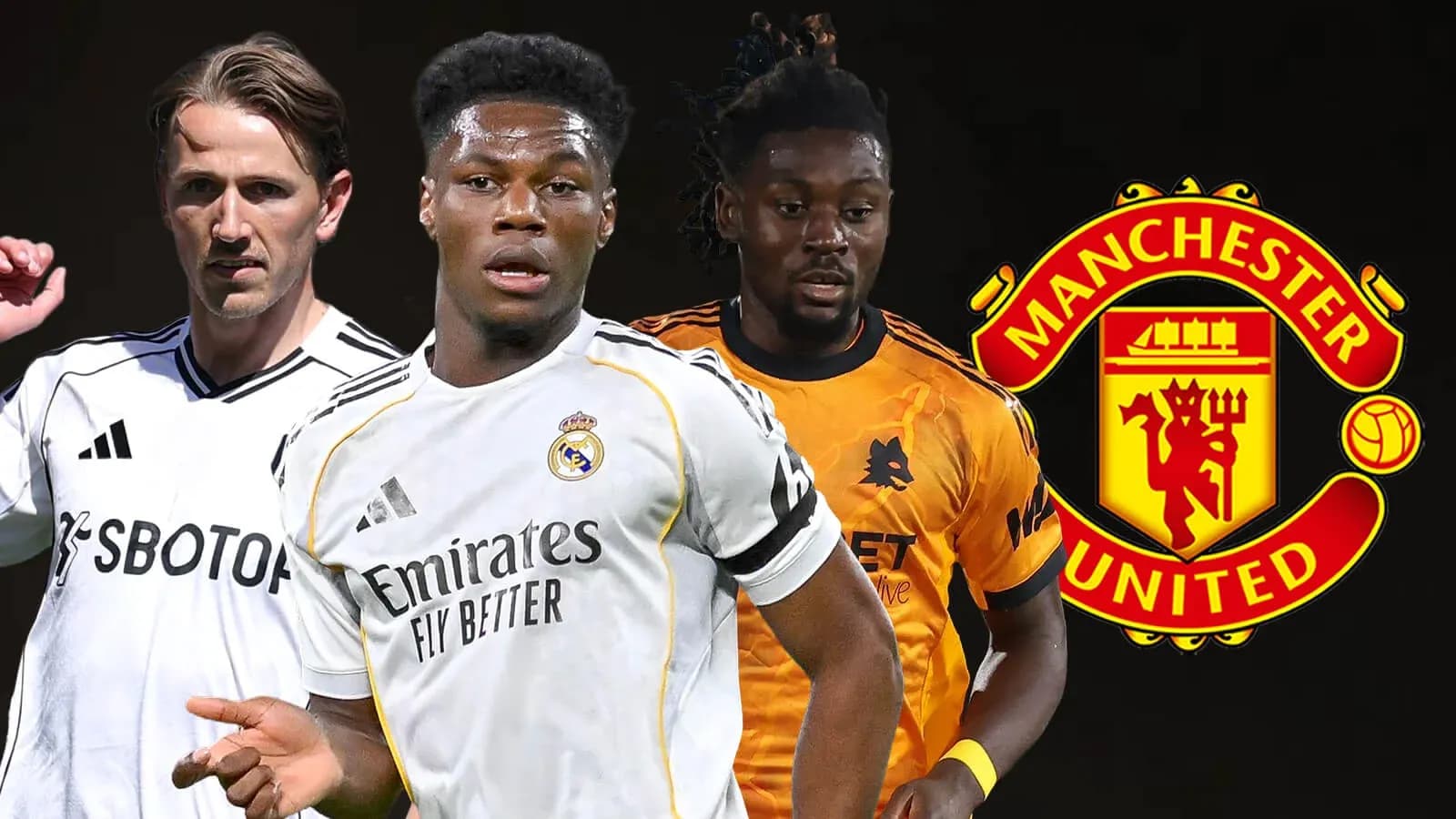
Reports in Spain suggest Real Madrid are “operating on the basis” that Rodri will eventually arrive at the Bernabéu. If that belief hardens into an offer, City face an unforgiving choice. Cash in once he returns to fitness and risk ripping out the brain of their midfield, or dig in behind Maresca’s stance and try to build the new City around him.
For a club already losing so much experience, the stakes could not be clearer.
Maresca’s board, Maresca’s pieces
To understand what comes next, you have to understand how Maresca thinks about the game.
He is a disciple of positional play, a coach who openly compares football to chess. Not in the lazy, cliché sense, but in the way he talks about “developing a plan, studying counter-moves, choosing the arrangement of the pieces”.
His teams, at their best, morph into an on-the-ball 3-2-2-3. It is a shape as much about zones as numbers. A framework that demands intelligence, patience and the courage to step into unfamiliar spaces.
Rodri is built for that world.
During the World Cup, he routinely dropped into the backline when Aymeric Laporte carried the ball forward, giving Spain a new angle in possession. Most of the time he anchored midfield, but when gaps appeared, he surged into them, offering line-breaking runs and passes with the same calm authority.
This is what makes him so valuable to Maresca: he can occupy multiple predefined positions within that 3-2-2-3, reading when to step in, when to drop, when to hold. He is not just another holding midfielder. He is the player who lets the rest of the structure breathe.
City know that. So does Madrid.
Life with Rodri… and without him
The plan, for now, is to retain him and build around that understanding of risk, tempo and positioning. But City cannot ignore the possibility that this era-defining pivot might move on.
Contingencies are already being sketched out.
Anderson arrives as a major investment, expected to slot into Maresca’s positional framework. City are also tracking 18-year-old Lille midfielder Ayyoub Bouaddi, who caught the eye for Morocco at the World Cup. Both are talented. Neither yet see the game with the clarity Rodri does.
That is not a criticism. It took Rodri years, and Fernandinho’s guidance, to fully adapt to the demands of Guardiola’s City. Reading the press, judging when to gamble, when to recycle, when to kill a counter at source – those are habits built over seasons, not months.
Maresca’s track record, though, offers City a different kind of reassurance. He has repeatedly shown a sharp eye for repositioning players into roles they had not previously occupied.
During City’s Treble season, when he worked as Guardiola’s assistant, it was John Stones who stepped out of centre-back and into midfield alongside Rodri, helping form that 3-2-2-3 in possession from a 4-4-2 defensive block. At Chelsea, Maresca experimented by using Moises Caicedo at right-back, only for him to step inside into a holding role once the team had the ball. Marc Cucurella was pushed further forward into attacking midfield zones.
These were not gimmicks. They were carefully calculated moves on Maresca’s chessboard.
So if Rodri does go, the Italian has already shown he is willing to redraw the map. A centre-back into a pivot. A full-back into a six. A defender into a playmaker. He will search his squad for the next player who can interpret space the way his system demands.
A bigger squad, a different City
One of the more intriguing shifts under Maresca will be philosophical rather than tactical. Guardiola preferred a tight group, a smaller squad of trusted lieutenants he could drill to perfection. Maresca looks more open to numbers, to variety, to having more pieces to move.
That matters in a season of upheaval.
Losing Stones, Ake, Akanji and Bernardo in one window strips away flexibility, leadership and tactical elasticity. Bringing in Anderson, promoting Monga and potentially adding someone like Bouaddi is a gamble on youth, upside and adaptability.
City with Rodri in the middle of that storm look far more stable. He is the one player who can hold the positional puzzle together while others learn the angles. Without him, Maresca will be forced to accelerate his experiments, to lean even harder into his taste for reinvention.
The board is set. The kingmaker in midfield is heading for surgery. Real Madrid are watching.
Now City must decide: do they build Maresca’s new era around Rodri, or accept that the most important piece on their board might soon be making moves somewhere else?