Real Monarchs vs Sporting KC II: A Clash of Volatile MLS Next Pro Teams
Under the lights at Zions Bank Stadium, this MLS Next Pro group-stage clash brought together two teams whose seasons have been defined by volatility rather than control. Real Monarchs, fifth in the Pacific Division and sitting tenth in the Eastern Conference table snapshot with 18 points and a goal difference of 0, came in as a side that either soars or crashes. Sporting KC II, sixth in the Frontier Division and twelfth in the Eastern Conference with 13 points and a bruising goal difference of -20, arrived as a team that concedes heavily but can be unexpectedly dangerous on their travels.
Heading into this game, the numbers framed a fascinating contrast in seasonal DNA. Real Monarchs had played 12 matches in total, winning 7 and losing 5 with no draws, scoring 23 and conceding 20 overall. At home they had played 8, winning 5 and losing 3, with 14 goals for and 14 against. That gave them a home attacking average of 1.8 goals per game and a matching 1.8 conceded, a profile of a team that turns Zions Bank Stadium into a high-variance arena. Their form line of “WWWWLLLLWWWL” underscored the streakiness: four straight wins, then four straight losses, then another burst of victories before this latest setback.
Sporting KC II, by contrast, had played 15 matches overall, winning 4 and losing 11, scoring 19 and conceding 40 in total. On their travels they had played 6, winning 3 and losing 3, with 12 goals scored and 16 conceded. That away profile—2.0 goals for and 2.7 against on average—painted them as an open, chaotic side: defensively fragile but far more assertive away than at home, where they had only 1 win in 9 and an average of 0.8 goals scored.
The final 3–1 scoreline to Sporting KC II, after a 1–0 away lead at half-time, fit those underlying patterns more than it contradicted them. Real Monarchs’ overall goal difference of 0 heading into this fixture came from 23 scored and 23 conceded when combining league table and team statistics snapshots, while Sporting KC II’s -21 in that combined view (19 for, 40 against) showed just how significant an away statement this was.
Tactically, both starting XIs told a story of youth, rotation, and experimentation more than rigid structure. Real Monarchs, under Mark Lowry, named R. Alphin in goal, with a defensive group built around G. Villa, D. Kropp, G. Calderon and R. Mesalles. The outfield core of C. Cowell, I. Amparo, L. O’Gara, Lineker Rodrigues, V. Parker and F. Ewald suggested a side leaning into athleticism and vertical running rather than a possession-heavy metronome. With no explicit formation data, the selection still hinted at flexible lines and interchangeable roles, particularly in wide and attacking zones.
On the opposite side, Istvan Urbanyi’s Sporting KC II went with J. Kortkamp as the last line of resistance, shielding him with J. Francka, P. Lurot, L. Antongirolami and D. Russo. The midfield and forward band of B. Mabie, S. Donovan, C. Derksen, M. Rodriguez, K. Hines and T. Haas looked designed to press and transition quickly, a logical approach for a team that averages 2.0 away goals and has yet to keep a clean sheet anywhere this season.
The absence list offered no clues, which in itself shaped the tactical void: both coaches had their full registered squads at their disposal, and the bench options were deep on both sides. Real Monarchs could call on B. Ewing, O. Anderson, L. Djiro, M. Wentzel, L. Rivera, O. Marquez, J. Ottley, L. Ream and C. Estala. Sporting KC II had J. Molinaro, T. Burns, T. Ikoba, A. Cunningham, Z. Wantland, Z. Loyo Reynaga, T. Lor, E. Brooks and S. Worcester. The breadth of substitutes hinted at in-game tactical shifts rather than a rigid, pre-set script: extra runners in wide channels, fresh legs in midfield, and late-game direct options.
Disciplinary trends loomed over the contest before a ball was kicked. Heading into this game, Real Monarchs were a late-card magnet: 31.25% of their yellows arrived between 76–90 minutes, and another 15.63% in the 91–105 window. Their single red card this season had come in the 31–45 range, underlining how emotional spikes around half-time can cost them. Sporting KC II, meanwhile, clustered 25.00% of their yellows between 16–30 minutes and 20.00% between 31–45, suggesting early aggression and occasional loss of control in the first half. That disciplinary map set up a contest in which Real Monarchs risked unraveling late, while Sporting KC II had to survive their own tendency to burn hot in the opening exchanges.
The “Hunter vs Shield” matchup in this fixture was less about one named striker and more about unit profiles. Real Monarchs’ home attack, averaging 1.8 goals per game, was up against a Sporting KC II away defence conceding 2.7 on their travels. On paper, that should have tilted the attacking initiative towards the hosts. Yet Sporting KC II’s away attack—2.0 goals per game—faced a Real Monarchs home defence that also allowed 1.8 per match, a softer underbelly than their points tally suggested. The 3-goal haul for the visitors ultimately reflected their away offensive identity more than an outlier.
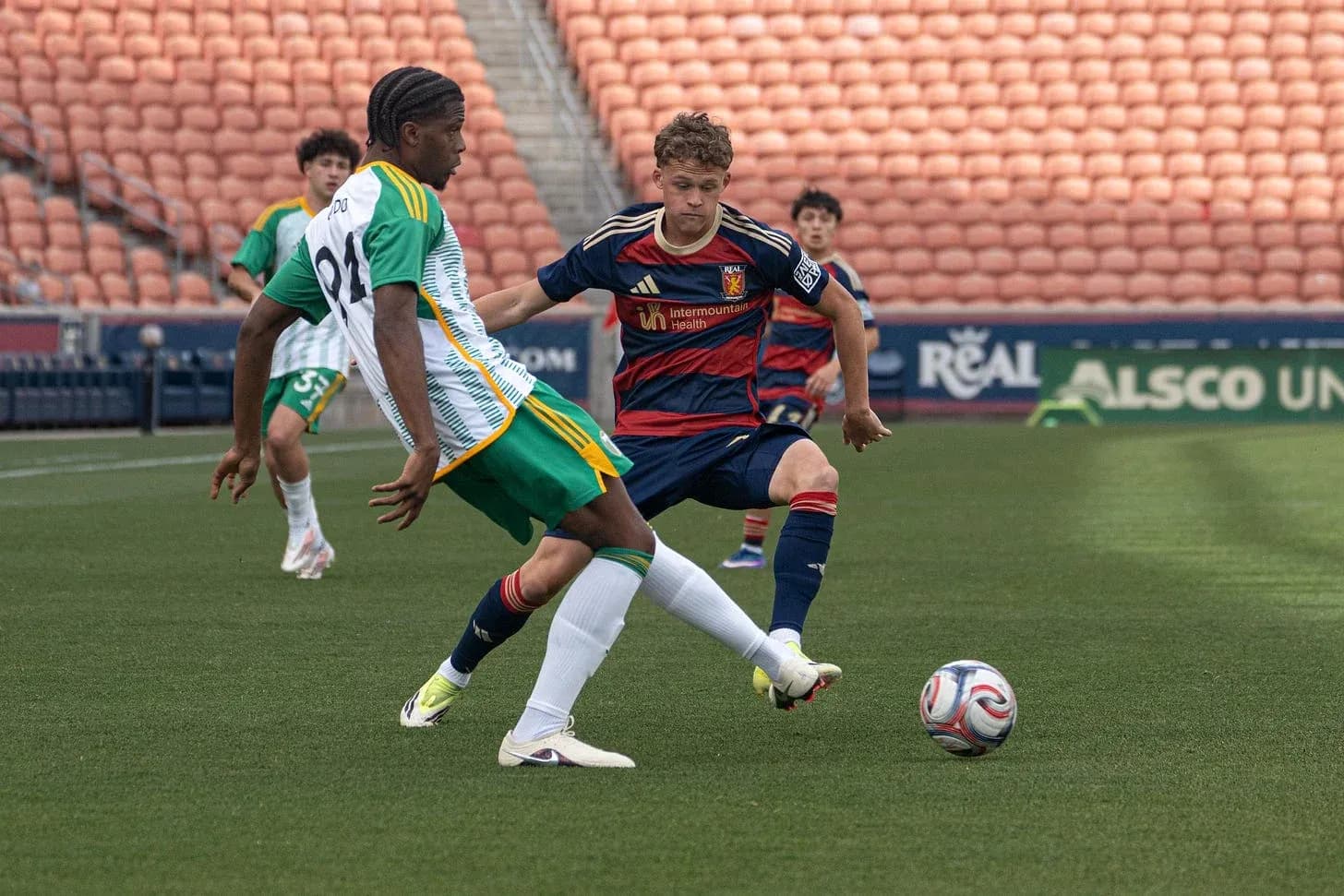
In the “Engine Room” duel, Real Monarchs’ midfield trio of C. Cowell, I. Amparo and L. O’Gara were tasked with controlling tempo and shielding a defence that concedes 1.8 at home. Their challenge was to slow down the vertical surges of S. Donovan, C. Derksen and M. Rodriguez, whose mandate was to turn every turnover into a direct thrust towards Alphin’s goal. Without granular passing and pressing metrics, the narrative still points to Sporting KC II winning that central battle: they imposed their transition game, forced Monarchs into uncomfortable defensive footraces, and capitalised with three goals.
From a statistical prognosis standpoint, the expected goals picture—if we map from season-long profiles—favoured a high-scoring encounter. Real Monarchs’ total averages of 1.9 scored and 1.7 conceded per match, combined with Sporting KC II’s 1.3 scored and 2.7 conceded overall, pointed to a game with space, chances, and volatility. Following this result, Sporting KC II’s away persona as an unpredictable, high-event side is reinforced, while Real Monarchs’ streaky identity deepens: a team capable of bursts of wins, but structurally fragile when asked to manage games against aggressive, transition-heavy opponents.
In narrative terms, this was less an upset and more a crystallisation of who these teams have been all season: Real Monarchs, the streaking protagonist with defensive cracks; Sporting KC II, the flawed antagonist whose best version often appears far from home.