Real Madrid's Promise: Can They Sign Rodri?
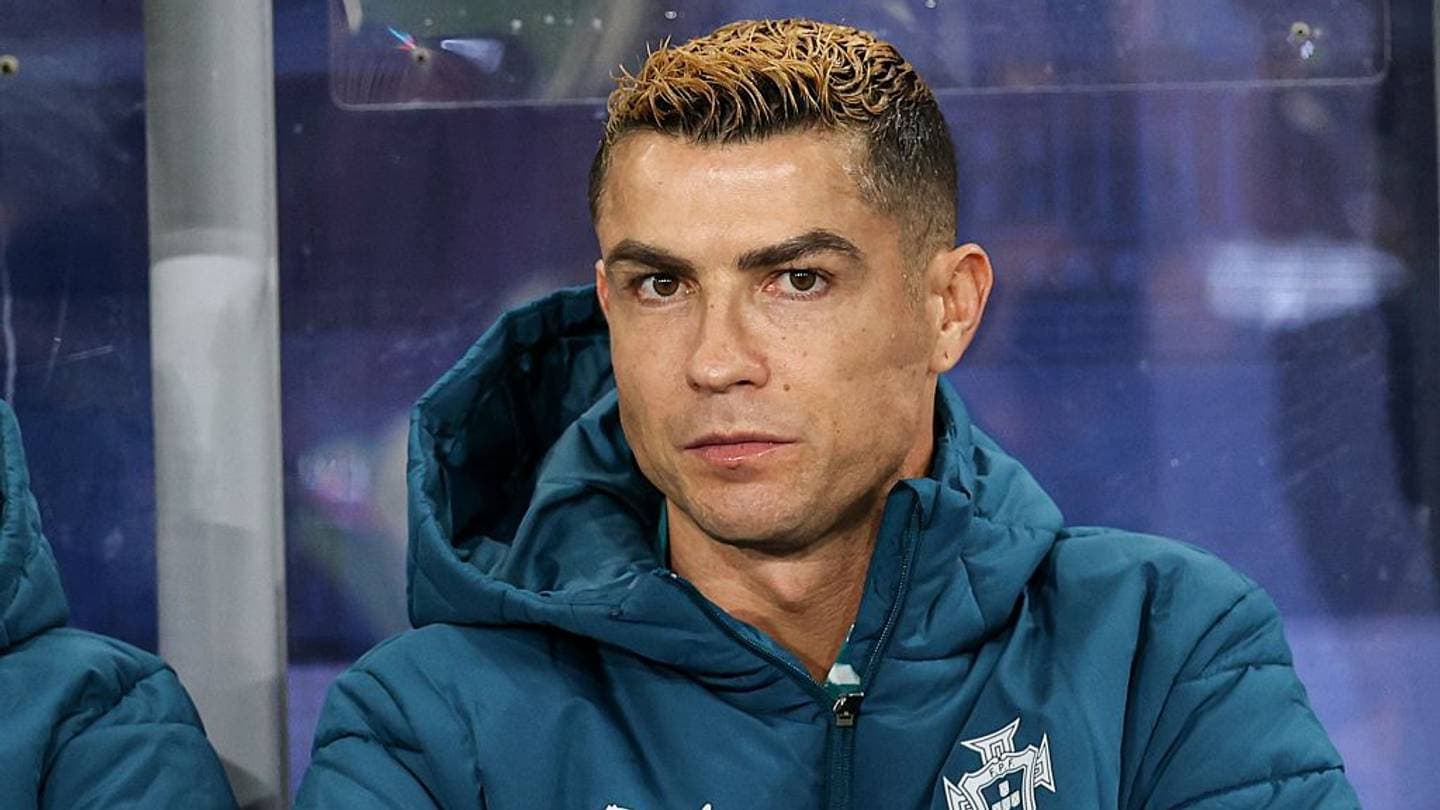
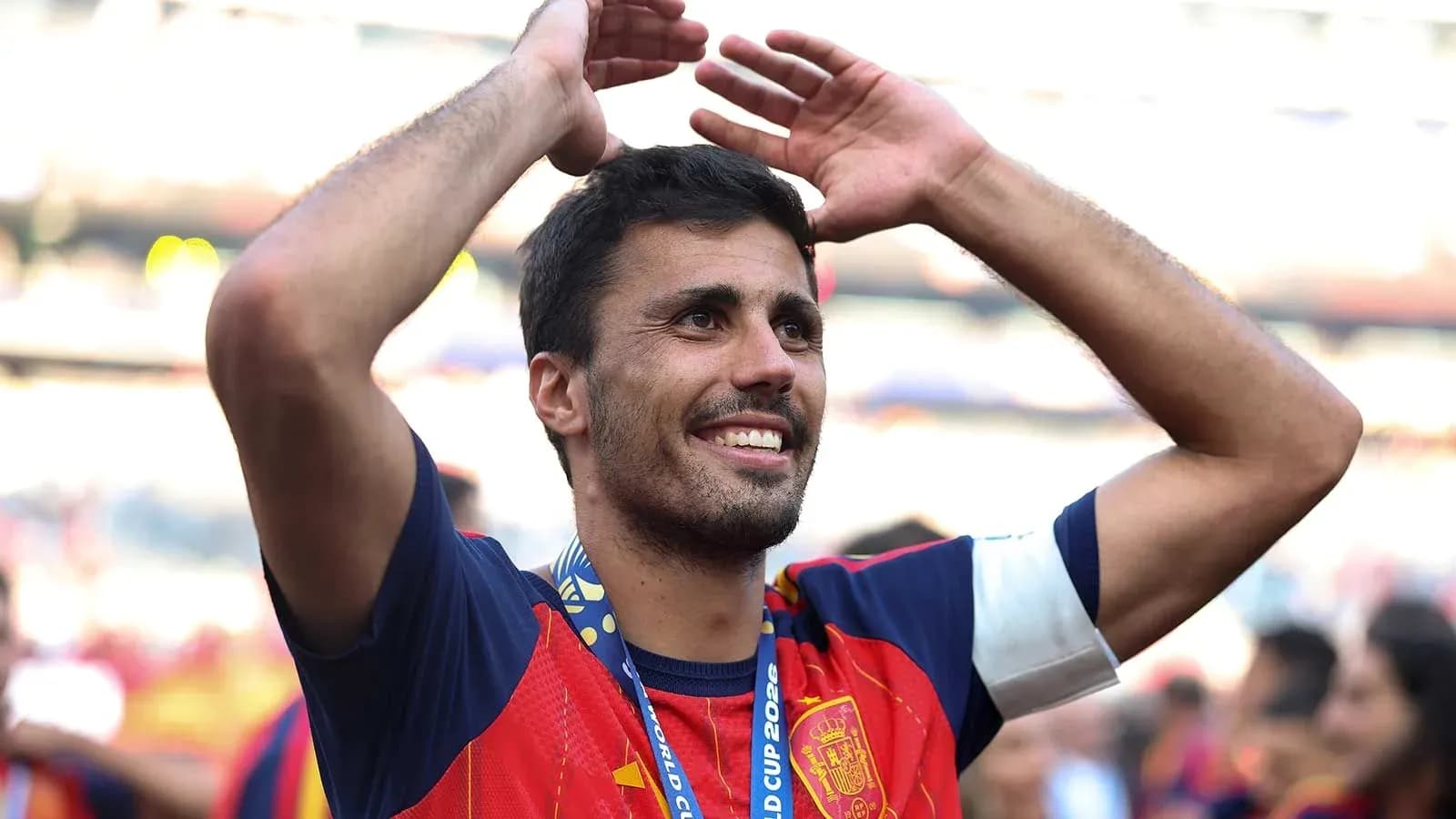
Real Madrid have always sold themselves as the club that signs the best footballers on earth. It is part marketing slogan, part religion at the Santiago Bernabeu. So when Rodri walked away from the World Cup in the USA, Canada and Mexico with the player of the tournament award and a winner’s medal for Spain, the rumours almost wrote themselves.
For Florentino Perez, they also carried a problem.
The Real president went through June locked in a noisy election duel with Enrique Riquelme and emerged, as usual, still in charge. He did not just win; he embellished. In classic Perez fashion, he promised a mega signing this summer, a €150 million swing at a superstar “of the calibre of Cristiano Ronaldo or Kaka.” It was a pledge to the socios as much as a shot across Europe’s transfer market.
The reality that followed has been far more prosaic.
A Promise Without a Galactico
The first supposed answer to that promise was not a new Ronaldo. It was Julian Alvarez. Real were prepared to wire €150 million to Atletico Madrid for the forward, at least on paper. Atletico’s response was swift and brutal: no. The offer, insiders suggested, may never have been entirely serious. It felt like a show of muscle rather than a genuine negotiation.
Real pivoted. Jose Mourinho returned to the Bernabeu, the man who once waged weekly war with Pep Guardiola’s Barcelona and left with trophies but not dominance. His comeback was the first big headline, a nod to a more combative, pragmatic era.
Then came the signings. Marc Cucurella from Chelsea. Denzel Dumfries from Inter Milan. Around €75 million on two full-backs. Ibrahima Konate arrived from Liverpool on a free, another defensive piece. Bernardo Silva, 31 and out of contract at Manchester City, followed for nothing.
Smart business, yes. A blockbuster? No.
The signing that would jolt the fanbase from two trophyless years into believing in a new golden cycle never landed. That is where Rodri, 30 years old and fresh from a World Cup that underlined his status as the best holding midfielder on the planet, re-enters the story.
Rodri: The Midfield That Changes Everything
On pure footballing grounds, the case for Rodri is simple. Even after tearing his anterior cruciate ligament in 2024, he dominated the World Cup, dictating Spain’s tempo, range and control. Every attack seemed to start with him, every phase of play bent to his rhythm.
According to Sky Sport, Manchester City have put a new contract on the table beyond his current 2027 deal. No agreement yet. Real, the same report says, have gone further, offering a contract until 2030 and preparing a bid in the €50–60 million range.
Then the counter-briefing began.
Spanish newspaper AS cited club sources insisting the supposed pursuit is little more than noise amplified by Spain’s World Cup triumph. Inside the Bernabeu, some see the Rodri talk as a by-product of a summer narrative, not a concrete operation.
Still, his profile slices straight through the heart of Real’s tactical identity.
With Rodri, you buy the ball. You buy control. He accelerates or slows the game with a touch, positions himself as the first passing option, and becomes the launchpad for everything. He is the kind of conductor Real have lacked since Toni Kroos and Luka Modric finally left.
But Real, from Carlo Ancelotti’s last years onwards, had grown comfortable without that kind of metronome. They ceded possession, soaked up pressure and then tore teams apart in transition through the pace and chaos of Vinicius Junior and Kylian Mbappe. Mourinho’s return only sharpened that expectation: a compact, ruthless side that kills on the break rather than hoards the ball.
Drop Rodri into that system and you are not just adding a midfielder. You are rewriting the team’s idea of itself.
Style, Age and a €100 Million Question
Two questions now hang over the whole debate.
First: does Rodri fit Mourinho? The Portuguese coach has never built his game around a possession-obsessed pivot. He has relied on discipline, athleticism and verticality rather than a deep-lying dictator of play. Rodri would demand the ball, demand responsibility, and pull Real into longer spells of controlled build-up.
Second: is a fee nudging €100 million for a 30-year-old, with an ACL rupture in his recent past, simply too much?
On this summer’s evidence, he still looks like a player with several elite years ahead of him. His World Cup performances suggested the injury has not dulled his brain or his authority. The price, in that sense, buys certainty in a position where Real have lost both Kroos and Modric and are yet to replace their brains.
Rodri, for his part, has never hidden his openness to crossing Madrid’s footballing divide again.
“The fact I played for Atletico doesn’t stop me from playing for Real. There are other players who have taken that path,” he said in the spring. One sentence, and the speculation machine roared into life.
Surgery, PSG and a Softening City
Then came another twist.
Last week, Manchester City announced that Rodri required immediate back surgery and would be out for an indefinite period. Coach Enzo Maresca laid out the schedule bluntly: “He will have the operation on Monday. Then he needs a holiday, has to rest and recover. And then he will come back to us.”
On Tuesday, City confirmed the procedure had gone well and wished him a speedy recovery.
Even that has not cooled the market. RMC reported that Paris Saint-Germain are also in the race, undeterred by the surgery and despite already boasting a stacked midfield with Vitinha, Fabian Ruiz and Joao Neves. Their two consecutive Champions League titles tell their own story about how strong that department is.
Yet after seven years in England, Rodri is said to favour a return to Spain. Convincing him, if Real truly move, would not be the hardest part.
Convincing City once looked impossible. Early noise from Manchester suggested the club would simply refuse to engage, no matter the offer. That line has started to bend. Marca reports that City, who “hold the player in the highest regard,” will accept his departure if that is his decision.
The door, once bolted, is now at least ajar.
Perez’s Promise Meets Reality
All of this loops back to Perez.
He is a president who has always believed in the power of the marquee signing, the name on the front pages that reasserts Real’s self-image as the biggest club in the world. He told the fans he would deliver one this summer. So far, he has not.
Rodri is not a forward, not a YouTube-friendly dribbler, not a marketing dream in the mould of Ronaldo. He is something more subtle and, for this team, perhaps more vital: the structure, the order, the calm.
He would force Mourinho to rethink, reshape and maybe even relinquish some of his instincts. He would cost a fortune at an age that usually frightens data departments. He is recovering from surgery and coming off a serious knee injury.
And yet, if Real truly want to step back into Europe’s centre stage, if Perez wants his promise to be remembered as a statement rather than a slogan, this is the kind of uncomfortable, transformative decision that defines an era.
Does the “biggest club in the world” still have the courage to build its next great side around a midfielder who wants the ball all the time? Or will that promise to the Bernabeu crowd fade into just another campaign line?