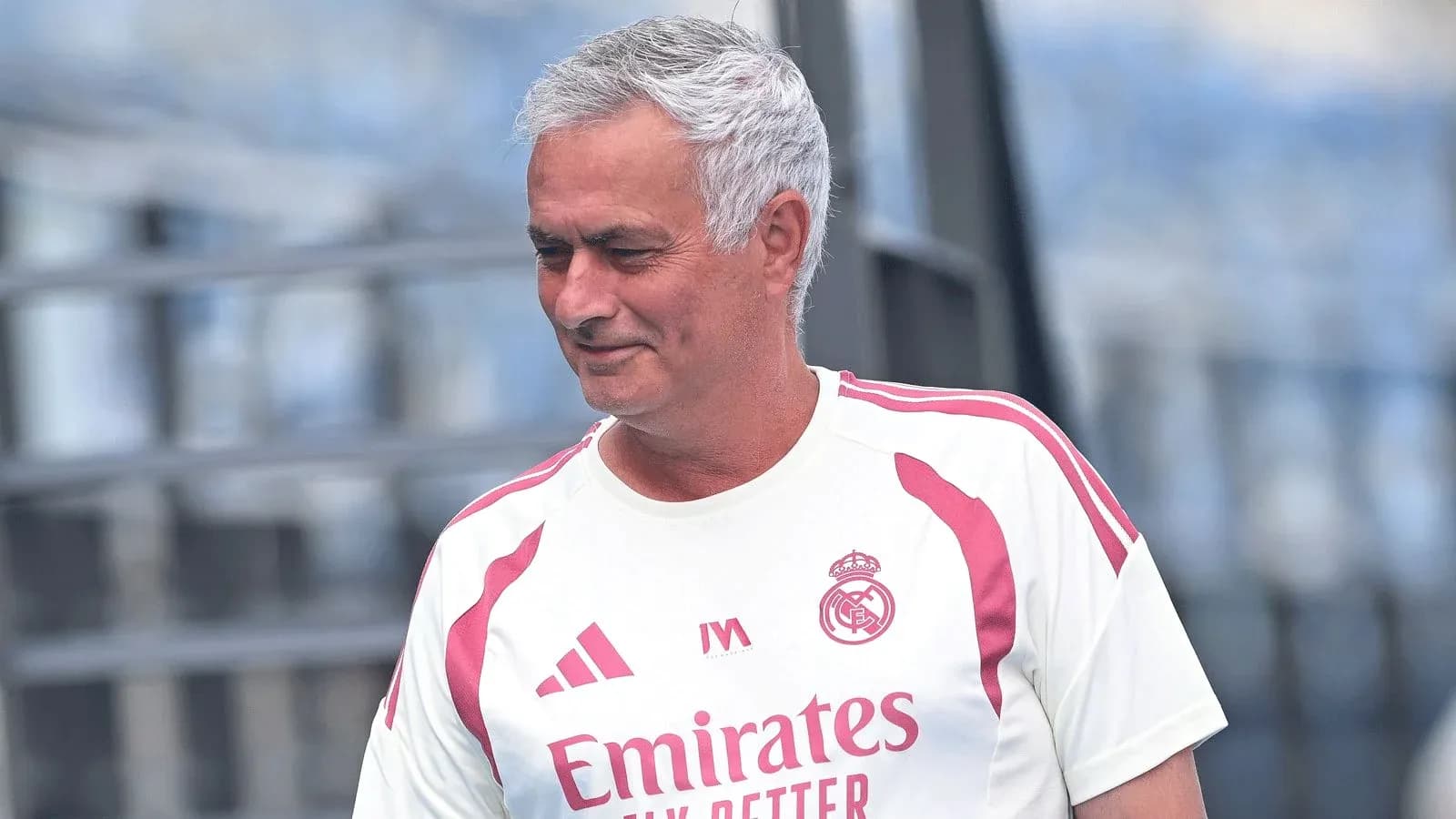
Real Madrid Closes Midfield Door as Mourinho Adjusts Strategy
Real Madrid have made their call. No more midfielders. No last‑minute pivot, no late splash after Rodri slipped away. The European champions are closing the window in the centre of the pitch and handing José Mourinho a clear message: make it work with what you have.
According to Fichajes, any change to that stance now rests on a bombshell sale. Only an offer of more than €80 million for either Aurelien Tchouameni or Eduardo Camavinga, lodged before 15 August, would reopen the conversation. Short of that, the midfield is officially closed for business.
Board backs what it already owns
Inside Valdebebas, the mood is one of conviction rather than compromise. The hierarchy believes this squad is already built to compete with anyone. The midfield, in particular, is seen as deep, varied and technically superior.
Two developments have stiffened that belief. First, the arrival of Silva on a free transfer from Man City, a move that gives Madrid an experienced, elite-level organiser without a transfer fee. Then, the pre-season rise of Guler, whose performances have not just impressed but altered internal planning. Between the seasoned 31-year-old and the 21-year-old Turkish talent, the board feels it has found its creative axis.
That faith has a consequence: the search for a traditional defensive midfielder is over. Rodri was the target, the specialist they wanted to anchor the side. Once that chase ended in failure, the club chose not to pivot to a Plan B. No stop-gap, no compromise signing. Just a hard stop.
Mourinho’s system under the knife
The decision drops the problem squarely on Mourinho’s desk. His preferred 4-2-3-1 is staying, but the personnel within it will not look quite as he first imagined.
Without a new destroyer at the base, the Portuguese coach is preparing to pull Silva deeper, into a playmaking role inside the double pivot. Rather than operating between the lines, the former City man will be asked to start moves from the engine room, knitting play together alongside Tchouameni.
It is a bold recalibration. Silva’s experience and intelligence become the launchpad, Tchouameni’s athleticism and defensive instincts the shield. On paper, it offers control and progression from deep rather than pure steel. On the pitch, it will demand huge discipline from both.
The knock-on effect is immediate. Fede Valverde, long a symbol of Madrid’s modern, high-intensity style, is the one pushed to the margins. With Yan Diomande arriving for €125 million, the Uruguayan is expected either to shift out to the right flank or, more starkly, to drop to the bench. For a player of his status, that is a significant tactical and political twist.
Guler handed the keys
Higher up the pitch, Mourinho has a very different kind of gamble in mind. Guler, just 21, is being handed the role of primary creator in the No 10 slot. This is not a gentle integration; it is a statement.
The plan is clear: give him the job Mesut Ozil once performed for Mourinho in Madrid. Receive between the lines, see the pass before anyone else, and supply the forwards relentlessly. Guler’s vision, weight of pass and calm in tight spaces have convinced the coaching staff that he can handle that responsibility now, not in a year or two.
Mourinho’s idea is to fuse Guler’s imagination with Silva’s work rate and rhythm, creating a dual brain at the heart of the team. From there, the supply line runs straight into the club’s devastating front line: Vinicius Junior, Jude Bellingham, Kylian Mbappe. If the structure holds, those three will never be short of service.
Inside the club, there is little doubt about the technical quality of the two playmakers. The belief is that Silva and Guler together can dictate tempo, control phases of possession and keep Madrid on the front foot in the biggest games. The risk is obvious as well: less pure defensive cover, more responsibility on Tchouameni, and a huge burden on a young creator.
Trial by training ground
The new blueprint will not wait for the Liga opener to be tested. Mourinho plans to use the coming sessions at Valdebebas as a laboratory, running Silva and Guler through their paces in central roles, stressing the system, and seeing how they cope with the weight of directing Real Madrid.
Coaches will watch closely: how Silva manages defensive transitions when stationed deeper, how Guler responds when pressed by aggressive midfielders, how the pair share responsibility in build-up. The answers will shape not just the starting XI, but the hierarchy within the squad.
For now, the message from the boardroom is unambiguous. Unless a giant bid lands on the table for Camavinga or Tchouameni before 15 August, this is the midfield with which Madrid will defend their title. No safety net, no late-market twist.
Mourinho has his structure, his pieces, and his constraints. The question now is simple: can this version of Real Madrid control games without the defensive midfielder they originally wanted, or will that closed door on the market come back to haunt them when the season hits its hardest stretch?