Real Madrid's Midfield Decision: No New Signings for Mourinho
Real Madrid have drawn a line under their midfield business. After failing to prise Rodri away, the European champions have decided there will be no more signings in the middle of the pitch this summer. Not one.
According to reports in Spain, any late twist now hinges entirely on departures. Only a huge sale — Aurelien Tchouameni or Eduardo Camavinga for a fee north of €80 million before 15 August — would reopen the market. Short of that, the midfield is officially closed.
Rodri dream dies, plan B is internal
Madrid went hard for Rodri. They didn’t get him. Rather than scramble for a lesser alternative, the club hierarchy has taken a hard stance: trust what’s already in the dressing room.
Inside Valdebebas, there is little appetite for panic buys. Executives are convinced the squad, as constructed, can carry the club through another title push. The arrival of Silva on a free from Man City has helped calm any nerves, as has the eye-catching pre-season rise of Arda Guler.
Those two developments have changed the internal conversation. What started as a search for a classic holding midfielder has ended with a strategic bet on technique and versatility.
No Rodri. No new destroyer. The message from upstairs is clear: the answers are already here.
Mourinho’s 4-2-3-1 gets ripped up
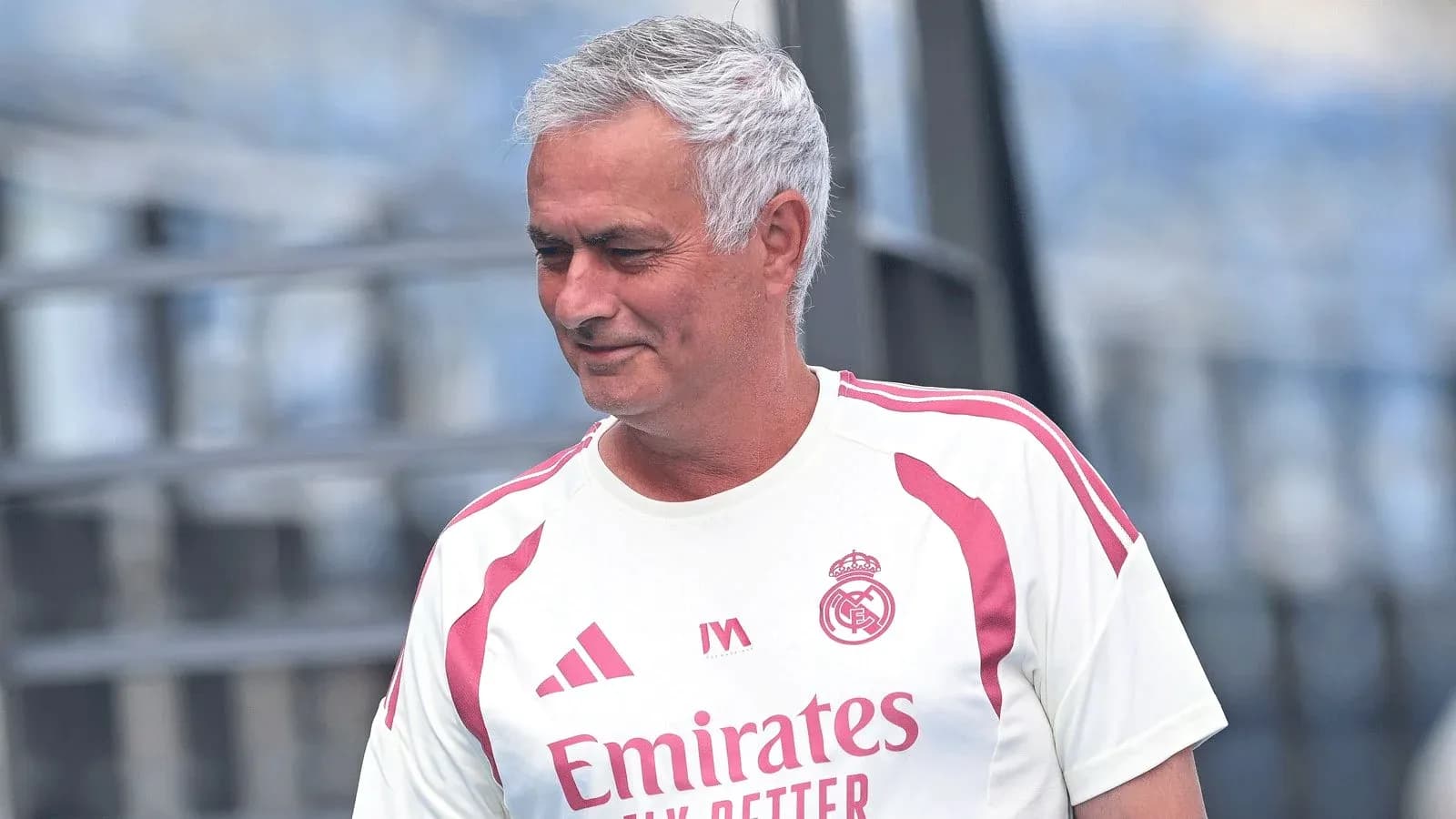
The decision leaves José Mourinho with a different kind of challenge. His preferred 4-2-3-1, built around a strong, specialist shield in front of the defence, now has to be reimagined without the pure defensive midfielder he wanted.
So the reshuffle begins.
Silva, signed as a free agent and expected by many to operate higher up, is now being prepared for a deeper role. Mourinho plans to drop the 31-year-old into a double pivot, asking him to dictate play from the base rather than roam as a traditional No 10.
Next to him, Tchouameni becomes the natural partner: the physical anchor, the ball-winner, the one who plugs gaps while Silva sets the tempo. It’s a pairing that sacrifices some brute defensive edge in exchange for control and passing angles.
The consequences ripple through the rest of the side. Fede Valverde, long a symbol of Madrid’s energy in midfield, is the one squeezed by the tactical squeeze. With Yan Diomande arriving for €125 million, the Uruguayan is expected either to shift to the right flank or lose his starting place altogether.
For a player of his stature, that is a brutal reality of elite competition.
Guler handed the keys
Higher up the pitch, Mourinho has a clear idea. The No 10 zone belongs to Arda Guler.
The 21-year-old Turkish playmaker is being groomed as the primary creator, the man responsible for the final ball, the one expected to unlock packed defences. Inside the club, there is already talk of him stepping into a role similar to the one Mesut Özil occupied during Mourinho’s first spell in Madrid: floating between the lines, stitching attacks together, feeding runners from all angles.
The plan is bold. Guler’s vision and flair, combined with Silva’s work rate and experience, should give Madrid a dual brain in midfield. Between them, they are expected to keep the ball moving and constantly supply Vinicius Junior, Jude Bellingham, and Kylian Mbappé.
It’s a structure that leans heavily on technical quality. It asks Guler to grow up fast. It asks Silva, at 31, to reinvent himself once more.
The board believes they can do it. They are convinced these two playmakers have exactly what is needed to dictate the rhythm of games, even without a classic holding midfielder behind them.
Valdebebas becomes the laboratory
The theory now meets the training ground.
At Valdebebas, Mourinho will immediately start testing this new blueprint, dropping Silva and Guler together into the heart of the side during sessions. Every drill, every internal game, will be watched closely as the staff gauge whether this pairing can handle the responsibility of driving Real Madrid forward.
Can Silva cope with the defensive load deeper on the pitch? Can Guler handle the weight of being the main creative outlet in a team with this many stars? Can Tchouameni and the rest of the unit cover the spaces that a Rodri-type presence would naturally own?
Those are the questions that will shape the opening weeks of the season.
What is not in doubt is the club’s stance. Unless an extraordinary offer lands for Camavinga or Tchouameni before 15 August, Real Madrid will march into the new campaign with what they have — no safety net, no late-market rescue, and a midfield built on conviction rather than compromise.