Rangers' Mixed Start Under McInnes: A 1-1 Draw at Dundee United
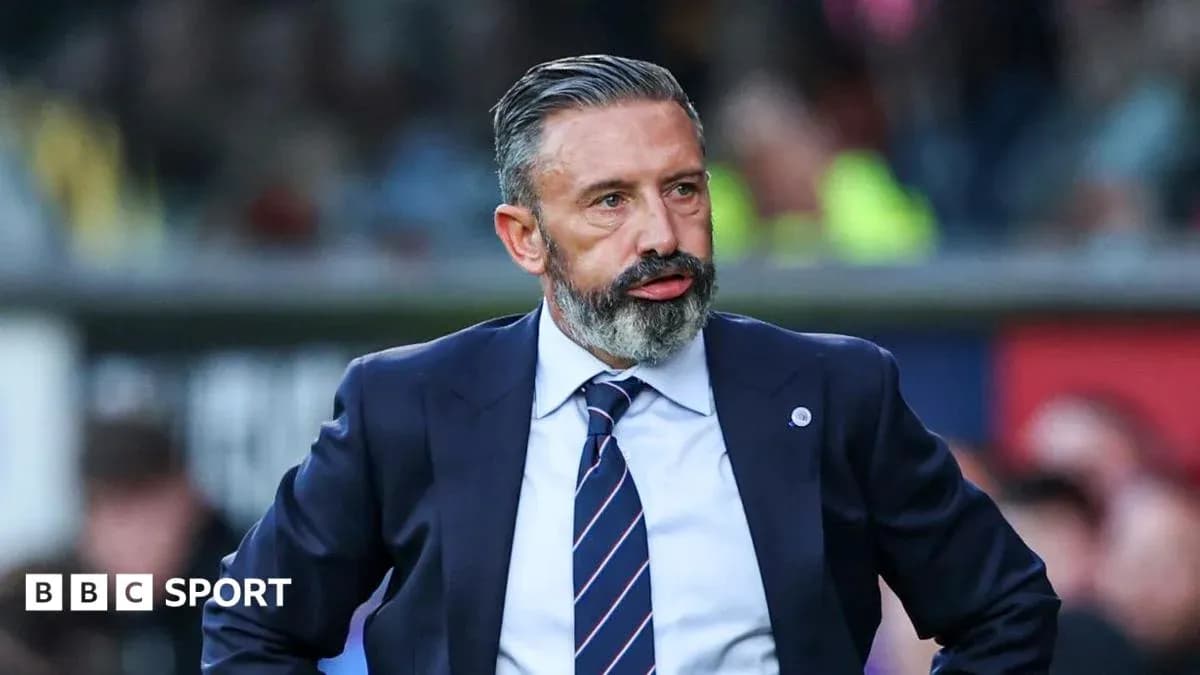
Derek McInnes did not reach for the hairdryer.
Twelve months on from Russell Martin savaging his Rangers side after an opening-day draw at Motherwell, the Ibrox club opened another league campaign with the same outcome – a 1-1 draw – but a very different mood music as a new era began at Dundee United.
This was not a statement performance. It was scratchy, disjointed and, at times, vulnerable. Yet McInnes, taking charge of his first league game as Rangers manager, spoke more about patience than panic.
“It’s one game,” he told Sky Sports after the match. “We are going to get better as we go along.”
He knows he has walked into a summer of upheaval, with a squad still being pulled into shape and a system still being learned.
A slow start, a warning shot
Rangers started like a team still figuring each other out. Dundee United were sharper, more cohesive, and they struck first.
Lachlan Rose punished the visitors in the first half, capping a spell where United looked more likely in every department. McInnes’ side sat too deep, the distances between defence and midfield yawning wide. The back line never looked truly settled, even before Ben Godfrey’s hamstring complaint forced him off.
Andy Halliday, watching on for Sportsound, did not sugar-coat it.
“No matter how many defenders you play with, the main fundamental is being compact, and I thought Rangers were the furthest thing from compact,” he said. His verdict on the night was blunt: apart from Thelo Aasgaard, the best individuals on the pitch wore tangerine, not blue.
Rangers went in at the break behind and deservedly so.
Aasgaard sparks a response
The response after half-time was better. It had to be.
McInnes’ debutants had looked tentative early on, but gradually the new faces began to settle. Goalkeeper Ivor Pandur, handed his first start, had already kept Rangers in it with composed handling and a calm presence behind that uncertain defence.
The breakthrough came from Aasgaard, one of the few in blue who consistently demanded the ball and tried to quicken the tempo. His equaliser dragged Rangers back into the contest and briefly suggested a late surge might be coming.
The pressure did rise. Dundee United were pushed deeper, the game stretched, spaces opening in wide areas. Yet Rangers never quite found the cutting edge to match their improved intent.
And they could easily have lost it.
When Jesse Randall raced through and tried to lift the ball over Pandur, Tannadice held its breath. The finish lacked conviction, the dink dropping tamely into the debutant keeper’s grasp. Rangers escaped, and 1-1 felt like a point gained as much as two dropped in that moment.
McInnes did not pretend otherwise.
“It’s disappointing – we’ve dropped a couple of points, but we weren’t good enough to get all three,” he admitted. The honesty matched the performance: honest, imperfect, short of what a club of Rangers’ stature demands.
New faces, old problems
For all the talk of transition, this still looked like a Rangers team wrestling with familiar issues.
Pandur, Godfrey, Cammy Devlin and Lawrence Shankland all started, giving a clear glimpse of McInnes’ blueprint. Dan Neil and Ross McCrorie came off the bench to add more of his imprint. The churn is obvious; the cohesion is not there yet.
Former Rangers striker Steven Thompson, on BBC Radio Scotland, urged calm.
“It’s not the result Rangers wanted, but it is a point away from home at a difficult venue,” he said. Other sides, he argued, will suffer here. The key, in his view, is time – time for McInnes to recruit, time to drill his ideas, time to understand which players he can truly trust.
“He will have learned a lot from his players tonight,” Thompson added. On this evidence, he will also have learned exactly where the squad is light.
Defensively, the picture is complicated. Godfrey’s hamstring issue adds to the uncertainty at the back, while new signing Olwethu Makhanya still awaits visa clearance ahead of Thursday’s Europa League qualifier at Jagiellonia Bialystok. McInnes needs bodies there, but his most urgent wish lies further up the pitch.
Width wanted, urgently
Djeidi Gassama was given the nod on the left at Tannadice. He did not last beyond half-time.
By the end, Rangers had Mohamed Diomande and Aasgaard operating in narrower roles, searching for pockets rather than hugging the touchline. The shape left them short of genuine one-v-one threat out wide, and McInnes did not hide his frustration.
“I thought second half as the game got stretched, we had opportunities to play in the spaces and we need people with the ability to go past defenders,” he said. “We still would like a winger to go get at people, make a difference and get people on the back foot.
“We never quite had that and we’re working hard to bring those types of players to the club. Our strikers are all dependant on service. We’re working hard and we know what we want.”
That last line felt telling. McInnes has a clear shopping list, and this performance underlined why. Without pace and directness in the wide areas, Rangers’ forwards fed on scraps. The structure improved after the break, but the spark never truly arrived.
Work in progress, tests to come
Nobody inside Ibrox will dress this up as an acceptable standard for long. A club conditioned to chase titles cannot live off caveats and context.
Yet this was night one under a new manager, with a reshaped spine and more signings to come. McInnes chose not to rage at his players in public. He chose realism.
Rangers leave Tannadice with a point, a list of concerns, and a clear idea of what the transfer market still has to deliver. The next stop is Europe and Jagiellonia Bialystok.
The question now is simple: how quickly can this “work in progress” become a team that looks like Rangers again?