Portugal's Tactical Mastery Secures 2-1 Victory Over Croatia
Portugal’s 2-1 victory over Croatia at BMO Field in this World Cup Round of 32 tie was defined by control, structural tweaks, and late-game management rather than sheer volume of chances. Portugal overturned a 0-1 deficit after the break, leaning on their 4-2-3-1 possession framework, high technical security, and bench impact to outlast a Croatian side that threatened repeatedly in transition and set phases but ultimately ran out of precision in the final third.
Executive Summary
Portugal dominated the ball (61% possession, 584 passes at 91% accuracy) and translated that territorial control into a 2-1 win, with the xG balance (2.18 vs 1.34) broadly reflecting the scoreboard. Croatia’s more direct, vertical 4-2-3-1 produced 13 shots and several dangerous moments, but they were outplayed over the full 90 minutes in circulation and field position. Portugal’s capacity to raise the tempo through substitutions and to keep structure in the closing stages underpinned a mature knockout performance.
Scoring Sequence & Disciplinary Log
The first half was goalless but not uneventful. At 17', Rúben Dias (Portugal) received a yellow card — Elbowing — a rare disciplinary blemish in an otherwise controlled Portuguese defensive display.
Croatia struck first after the interval. On 46', Igor Matanović (IN) came on for Ante Budimir (OUT), and the reshaped front line paid off when, at 53', Ivan Perišić (Croatia) scored a Normal Goal with no assist, exploiting space down Portugal’s left. Croatia then picked up their first booking at 59': Luka Modrić (Croatia) was shown a yellow card — Tripping — a sign of the strain Portugal’s midfield rotations were beginning to impose.
At 61', a potential goal by Cristiano Ronaldo (Portugal) was disallowed by VAR for offside, a key momentum jolt that nonetheless foreshadowed Portugal’s growing threat. Roberto Martinez reacted aggressively: at 62', Vitinha (OUT) made way for Bernardo Silva (IN); at 63', Pedro Neto (OUT) for Francisco Conceição (IN), Bruno Fernandes (OUT) for Nélson Semedo (IN), and João Cancelo (OUT) for Gonçalo Ramos (IN). The shape remained a 4-2-3-1, but with fresher, more vertical profiles.
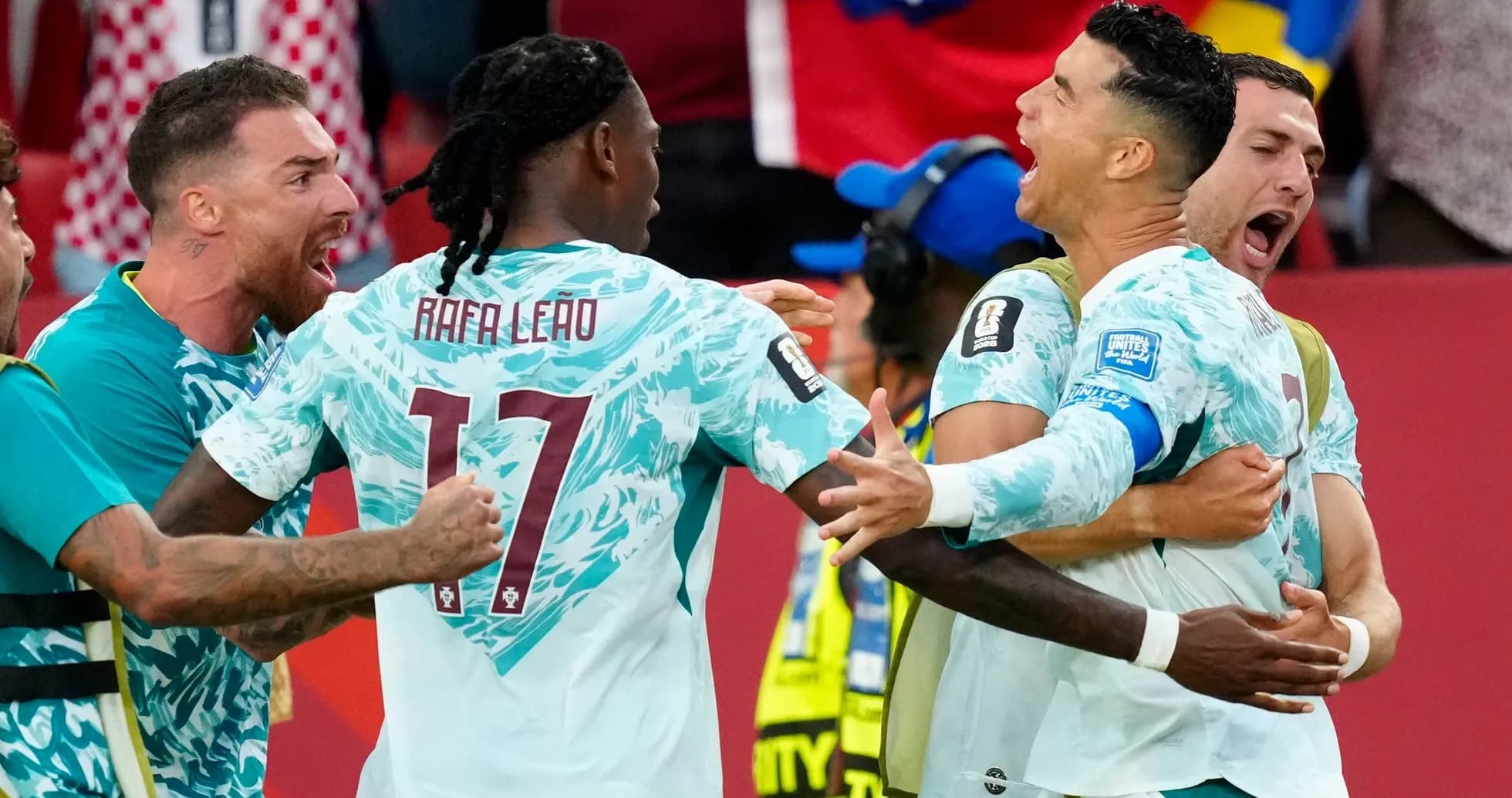
The breakthrough came at 68', when Cristiano Ronaldo (Portugal) converted a Penalty, levelling the match. Immediately after, Croatia adjusted, with Martin Baturina (OUT) replaced by Mario Pašalić (IN) at 68' to add more penalty-box presence. At 81', a potential goal by Petar Sučić (Croatia) was disallowed by VAR for offside, underlining Croatia’s continued threat despite Portugal’s control. Moments later, at 81', Cristiano Ronaldo (OUT) was replaced by Rúben Neves (IN), giving Portugal additional midfield ballast for the run-in.
In added time, Croatia shuffled again: at 90+2', Nikola Vlašić (OUT) made way for Joško Gvardiol (IN), a move that tilted them towards a more aggressive late push. Portugal then delivered the decisive blow at 90+4', when Gonçalo Ramos (Portugal) scored a Normal Goal, assisted by Rafael Leão, finishing a move that encapsulated Portugal’s superior freshness and structure.
Croatia’s final roll of the dice saw Mateo Kovačić (OUT) replaced by Andrej Kramarić (IN) at 90+6', but their frustration boiled over at 90+8' as Ivan Perišić (Croatia) was booked — Unsportsmanlike conduct. Deep into added time at 90+13', a potential goal by Joško Gvardiol (Croatia) was again disallowed by VAR for offside, the third major VAR intervention and a final confirmation of Portugal’s passage.
Card totals: Portugal 1 yellow, Croatia 2 yellows, Total 3.
Tactical Breakdown & Personnel
Both teams lined up in a 4-2-3-1, but their interpretations diverged. Portugal’s double pivot of João Neves and Vitinha initially focused on short circulation and rest-defence positioning, allowing Bruno Fernandes to operate high between the lines behind Cristiano Ronaldo. Full-backs João Cancelo and Nuno Mendes pushed on asymmetrically, with Mendes often providing width while Rafael Leão rolled inside to occupy half-spaces and central lanes.
Portugal’s dominance of possession (61%) and high passing volume (584 passes, 532 accurate, 91%) reflected a clear plan: stretch Croatia horizontally, tire their midfield, and then accelerate combinations in the final third. Ten shots inside the box and four blocked efforts underline how consistently Portugal were able to play into dangerous zones, even if they only registered three shots on goal.
Croatia’s 4-2-3-1 was more transitional. Luka Modrić and Mateo Kovačić formed the double pivot, tasked with resisting Portugal’s press and springing counters. The wide trio of Nikola Vlašić, Petar Sučić and Martin Baturina supported Ante Budimir, with Ivan Perišić providing width and overlapping threat from left-back. Croatia’s 13 total shots (10 inside the box) and five corners show they were able to create volume, but the quality of their final actions did not consistently match Portugal’s.
In goal, Diogo Costa (Portugal) made 5 saves, a significant workload that reflects Croatia’s ability to reach shooting positions despite having just 39% of the ball. Dominik Livaković (Croatia) registered 2 saves, a low number that speaks both to Portugal’s shot selection — many efforts blocked or off target — and to Croatia’s defensive line generally holding Portugal at arm’s length until the penalty and late winner.
The substitution wave around the hour was the tactical hinge. Introducing Bernardo Silva and Francisco Conceição added press resistance and one‑v‑one threat on the right, while Nélson Semedo’s arrival allowed Portugal to adjust their full-back dynamics and secure transitions. Gonçalo Ramos gave them a more mobile reference up front, crucial for attacking depth and attacking the space behind a tiring Croatian back line. Rúben Neves’ late introduction further solidified central control, enabling Portugal to manage the final phases after taking the lead.
Croatia’s changes were more reactive. Igor Matanović for Budimir added energy in the box and contributed to Perišić’s opener, while Mario Pašalić and later Andrej Kramarić were intended to stack the area with finishers. However, the structural base behind them weakened, and Portugal increasingly controlled second balls and territory, forcing Croatia into hopeful deliveries rather than structured chance creation.
The Statistical Verdict
The underlying numbers align closely with the narrative of a deserved Portuguese win, albeit in a match where Croatia remained dangerous. Portugal’s xG of 2.18 against Croatia’s 1.34, combined with a 15–13 shot edge and superior shot quality (10 vs 10 shots inside the box, but with more controlled build-up), supports the 2-1 outcome. Portugal’s passing accuracy at 91% versus Croatia’s 85%, and a 584–368 pass differential, underpinned their ability to dictate tempo and territory.
Defensively, Portugal limited Croatia to 6 shots on goal, with Diogo Costa (Portugal) responding with 5 saves, indicating that most Croatian efforts were either from less favourable angles or well contested. Croatia, by contrast, allowed only 3 shots on goal but conceded twice, with Dominik Livaković (Croatia) making 2 saves. The goals prevented metric at -0.45 for both teams suggests that each goalkeeper conceded slightly more than the shot quality might predict, but the decisive factor was Portugal’s capacity to generate and convert high-leverage moments, particularly via the penalty and the late, well-constructed winner.
Discipline also played a role in game control. Portugal committed just 6 fouls to Croatia’s 12 and collected only 1 yellow card to Croatia’s 2, consistent with a side largely dictating the terms of engagement. Across 90 minutes plus extensive added time, Portugal’s structural coherence, bench impact, and superior possession framework were enough to edge a tactically rich knockout tie.