Portland Timbers II Triumphs 2–1 Over Minnesota United II
Providence Park under the floodlights can make even a developmental fixture feel like a playoff night, and Portland Timbers II’s 2–1 win over Minnesota United II had exactly that edge. In a league built on volatility and opportunity, this was a meeting of two sides whose seasonal DNA is clear: high-risk, high-variance football with little interest in draws.
Heading into this game, Portland Timbers II sat on 17 points from 9 matches, with a goal difference of 1 in the MLS Next Pro standings. Their overall record of 5 wins and 4 losses, with 13 goals for and 12 against, painted them as a team that lives on the knife-edge. At home, they had played 6, winning 3 and losing 3, scoring 9 and conceding 7. Minnesota United II arrived with 14 points from 10 matches, also refusing to share points: 5 wins, 5 losses, 10 goals scored and 13 conceded overall, for a goal difference of -3. On their travels, they had played 7, winning 3 and losing 4, with 9 goals for and 11 against.
I. The Big Picture: Structure in the chaos
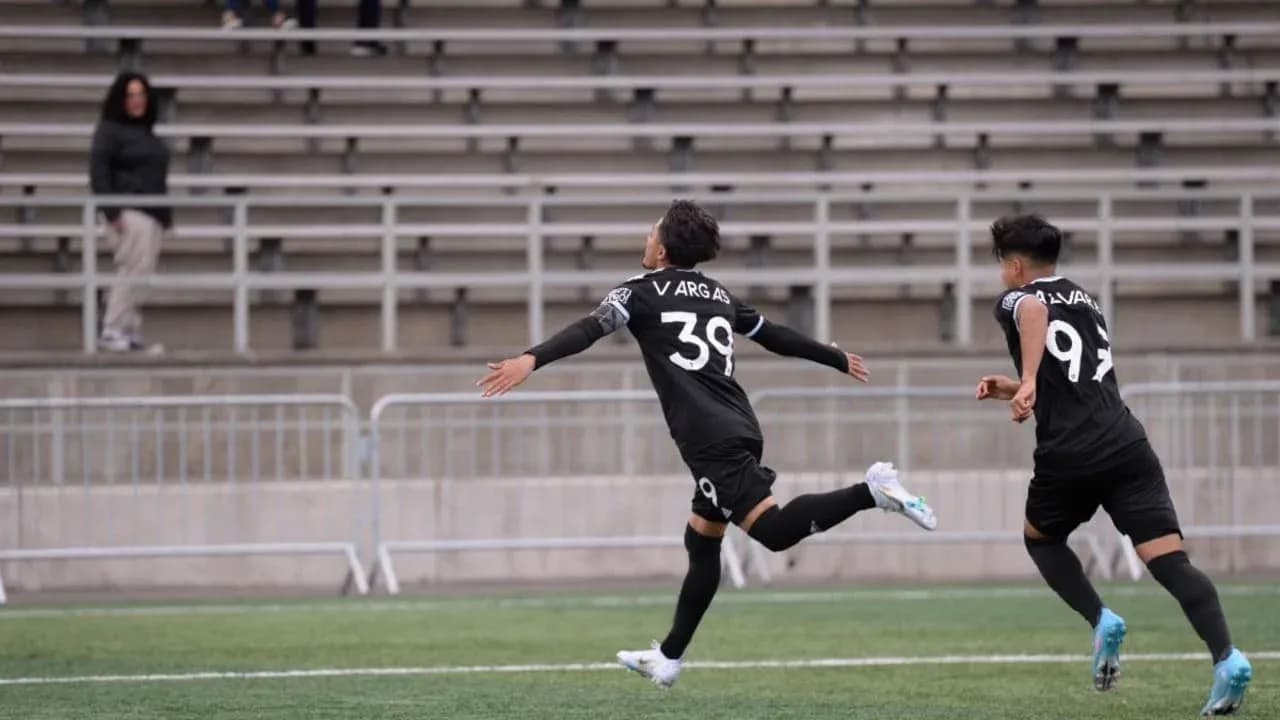
Jack Cassidy sent out Portland without a listed formation, but the personnel hints at a flexible, youthful side. S. Joseph, wearing 91, anchored the back, with a defensive and build-up platform likely shared by A. Bamford and N. Lund. The attacking thrust came from a cluster of dynamic profiles: C. Ondo, C. Ferguson, E. Izoita and V. Enriquez offering vertical runs and rotations, while B. Barjolo and L. Fernandez-Kim provided width and connective play. Up front, Colin Griffith, in shirt 39, was the reference point – and, tellingly, he also tops the league’s rating charts for Portland in both scoring and assisting categories, even if his raw numbers are still modest.
Minnesota United II mirrored that developmental volatility. K. Rizvanovich in goal was shielded by a back line built around P. Tarnue, A. Kabia and N. Dang. In front of them, J. Farris and M. Harwood had to stitch together the transitions, with L. Pechota and S. Vigilante pushing higher to support the attacking trio of K. Michel, M. Caldeira and D. Randell. Without a formal shape listed, their season statistics tell the tactical story: on their travels, they averaged 1.3 goals for and 1.6 against, while Portland at home averaged 1.7 goals for and 1.7 against. This was always likely to be a match of trading punches rather than one team locking it down.
II. Tactical Voids: Discipline and risk
Neither side came into the fixture with documented absentees, which meant both coaches could lean into their preferred chaos. But the card profiles reveal the deeper tactical voids.
Heading into this game, Portland’s yellow-card distribution was heavily skewed towards the middle and late phases: 31.82% of their yellows arrived between 61–75 minutes, with another 18.18% from 76–90. That is the picture of a young side that ramps up its aggression as the game opens up, sometimes overstepping as legs tire and spaces widen.
Minnesota United II, meanwhile, were at their most combustible around the break and in the closing stretch. A combined 55.56% of their yellows came between 31–45 and 76–90 minutes, with 27.78% in each of those windows. This suggests a team that struggles to manage emotional spikes: late in the first half when frustration builds, and in the final quarter-hour when game states become desperate.
With no red cards recorded for either side this season and no penalties missed – Portland had scored 2 out of 2 overall, Minnesota 1 out of 1 – the risk profile is more about cumulative disruption than catastrophic collapses. The void, tactically, is game management rather than outright discipline meltdown.
III. Key Matchups: Hunter vs Shield, Engine Room vs Enforcer
The “Hunter vs Shield” narrative here revolved around Portland’s collective attack against Minnesota’s away defence. On their travels, Minnesota United II had conceded 11 goals in 7, an average of 1.6 per match. Portland at home were scoring 1.7 per match and had already produced a biggest home win of 2–1 in the campaign – a scoreline they repeated here. The data suggested that if Portland could generate volume, Minnesota’s back line would eventually crack.
Griffith, as Portland’s headline attacking figure in the league metrics, was central to this. Even without gaudy goal numbers, his presence as a rated forward in the top-scorer and top-assist tables marks him as the reference point around whom Ondo, Ferguson and Enriquez can orbit. Against a Minnesota defence that has shown vulnerability on the road, the matchup tilted towards the hosts’ “hunter” unit.
In the “Engine Room” battle, much hinged on the unnamed but obvious duels between Portland’s midfield cluster – Izoita, Enriquez, Barjolo and Fernandez-Kim – and Minnesota’s central spine of Farris, Harwood and Pechota. Minnesota’s overall defensive record of 13 goals against in 10 matches (1.3 per game total) is slightly better than Portland’s 15 conceded in 9 (1.7 per game total), but the split tells the story: Minnesota are tighter at home (0.7 conceded per match) and more exposed away, while Portland’s home and away defensive averages are both 1.7.
That meant the “Shield” for Minnesota was never going to be a static low block; it had to be an active, pressing midfield trying to break Portland’s rhythm early. The danger window, however, was always going to be the second half, where Portland’s card surge between 61–75 minutes reflects an aggressive push – and where Minnesota’s own discipline wobbles.
IV. Statistical Prognosis: Why 2–1 felt inevitable
Following this result, the numbers feel almost self-fulfilling. Portland’s season-long averages pointed towards a high-event home match: 1.7 goals for and 1.7 against at Providence Park. Minnesota’s away pattern of 1.3 scored and 1.6 conceded suggested they would contribute but not control.
In xG terms – even without explicit values – the profiles hint at a game where Portland’s volume and territorial dominance at home would generate the clearer chances, while Minnesota would rely on transitions and moments from Michel, Caldeira and Randell. Portland’s three clean sheets overall, split 1 at home and 2 away, already told us they are not built to suffocate opponents; they are built to outscore them.
The 2–1 scoreline, then, fits the statistical prognosis: Portland leaning into their attacking averages, Minnesota finding a goal but unable to keep the door shut. In a playoff-style race where both teams chase the upper rungs of MLS Next Pro, this felt less like an anomaly and more like a crystallisation of who they are – two fearless, imperfect sides, with Portland’s sharper edge at Providence Park just enough to tilt the night in green and gold.