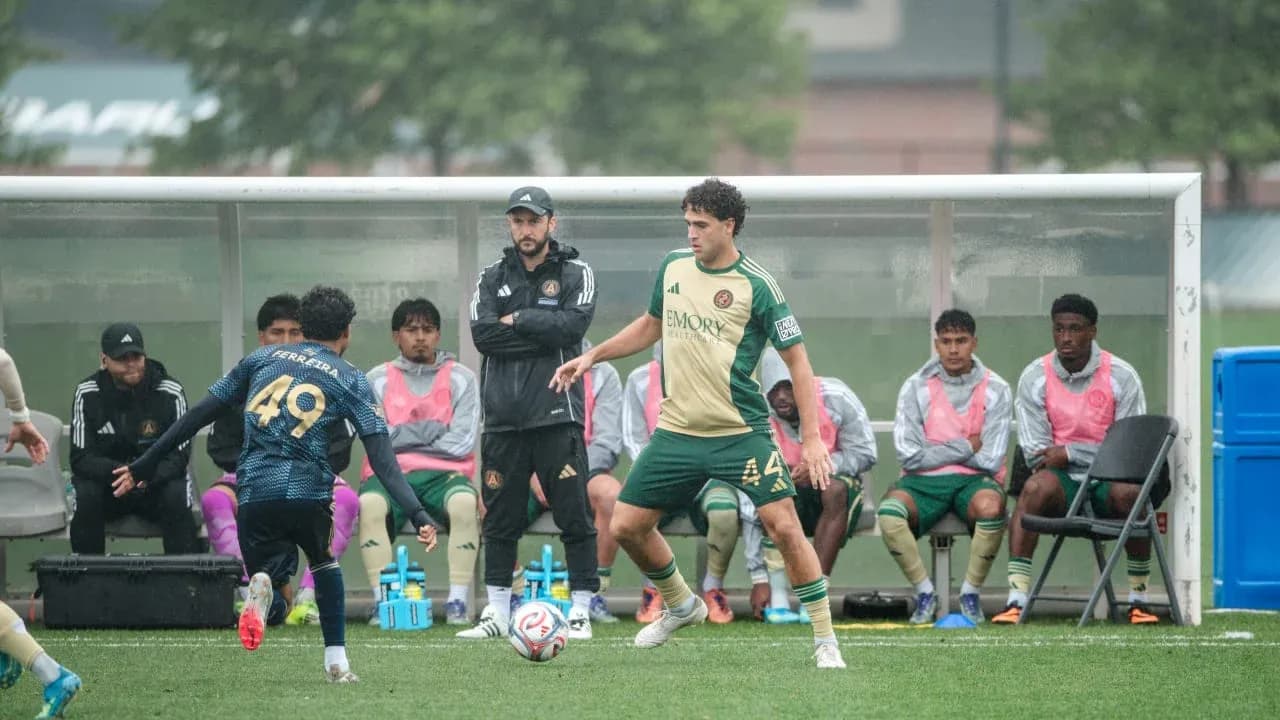
Philadelphia Union II Triumphs Over Atlanta United II in 2–1 Comeback
Subaru Park had already told its story by the final whistle: a 2–1 comeback for Philadelphia Union II over Atlanta United II, a result that felt like a small inversion of the MLS Next Pro hierarchy. Heading into this game, Atlanta arrived as the more explosive side, Union II as the more erratic one. Over 90 minutes, the script bent toward the hosts’ resilience and their capacity to suffer, then strike.
This was a Group Stage contest in MLS Next Pro, but it carried the quiet weight of Eastern Conference playoff positioning. In the broader conference table, Atlanta United II had been the more convincing force: 19 points from 11 matches, a goal difference of 6 built on 21 goals for and 15 against. Union II, at 18 points and a goal difference of 3, were a step behind in the conference ranking but ahead in their own Northeast Division, living on narrow margins and a volatile form line of “WWLWWLWLLLW”.
The season’s DNA for both sides framed the clash clearly. Philadelphia Union II at home had been a coin flip: 8 matches played at Subaru Park, 4 wins and 4 losses, no draws. At home they had scored 11 and conceded 9, averaging 1.4 goals for and 1.1 against. They either imposed themselves or were picked off. Atlanta United II, by contrast, were road gamblers. On their travels they had played 8, winning 4 and losing 4, with 15 goals scored and 12 conceded. That away average of 1.9 goals for and 1.5 against underlined a side that leans into chaos and backs its attack to outgun the opponent.
The lineups reflected two squads built around youth, energy, and fluidity more than rigid structure. Ryan Richter’s Union II XI had G. Marks as the last line, with an outfield core shaped by O. Pratt, R. Uzcategui, K. Moore, and J. Griffin behind a mobile attacking mix of N. Hasan, O. Benitez, M. De Paula, W. Ferreira, T. Reed, and E. Davis III. Without a listed formation, the shape was defined less by chalkboard and more by roles: Griffin and Moore as stabilizers, Hasan and Benitez as the connectors, Ferreira and Reed offering vertical runs and pressing triggers.
Atlanta United II’s starting group, even without a named coach in the data, had a clear attacking intent. J. Ransom anchored the side, with D. Chica, M. Senanou, M. Cisset, and D. Chong-Qui likely forming the defensive and first build-out layer. Ahead of them, A. Gill and A. Torres offered creativity between the lines, while E. Dovlo, I. Suarez, C. Dunbar, and A. Kovac provided width, runs, and finishing threat. The bench depth—M. Tablante, P. Weah, L. Butts, D. Sibrian, I. Ettinger, A. Jardines, and M. Pineda—gave Atlanta multiple ways to change tempo and profile in the second half.
If there was a “tactical void” on the night, it came not from absences but from discipline and game-state management. Both teams have lived on the edge this season when it comes to cards. Union II’s yellow-card distribution is spread but telling: 17.65% of their bookings arrive between 16–30 minutes, another 17.65% from 61–75, and a further 17.65% from 91–105. They also have a red-card spike split evenly between 31–45 and 61–75, each carrying 50.00% of their total reds. Atlanta’s own disciplinary curve is even more aggressive in the heart of the game: 20.83% of their yellows in 46–60, 20.83% in 61–75, and another 20.83% in 76–90, with red cards appearing in each of 46–60, 61–75, and 76–90 (33.33% apiece). This is a pair of squads that tackle the match hardest when fatigue and emotion rise.
In that context, the “Hunter vs Shield” matchup was less about a single striker and more about systemic profiles. On their travels, Atlanta United II’s attack has been prolific: 15 away goals at an average of 1.9 per match, supported by a biggest away win of 2–6 and a ceiling of 6 goals in a single away outing. Union II’s home defense, however, is sturdier than their overall volatility suggests: 9 conceded in 8 home matches, an average of 1.1, and 2 clean sheets at Subaru Park. This is a back line that can bend without fully breaking, especially when Marks is protected by the collective work of Moore, Griffin, and the wide support from Hasan and Benitez.
The “Engine Room” duel sat in the middle of the pitch. For Philadelphia, players like Hasan and Benitez are the ones who link phases, turning clearances into passes and passes into counters. On Atlanta’s side, Gill and Torres are tasked with receiving between the lines, driving at defenders, and releasing runners like Dunbar and Suarez. Atlanta’s season-long attacking average of 1.9 goals overall, combined with Union II’s 1.1 goals against total average, set up a clash between a side that thrives in transition and one that prefers to compress space, then spring forward.
From a statistical prognosis standpoint, the numbers heading into this fixture suggested a high-variance contest. Union II’s overall goals for average of 1.4, paired with 1.1 against, painted them as narrow-margin merchants. Atlanta’s 1.9 goals for and 1.5 against overall pointed to a more open, stretched style. Neither side had drawn a match all season—11 played, 6 wins and 5 losses for both—so the probability of a decisive outcome was always high.
What tilted the balance toward Philadelphia on the night was their ability to translate those thin margins into a controlled comeback. The 0–1 deficit at half-time echoed their season-long habit of living on the edge, but the second-half response aligned with their best runs of form, like their biggest home win of 4–1 and their capacity to score in bursts. Atlanta, for all their away firepower, met a defense that refused to crack a second time and a home side that matched their intensity without tipping over into the disciplinary chaos that has occasionally cost both teams.
Following this result, the underlying xG story—though not explicitly provided—would likely show Union II squeezing more value out of fewer, better chances, while Atlanta generated volume without the same clinical edge that has powered their 2–6 away high. Defensively, Philadelphia’s 1.1 total goals against average and Atlanta’s 1.5 were mirrored in the 2–1 scoreline: Union II once again won by a single goal, and Atlanta once again conceded more than their attack could repair.
In narrative terms, this was a night where structure beat volatility just enough. Marks’ composure, the industry of Moore and Griffin, the connective tissue of Hasan and Benitez, and the front-line work of Ferreira, Reed, and Davis III combined to drag Union II back from the brink. Atlanta’s Ransom, Chica, Senanou, and Cisset faced the full weight of that late pressure and, for once, could not hold the line.
In a league defined by developmental chaos, this 2–1 at Subaru Park felt like a small but significant statement: Union II can live in the same high-risk, high-reward world as Atlanta United II—and on this occasion, they navigated it with just a little more control.