Pep Guardiola in Talks to Become Italy's Head Coach
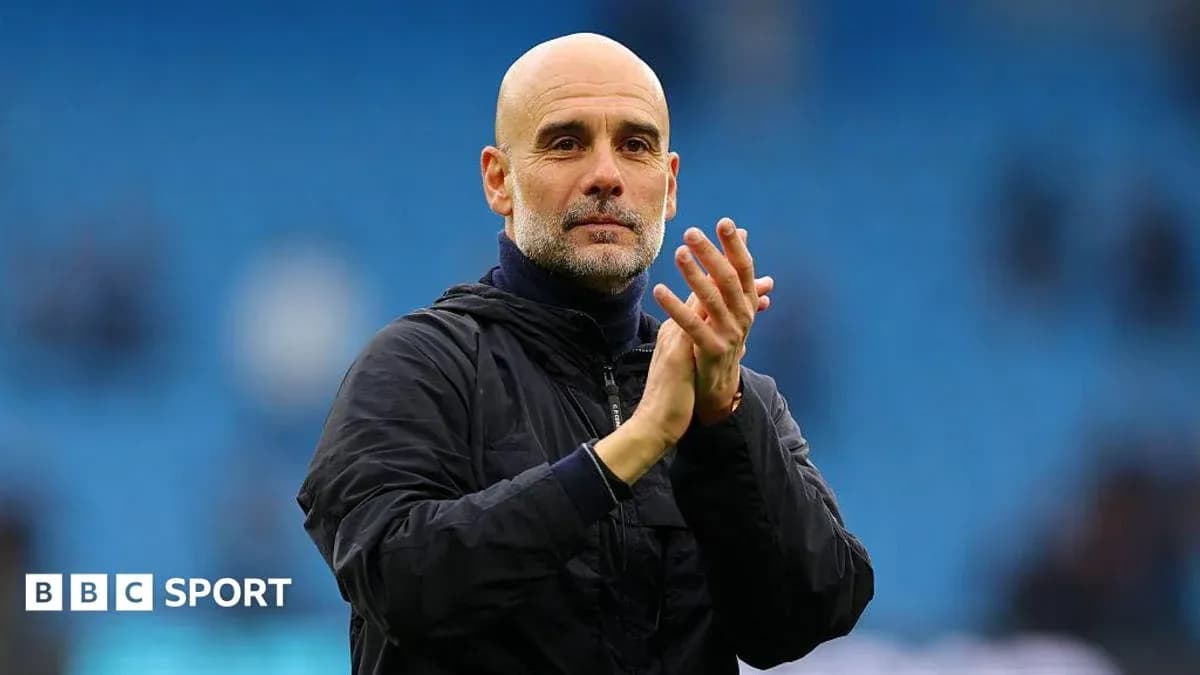
Pep Guardiola has held talks about becoming Italy’s next head coach, Italian Olympic Committee and Football Federation powerbroker Giovanni Malagò has confirmed, raising the prospect of one of the game’s most influential managers taking charge of a national team in crisis.
Guardiola walked away from Manchester City this summer after a decade of relentless success in England: six Premier League titles, three FA Cups, five League Cups and the club’s long‑awaited Champions League crown. He left in May sounding exhausted, admitting: “I am so tired. Seriously, I am so tired.”
Yet only a few months later, Italy are asking if he has one more project in him.
Italy’s search after another World Cup failure
The Azzurri have been without a head coach since April, when Gennaro Gattuso resigned in the wake of Italy’s failure to qualify for a third consecutive World Cup. For a four-time world champion, that is not a blip. It is an emergency.
The Italian Football Federation (FIGC) has been scouring the market for a figure big enough to reset the entire direction of the men’s national team. Sky Italia first revealed on Monday that the FIGC had made contact with the 55‑year‑old Spaniard.
Malagò has now gone a step further. Speaking to Italian digital outlet Cronache di spogliatoio, he confirmed that discussions with Guardiola have taken place and that the federation is prepared to bend its own financial rules to make a deal possible.
“[Financial] exceptions have been made, exceptions that for example may concern the name that is so overbearing in these hours: Pep Guardiola,” Malagò said. “Exceptions for obvious reasons that I am not here to explain, but it is not certain that this thing will go through.”
The message is clear: Italy are ready to stretch for Guardiola – but they are not certain they can land him.
A rare foreign bet for the Azzurri
If Guardiola accepts, he would become only the third non‑Italian to take charge of the men’s national team setup in more than a century. Hungary’s Lajos Czeizler served on the technical committee that guided Italy in the 1950s, while legendary Argentine coach Helenio Herrera shared the role with Ferruccio Valcareggi in the 1960s.
Italy have always trusted their own. That is part of the cultural fabric of the national side. Breaking that tradition for Guardiola underlines how far the FIGC is willing to go to jolt the Azzurri out of their current malaise.
Guardiola has never managed in Italy, but the country is not unfamiliar ground. He speaks fluent Italian and spent two seasons in Serie A between 2001 and 2003, across two spells with Brescia and a stint at Roma. Those were modest years on the pitch, yet they left him with a feel for Italian football’s intensity, its tactical obsession, its scrutiny.
Mancini, Pirlo… and others
Guardiola is not the only name on the table. Another former Manchester City manager, Roberto Mancini – the man who led Italy to Euro 2020 glory five years ago – is in the frame. So is Andrea Pirlo, the former Azzurri midfielder currently in charge of Dubai United.
Asked directly whether Guardiola, Mancini and Pirlo formed the full shortlist, Malagò was categorical: “Absolutely not. We think about a certain profile and certainly these names fall into that category.”
So Italy are hunting a profile, not just a name: a coach who can command a dressing room, reshape a playing identity and withstand the pressure of a nation still measuring itself against Paolo Rossi, Roberto Baggio and Fabio Cannavaro.
Guardiola fits that description more completely than anyone else in modern football. His Barcelona sides redefined a generation, his Bayern Munich teams dominated Germany, and his Manchester City era turned domestic supremacy into something close to routine. His time in Manchester followed trophy‑laden spells in Spain and Germany; wherever he has gone, silverware has followed.
A quick return or a needed pause?
The question now is whether Guardiola is ready to dive back in so quickly. When he closed the chapter at City in May, he spoke like a man who needed distance from the touchline, who wanted to step away from the grind after 10 years of constant pressure and constant winning.
Yet the Italy job is different from the club treadmill. Fewer games. Longer gaps between fixtures. More time for reflection and construction. For a coach obsessed with detail and structure, the national team environment offers a different kind of challenge: less daily control, more long‑term influence.
The FIGC, contacted for further comment, has yet to elaborate on the talks or timelines. The clock, though, is ticking. Italy cannot drift into another qualifying campaign without a clear leader.
If Guardiola says yes, it would mark one of the most audacious appointments in the Azzurri’s history – a tactical revolutionary asked to revive a fallen giant. If he says no, Italy must turn back to familiar faces like Mancini or Pirlo and hope that an Italian solution can still solve a very modern problem.