Paolo Maldini Faces FIGC Crisis After Pirlo Appointment Collapse
Paolo Maldini is on a collision course with the FIGC.
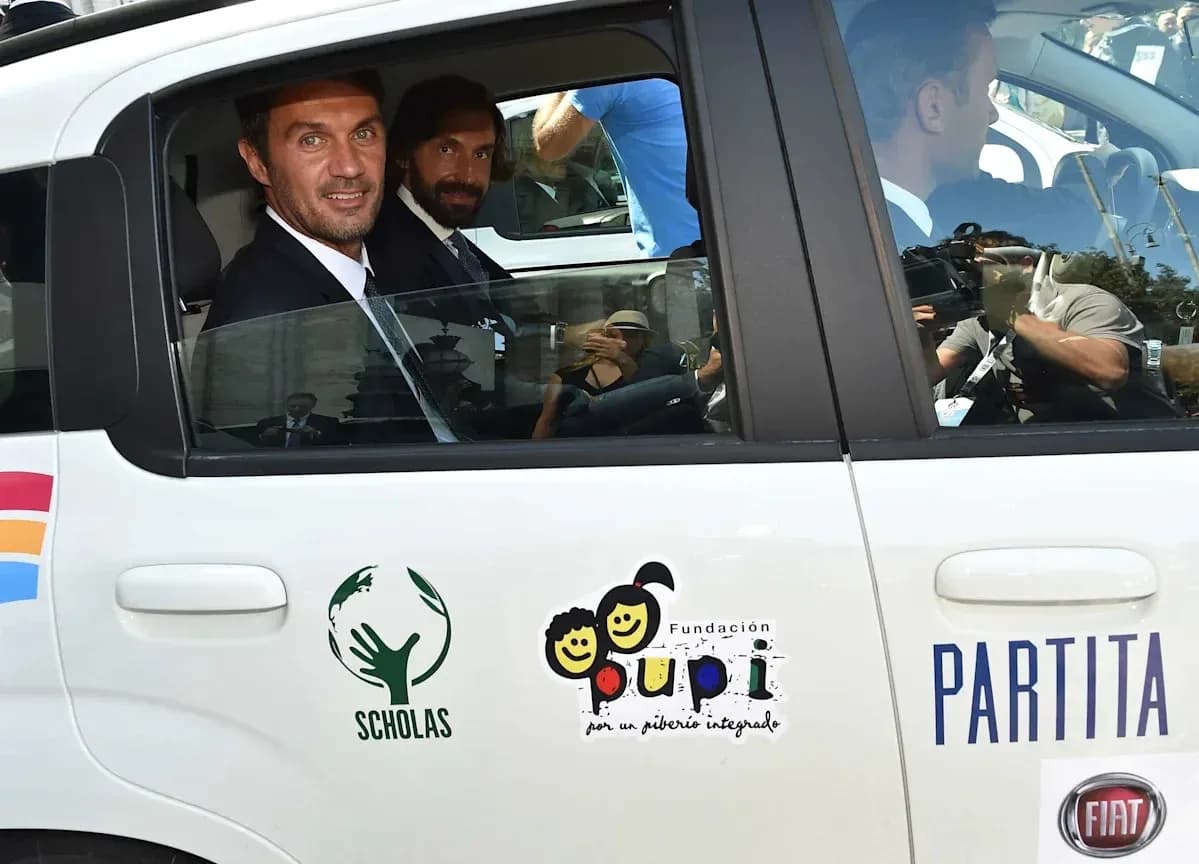
According to reports from Corriere della Sera, relayed by journalist Guillaume Pacini, the former Milan captain has threatened to resign from his role as FIGC technical director after the federation’s botched attempt to appoint Andrea Pirlo as Italy’s new head coach.
Pirlo had been effectively lined up as the next manager of the men’s national team. The FIGC moved towards his appointment, the message was clear, and the Azzurri appeared set to begin a new era under one of the icons of the 2006 World Cup triumph.
Then the backlash hit.
Pirlo’s work as a global ambassador for Fonbet, a Russian betting company, triggered a storm that the federation somehow failed to foresee. His role with Fonbet has included appearances alongside pro-Kremlin figures at events involving Russian veterans of the ongoing war in Ukraine. The controversy around those links proved too heavy for an institution already sensitive to questions of image and politics.
The appointment collapsed. So did the illusion of a smooth reset for Italian football.
Inside the FIGC, the fallout has been severe. Maldini, brought in as a symbol of competence and credibility, now finds himself at the centre of the crisis rather than above it. As reported by Il Messaggero, again via Pacini, he is considered highly unlikely to stay on in his post. If he does remain, it would only be under one clear condition: he wants full control over the choice of Pirlo’s replacement.
That demand cuts to the heart of the federation’s power structure. Grant Maldini that authority and the technical director becomes the dominant figure in the sporting project. Refuse, and they risk losing the man they entrusted with steering the Azzurri into a new phase.
Names are already circling. Roberto Mancini, the coach who delivered Euro 2020 glory before his own controversial exit, is back in the conversation. So is Antonio Conte, the intense, demanding former national team boss who rebuilt Italy’s competitive edge at Euro 2016. Several other candidates have also been linked, but no clear favourite has emerged from the noise.
What has emerged is the scale of the miscalculation.
The FIGC should have seen this coming. Pirlo’s association with Fonbet was not buried in obscure documents or hidden in distant markets. It was public, visible, and always likely to attract scrutiny in the current geopolitical climate. Instead of anticipating the reaction, the federation walked straight into a storm of criticism, damaging its reputation before a ball has even been kicked in this supposed new chapter.
The result is a federation exposed on multiple fronts: publicly embarrassed by a failed appointment, internally destabilised by the potential loss of its technical director, and facing the prospect that, even if Maldini stays, he does so with more leverage than the leadership ever intended to grant him.
For the Azzurri faithful, this was meant to be a fresh start. A new coach, a new project, a clean break from recent disappointments. Instead, they are watching what feels like a comedy of errors play out at the top of the game.
The next decision — who takes the Italy bench, and who actually makes that call — will tell everyone whether this is just an early stumble, or the first sign that the new era is already off balance.