Norway vs Brazil: A World Cup Clash to Remember
Norway have waited nearly three decades to feel this kind of tension again. Under the lights at New York/New Jersey Stadium, they step out against Brazil with a place in the World Cup quarter-finals on the line and a chance to redraw the limits of what this team can be.
Both sides arrive with late drama still pulsing in their legs. Brazil left it late to see off Ivory Coast. Norway did the same against Japan. Now there is no margin for error. Win, and it’s Mexico or England next. Lose, and the dream ends here.
For Norway, this isn’t just another knockout tie. It’s a generation trying to write its own chapter.
Nyland: The free agent with everything to lose
In goal stands Orjan Nyland, a familiar name to English fans after spells at Aston Villa, Norwich, Bournemouth and Reading. He comes into this World Cup as Norway’s undisputed No1, yet without a club after Sevilla released him at the end of his contract.
It adds a sharp edge to his tournament. Every save is a shop window. Every mistake, a reminder of the uncertainty waiting beyond this World Cup. Against Brazil’s forwards, his evening will likely be spent on a tightrope.
A patched-up defence with Premier League steel
On the right, Marcus Holmgren Pedersen was supposed to be the understudy. He is no longer. An injury elsewhere has thrust him into the spotlight, and he has responded with intent, including a crucial goal in the chaotic 3-2 win over Senegal. He will need the same mix of energy and composure against the Selecao.
Kristoffer Ajer brings Premier League muscle to the heart of defence. The Brentford centre-half is tall, aggressive and used to physical battles. Tonight, he could find himself up against a very familiar face: club team-mate Igor Thiago. That duel alone could dictate how much pressure Norway’s back line must absorb.
The big concern is Julian Ryerson. The Borussia Dortmund full-back has missed Norway’s last two games and remains the major injury doubt. When fit, he is everything the modern full-back should be: relentless up and down the flank, sharp in the press, eager to join attacks. His absence would strip Norway of one of their key outlets, and it’s no coincidence he has been linked with a move to Liverpool.
Torbjorn Heggem offers versatility across the back line, now building his career at Bologna after a stint with West Brom. He is the type of defender managers trust in tournaments: low drama, high reliability.
On the left, David Moller Wolfe arrives with something to prove. Relegation with Wolves hurt, but his response has been impressive. He has parked the disappointment, tightened his game and helped drive Norway into the last-16. This is a chance to show he belongs on this stage regardless of what happened at club level.
Odegaard, the conductor on the biggest stage
Everything in this team eventually runs through Martin Odegaard. Arsenal’s title-winning captain has come into the tournament off a frustrating, injury-hit season, but the World Cup has felt like a reset. The stage suits him.
Three games in North America, three assists. The numbers are simple; the influence is not. Odegaard drifts into half-spaces, dictates tempo, and turns defensive clearances into crafted attacks. When Norway break the Brazilian press, the ball will almost certainly find his left foot first.
Alongside him, Sander Berge brings power and presence. Norway’s midfield powerhouse must cover ground, snap into duels and still find the composure to use the ball well. Up against Brazil’s technicians, his work rate and physicality will be tested from the first whistle to the last.
Patrick Berg offers a different kind of authority. At Bodo/Glimt, he has been a central figure in a side that has rattled established names across Europe over the past two seasons. He reads danger early, keeps the ball moving and gives Odegaard the freedom to roam. Quiet players often decide big games. Berg fits that mould.
Haaland and his supporting cast
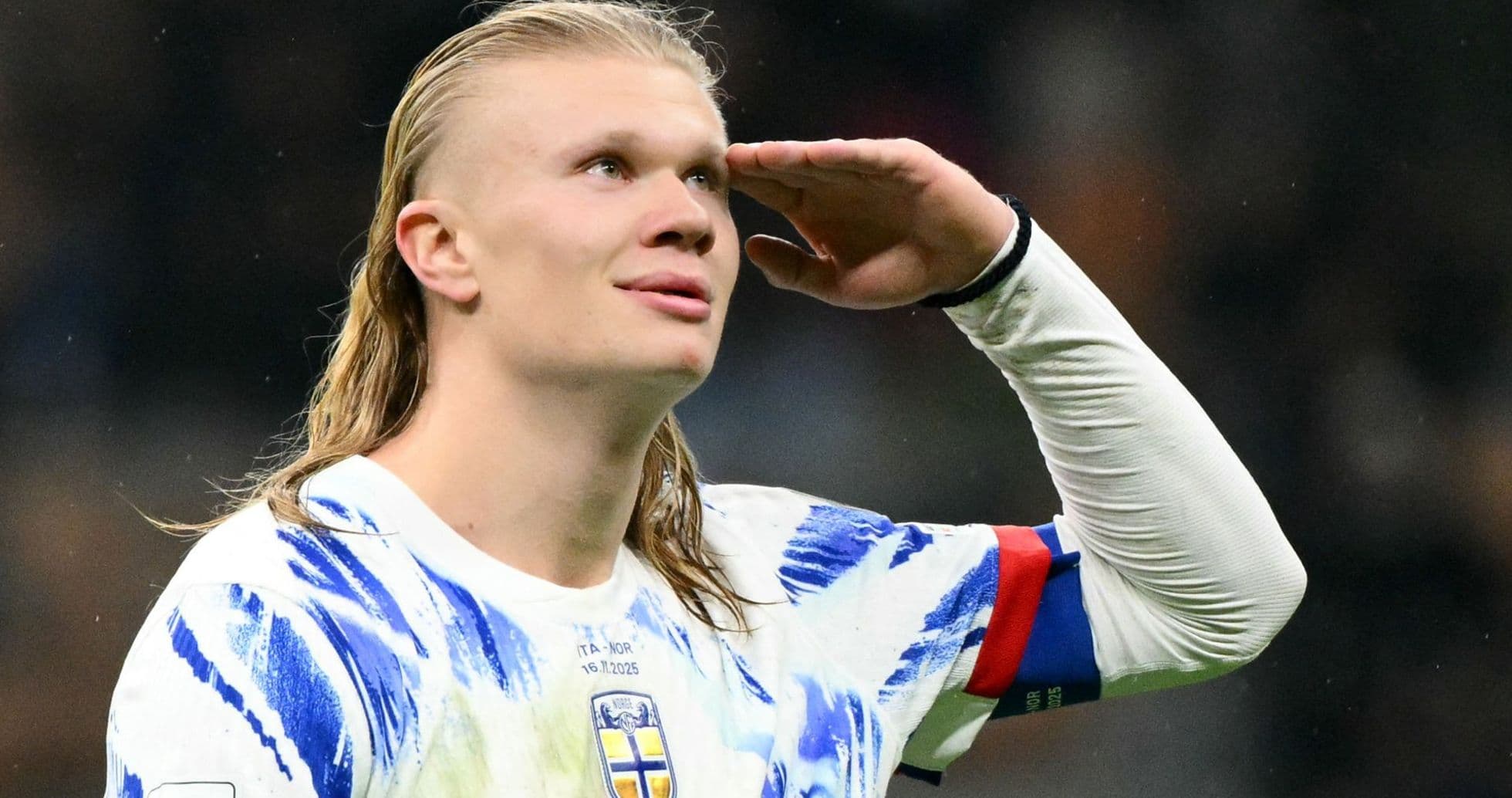
Up front, the spotlight is brutal and unforgiving. Erling Haaland stands right in the middle of it.
Manchester City’s record-breaking No9, arguably the most feared striker in the game, doesn’t need an introduction. His presence alone bends defences out of shape. Harry Kane may argue the “best striker” tag, but Haaland’s numbers and aura speak loudly enough on their own. Against Brazil, he will not see the ball often. When he does, he must be ruthless.
Around him, the options are varied and dangerous. Alexander Sorloth, once a misfit at Crystal Palace, has rebuilt his reputation the hard way. At Trabzonspor, then Villarreal, and now Atletico Madrid, he has grown into a fearsome forward, averaging just under a goal every other game. He can lead the line or drift off the right, giving Norway flexibility in how they attack Brazil’s back four.
Antonio Nusa brings something different again: raw excitement. The RB Leipzig winger has long been earmarked as one of Europe’s most intriguing young talents. A move to Brentford collapsed after a failed medical in 2024, and Tottenham have tracked him, but his answer to all the noise has been simple – perform. He backs up the hype with fearless dribbling and direct running, the kind of player who can flip the mood of a game with one burst of acceleration.
Oscar Bobb offers guile out wide. Developed at Manchester City and now at Fulham in search of regular minutes, he is an “on his day” winger in the best sense. When the confidence is there, he glides past defenders and creates chaos. This tournament is his chance to turn potential into something more permanent.
Behind Haaland, Jorgen Strand Larsen waits. Being the back-up to a phenomenon means minutes are scarce, but his record – six goals in 29 games – hints at a striker who can contribute when called upon. If Norway chase the game late on, his presence could change their shape and ask new questions of a tiring Brazilian defence.
A night that can change everything
Norway did not return to the World Cup just to make up the numbers. They finished runners-up to France in Group I, they have already shown late resilience against Japan, and they now stand one win away from a first-ever quarter-final.
Across from them, Carlo Ancelotti’s Brazil, Group C winners ahead of Morocco and still carrying the weight of a nation that expects deep runs as a minimum.
The stakes are clear. Beat Brazil and Norway do more than reach the last eight. They announce themselves as a serious force on the global stage again.
The question is simple: with this blend of star power, steel and emerging talent, are they ready to take that step tonight?