Nicolás Otamendi's Farewell: A Warrior's Departure from Argentina
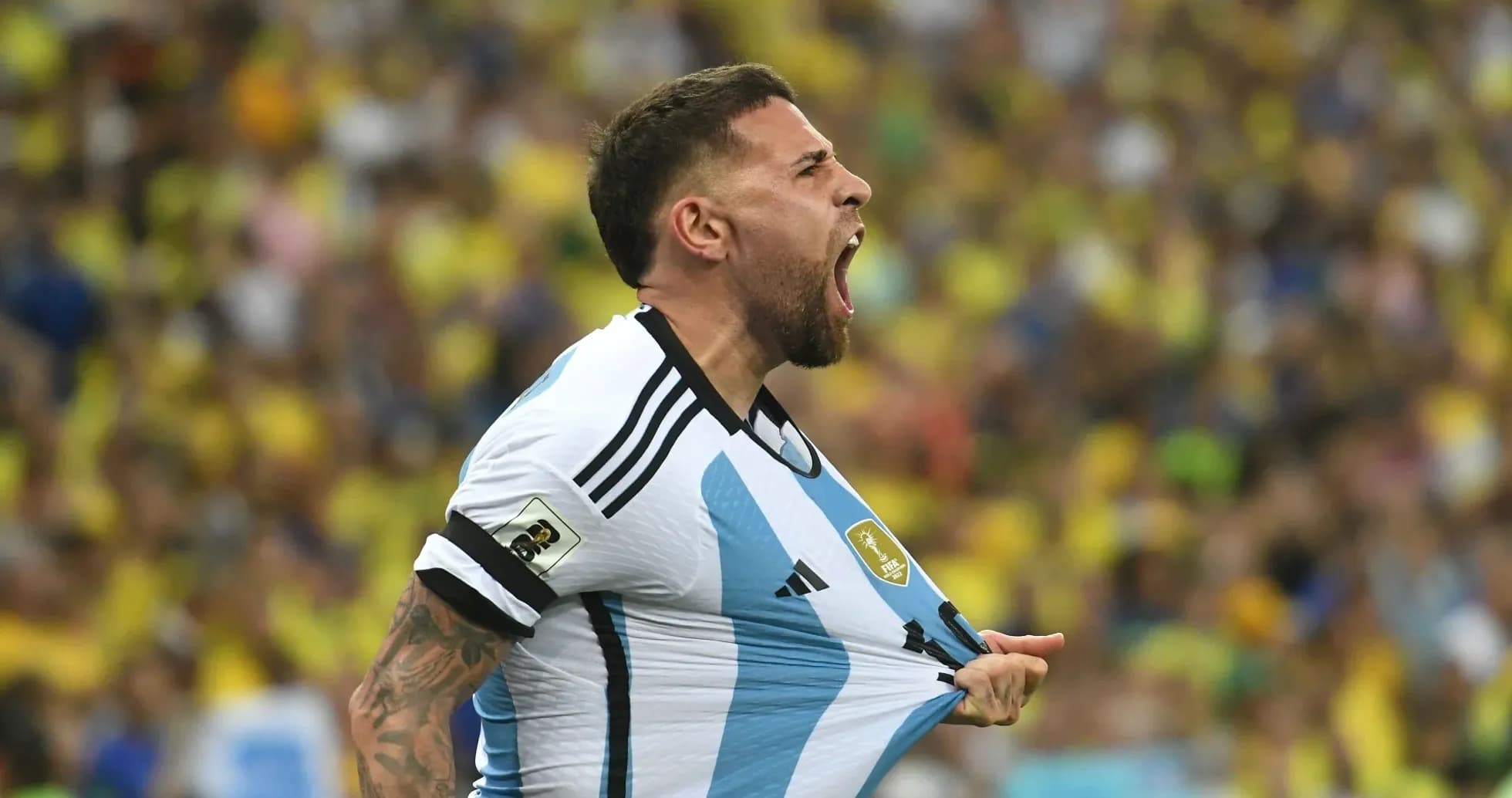
Nicolás Otamendi chose his own moment. Not with a sliding tackle or a last-ditch header, but with a written confession to millions of Argentines who have lived and suffered alongside him for more than a decade and a half.
“Today, I’m writing the most difficult words I’ve ever had to,” he posted on Instagram. With that line, the 38-year-old centre-back confirmed what many around the Albiceleste had long suspected: he will retire from the national team after the 2026 World Cup.
For a player who built his career on collisions, blocks and bruises, this was the hardest contact of all — with the end.
A childhood dream, a painful goodbye
Otamendi’s message read like a farewell letter to a country, not just a shirt. He called playing for Argentina “a childhood dream’’ and “the greatest privilege” of his football life, underlining that he had defended the colours “with all my heart, with pride, and with a sense of responsibility, knowing what it means to millions of Argentines.”
The timing added sting. Argentina’s defeat in the 2026 World Cup final still hangs heavy over the squad and its fans. Otamendi did not hide from that wound. He admitted his regret at the loss, but insisted he walks away “with the peace of mind that comes from giving it all.”
There was no self-pity in the words. Just a man closing a circle.
He thanked supporters and his family for standing beside him “through the good times and the bad,” then turned to those who will replace him, urging the next generation of Argentina players to “never stop believing.”
The final line hit like a chant rolling down from the terraces: “Thank you, Argentina. Thank you for letting me fulfill my dream of becoming a world champion and wearing the most beautiful jersey in the world.”
Teammates salute a leader
The reaction was immediate and emotional. His Instagram post became a gathering place for a generation of Argentina players who had battled with him in finals, qualifiers and friendlies scattered across the globe.
Alexis Mac Allister summed up the public image of Otamendi, thanking him for being “an exemplar of fight, resilience and love for the shirt.” Germán Pezzella went straight to the core of his role in the dressing room, calling him “a guide for us all.”
Paulo Dybala, Marcos Senesi, Mariano Andujar and Gianluca Prestianni added their own messages of gratitude, a roll call that stretched across positions, ages and eras within the squad. They didn’t need to explain what he meant; their presence under his post said enough.
Rodrigo de Paul went a step further. In an Instagram story, the midfielder dedicated a personal farewell to the vice-captain, revealing the quiet rituals behind the public warrior.
“From the day I got to the national team, you opened the door to your room, and since then we’ve held the same rituals,” he wrote. “My thanks to you, my brother, are eternal. You were an example to follow and one of the leaders of the beautiful story this team built. Thanks for everything, I’ll miss you.”
Those words peeled back the curtain on Otamendi’s influence. He wasn’t just a name on the team sheet; he was one of the pillars around which Argentina’s modern era was built.
From pillar to backup – and the inevitable end
For all the emotion, this was not a shocking announcement. At 38, with a World Cup, Copa América and a long European career behind him, Otamendi was always likely to step aside as Argentina refreshed its back line.
Under Lionel Scaloni, he had been a cornerstone at Qatar 2022, starting as one of the coach’s most trusted defenders. Four years later, his role shifted. Lisandro Martínez moved into the starting XI alongside Cristian “Cuti” Romero, while Otamendi became the experienced backup, the safety net on the bench and the voice in the dressing room.
He read the signs clearly. Rather than clinging on, he chose to leave on his own terms, still close enough to the front line to feel the grass and the noise, but honest enough to accept that the future belongs to others.
The Vélez kid who took on the world
Otamendi’s story with the Albiceleste stretches back to 2008, when he emerged at Vélez Sarsfield as a rugged, uncompromising defender in the Argentine First Division. From there, he built a career across Europe — including spells at Manchester City and Benfica — always carrying the same edge, the same readiness to fight every ball as if it were his last.
He never fit the stereotype of the elegant South American ball-playing centre-back. He was something else: abrasive, confrontational, utterly relentless. A defender who relished the duel as much as the interception.
Standing at 1.83m, he was tall by Argentine standards but often undersized in the international arena. He turned that supposed weakness into a weapon. His aerial dominance became one of his trademarks, driven more by timing, aggression and sheer will than by physical advantage.
One image captured that spirit better than any statistic. In Qatar 2022, during the round of 16 against Australia, cameras caught Otamendi rising above 1.98m Harry Souttar, towering over the giant defender in an aerial battle. The photograph went viral, not because of the header itself, but because it distilled everything he represented: defiance, bravery, and an unshakeable refusal to accept limits.
A legacy carved in tackles and scars
Otamendi leaves the national team with more than medals and appearances. He leaves a template.
Determination. Fierceness. Competitiveness. These are the traits that defined his career and will shape how future Argentina defenders measure themselves. His name now sits comfortably in conversations that include Daniel Passarella, Oscar Ruggeri and Roberto Ayala — not because he was identical to them, but because, like them, he gave Argentina an identity at the back.
He was the defender who always seemed ready for one more duel, one more block, one more argument with a centre-forward twice his size. The man who turned every ball into a battle and every battle into a statement.
Now, as he prepares to walk away from the Albiceleste after 2026, the question shifts from what he gave to what comes next. Can Argentina’s emerging defenders carry that same fire, that same uncompromising edge, into a new era without the bearded warrior who set the standard?